
by villarramil028 | Apr 3, 2026 | Filipino Cuisine, Food & Nutrition Education
Curacha (Spanner Crab): Nutritional Overview and Culinary Context
A neutral educational look at the characteristics, food uses, and basic nutrient profile of curacha.
Spanner crab, commonly called curacha in parts of the Philippines, is a marine crustacean known for its distinctive shell shape and firm meat. In culinary contexts, it is often associated with seafood dishes from southern Philippine regions. This article provides a neutral overview of curacha, including its biological classification, culinary uses, and general nutritional characteristics.
Biological Characteristics
Curacha refers to the species Ranina ranina, a crab with a flattened, reddish-brown shell and spanner-like front claws. Unlike many other crabs that move sideways, this species typically burrows in sandy seabeds and may move forward when emerging.
The species is found in tropical and subtropical waters across the Indo-Pacific region, including coastal areas of the Philippines.
Culinary Context in the Philippines
In Philippine cuisine, curacha is often prepared using regional cooking methods that emphasize seafood freshness. Dishes may include sauces or preparations based on coconut milk, tomatoes, spices, or chili. These preparations vary by locality and household tradition.
Food preparation practices typically involve cleaning, boiling, steaming, or sautéing the crab before combining it with sauces or seasonings.
General Nutritional Profile
Like many edible crabs, curacha meat contains several nutrients commonly found in seafood.
Typical nutritional components of crab meat may include:
- Protein: contributes to the body’s structural and metabolic functions
- Minerals: such as zinc, phosphorus, and selenium
- Vitamin B12: involved in red blood cell formation and nervous system function
- Omega-3 fatty acids: naturally present in some marine foods
Actual nutrient values can vary depending on factors such as the crab’s size, diet, habitat, and cooking method.
Food Safety Considerations
When handling seafood such as curacha, standard food safety practices are generally recommended. These include:
- purchasing seafood from reputable vendors
- maintaining proper refrigeration before cooking
- cooking seafood thoroughly to safe temperatures
- avoiding cross-contamination with raw foods
In the Philippines, seafood safety and food labeling are overseen by agencies such as the Food and Drug Administration and the Department of Health under national food safety regulations.
Context
In nutrition science, seafood is often studied for its protein content and micronutrients. Dietary planning approaches typically consider seafood as one possible source of protein among many food groups, including plant-based options, poultry, meat, legumes, and dairy.
Individual nutritional needs can vary depending on age, health status, dietary preferences, and cultural practices. Consumers are encouraged to consider food safety guidelines and consult qualified nutrition or medical professionals for personalized dietary guidance.
FAQs
What is curacha?
Curacha is the Philippine common name for the spanner crab (Ranina ranina), a marine crustacean found in tropical waters of the Indo-Pacific region.
Is crab meat considered a source of protein?
Crab meat generally contains protein and several micronutrients commonly found in seafood, though nutrient levels can vary depending on species and preparation.
How is curacha typically cooked?
Curacha may be prepared by boiling, steaming, or sautéing before being combined with sauces or seasonings used in regional seafood dishes.
Trusted Sources
- Department of Health
- Food and Drug Administration
- Food and Agriculture Organization
- Peer-reviewed seafood nutrition and marine biology journals
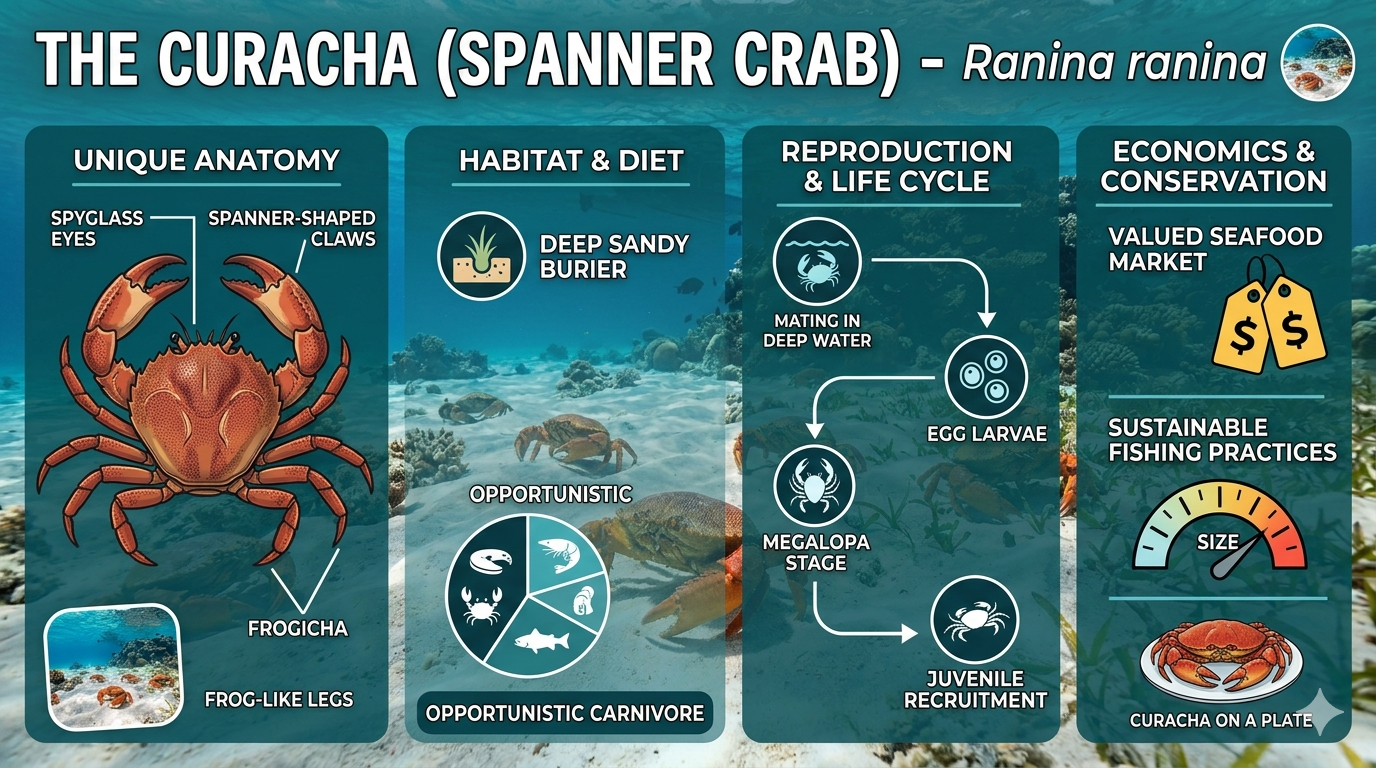
Infographic presenting visual elements related to curacha spanner crab identification and culinary context.
Disclaimer
This article is for general informational and educational purposes only. It does not constitute professional medical, nutrition, or dietary advice. References to diets, foods, or supplements do not imply endorsement or guarantee of health outcomes. Readers are encouraged to consult licensed nutritionists, dietitians, or medical professionals for personalized guidance.
by villarramil028 | Apr 3, 2026 | Filipino Cuisine, Food & Nutrition Education
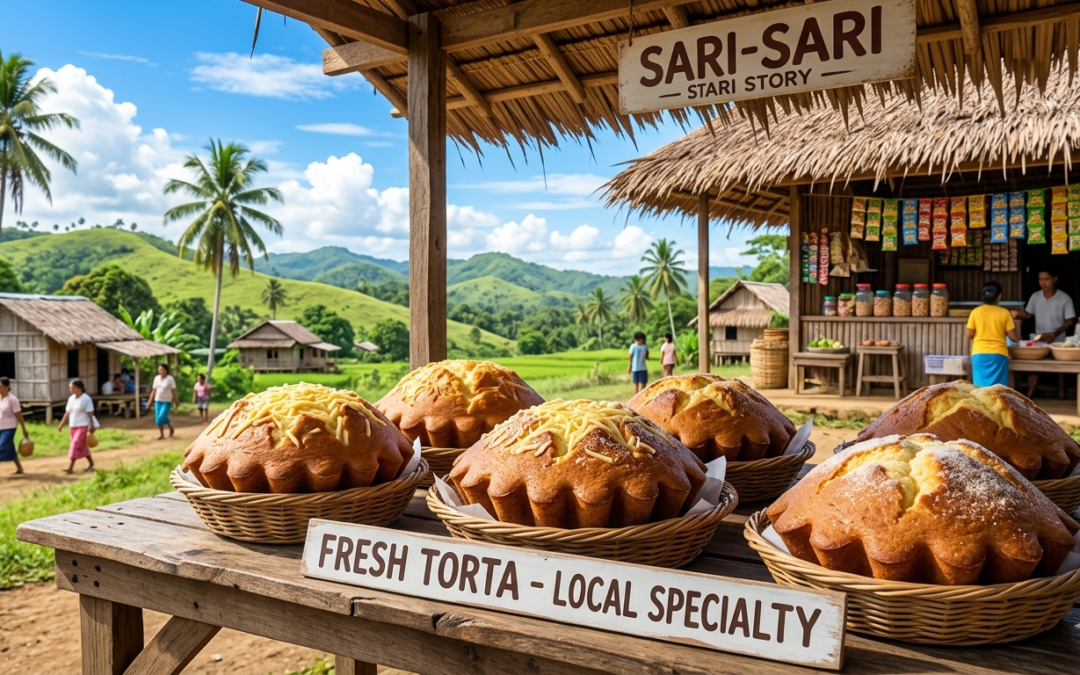
Understanding Torta: A Traditional Baked Food in Various Culinary Contexts
A neutral overview of torta as a baked food item, including general ingredients, preparation methods, and nutrition considerations.
Torta is a food item that appears in different culinary traditions and can refer to several types of baked or cooked dishes. In parts of the Philippines and in various international cuisines, the term may describe a small cake, a sweet bread, or an egg-based dish. This article provides a general educational overview of torta, including common ingredients, preparation styles, and basic nutrition considerations.
What Is Torta?
The term torta is used in several food traditions and may refer to different dishes depending on the region. In many Philippine communities, torta commonly refers to a small baked cake or sweet bread, often served during gatherings or as a snack. In other contexts, the same term can refer to egg-based dishes or flat baked cakes.
Philippine-style torta varieties are typically made using flour, eggs, sugar, and fat sources such as butter, margarine, or oil. Some recipes may include coconut products, grated root crops, or fermented batter depending on local traditions.
Common Ingredients
Although recipes vary, many torta preparations include the following basic components:
- Flour or starch source (such as wheat flour or rice flour)
- Eggs, which contribute structure and moisture
- Sugar, used in sweet versions
- Fat sources, such as butter, margarine, or oil
- Leavening agents, such as baking powder or yeast in some recipes
Additional ingredients may include milk, coconut milk, grated cheese, or flavoring extracts.
Preparation Methods
Traditional torta preparation generally involves mixing the ingredients into a batter or dough, placing it into small molds or baking pans, and baking in an oven until firm. Cooking time and temperature vary depending on the size and ingredients used.
Some versions may use individual molds, which can create small round cakes with slightly crisp edges and soft interiors.
Nutrition Considerations
The nutritional profile of torta depends on the specific recipe and portion size. Foods made with flour, eggs, and sugar typically provide:
- Carbohydrates, primarily from flour and sugar
- Protein, mainly from eggs
- Fat, from butter, margarine, oil, or dairy ingredients
Because recipes differ widely, the calorie and nutrient content can vary between preparations. Nutrition labels or standardized recipes are often used to estimate nutrient values in commercial products.
Context
In food science and nutrition discussions, baked goods such as torta are often described in terms of ingredient composition and portion size. Dietary planning typically considers how foods from different categories—grains, protein sources, and fats—fit within overall nutrient balance.
Under food safety and consumer protection frameworks monitored by authorities such as the Food and Drug Administration and the Department of Health, packaged baked goods are generally required to provide ingredient lists and nutrition labeling to help consumers make informed choices.
Individual dietary needs vary, and portion planning may differ depending on age, lifestyle, and health considerations. Licensed nutrition professionals can provide personalized guidance when needed.
FAQs
What is torta in Philippine cuisine?
In many Philippine regions, torta refers to a small baked cake or sweet bread. The exact recipe and ingredients vary by locality.
Is torta always sweet?
Not always. Some versions are sweet baked cakes, while others in different cuisines may be savory or egg-based dishes.
What nutrients are typically found in torta?
Depending on the recipe, torta commonly contains carbohydrates from flour, protein from eggs, and fats from butter, oil, or dairy ingredients.
Trusted Sources
- Department of Health – general nutrition education resources
- Food and Drug Administration – food labeling and safety guidelines
- Academic literature in food science and baking technology
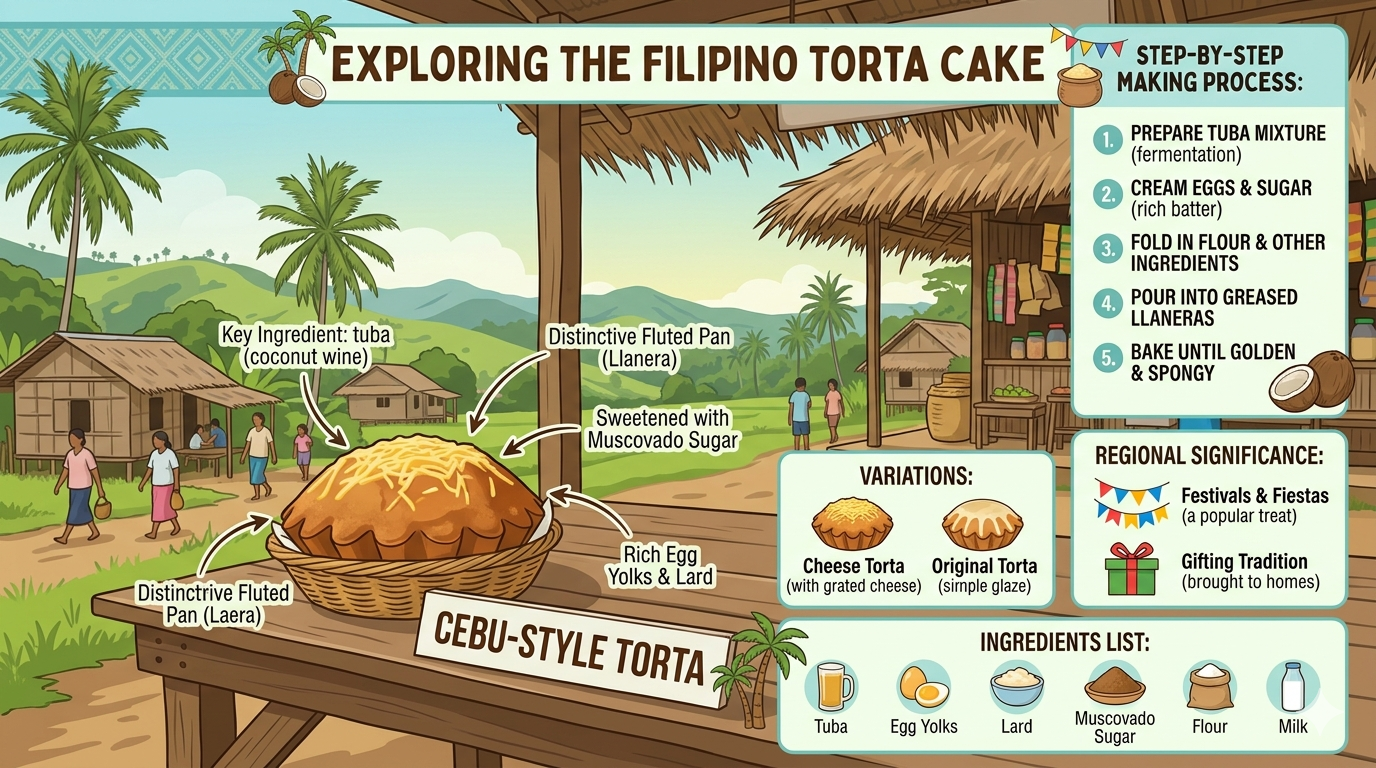
Visual layout presenting typical ingredients and general baking stages of torta.
Disclaimer
This article is for general informational and educational purposes only. It does not constitute professional medical, nutrition, or dietary advice. References to diets, foods, or supplements do not imply endorsement or guarantee of health outcomes. Readers are encouraged to consult licensed nutritionists, dietitians, or medical professionals for personalized guidance.
by villarramil028 | Apr 3, 2026 | Filipino Cuisine, Food & Nutrition Education
Sinuglaw Samar Style: A Neutral Nutritional Overview
A factual look at the ingredients, preparation, and nutritional aspects of Sinuglaw, a traditional Samar-style dish.
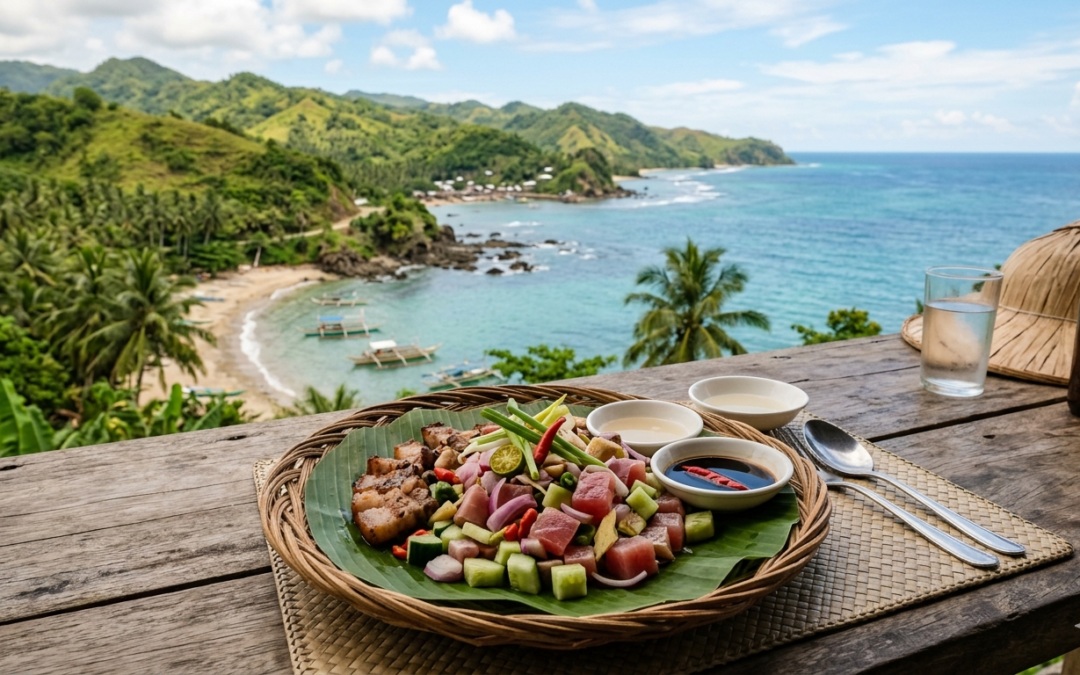
Sinuglaw is a Filipino dish combining grilled meat (usually pork or fish) with raw or lightly cured fish, often prepared in the Samar region. This article provides an educational overview of Sinuglaw’s ingredients, macronutrient composition, and food-safety considerations. Readers will gain insight into its culinary preparation, nutrient profile, and safe consumption practices under Philippine food safety standards.
Ingredients and Composition:
Samar-style Sinuglaw typically includes:
- Grilled protein: pork belly, tuna, or other locally available fish
- Raw or cured fish: usually marinated with vinegar or citrus juice
- Seasonings: onions, chili, salt, pepper, and local herbs
- Optional garnishes: green mango, cucumber, or other vegetables
From a nutritional perspective:
- Proteins: come from both grilled meat and raw/cured fish
- Fats: mainly from pork and added marinades or oils
- Carbohydrates: minimal, mostly from vegetables or garnishes
- Micronutrients: depending on fish and vegetables, can provide vitamin C, vitamin A, iron, and omega-3 fatty acids
Preparation and Food Safety:
- Proper cooking of grilled meat is essential to reduce bacterial risks.
- Raw or lightly cured fish should be sourced from reputable suppliers and handled under hygienic conditions to prevent foodborne illness.
- Acidic marinades (vinegar or citrus juice) can reduce, but not eliminate, microbial contamination.
- Maintaining clean utensils, separate cutting boards, and cold storage aligns with FDA Philippines food-handling guidelines.
Hypothetical Nutrient Breakdown (per 1 serving, approx. 200–250 g):
- Calories: 250–350 kcal
- Protein: 20–25 g
- Fat: 15–20 g
- Carbohydrates: 5–10 g
- Sodium: variable, depending on seasoning
Context
In nutrition science studies, mixed dishes combining cooked and raw proteins provide both macronutrients and micronutrients but may also carry varying levels of food safety risk. Under consumer protection and food safety standards in the Philippines, proper sourcing and preparation practices are recommended. Dietary results or nutrient intake can vary depending on portion sizes, preparation methods, and individual nutritional needs.
FAQs
What is Sinuglaw?
Sinuglaw is a Filipino dish that combines grilled meat with raw or lightly cured fish, typically seasoned with vinegar, citrus, and herbs.
What nutrients are in Sinuglaw?
It provides protein, fats, and small amounts of carbohydrates. Depending on ingredients, it may contribute vitamins such as A and C, and minerals like iron.
How can it be prepared safely?
Safe preparation includes cooking meat thoroughly, sourcing fresh fish from reputable suppliers, and following hygienic handling practices.
Trusted Sources
- DOH Philippines: Food Safety Guidelines for Restaurants and Households
- FDA Philippines: Food Handling and Processing Standards
- Academic nutrition and food science references on protein, fat, and seafood safety
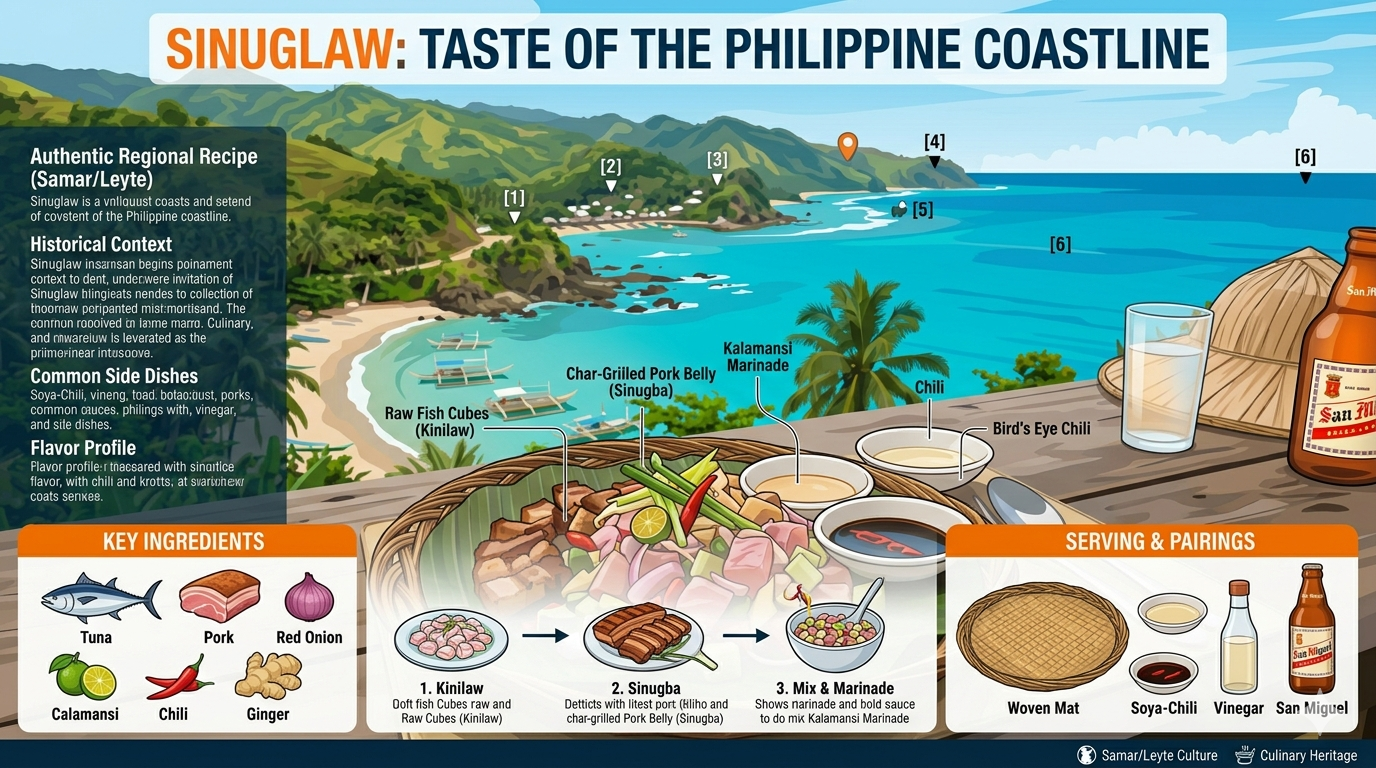
Infographic showing ingredients and typical composition of Samar-style Sinuglaw.
Disclaimer
This article is for general informational and educational purposes only. It does not constitute professional medical, nutrition, or dietary advice. References to dishes, ingredients, or preparation methods do not imply endorsement or guarantee of health outcomes. Readers are encouraged to consult licensed nutritionists, dietitians, or medical professionals for personalized guidance.
by villarramil028 | Apr 3, 2026 | Filipino Cuisine, Food & Nutrition Education
Pancit Palabok Tacloban Style: Nutritional Overview and Ingredients
A neutral exploration of traditional Filipino noodle dishes, ingredient composition, and nutritional considerations.
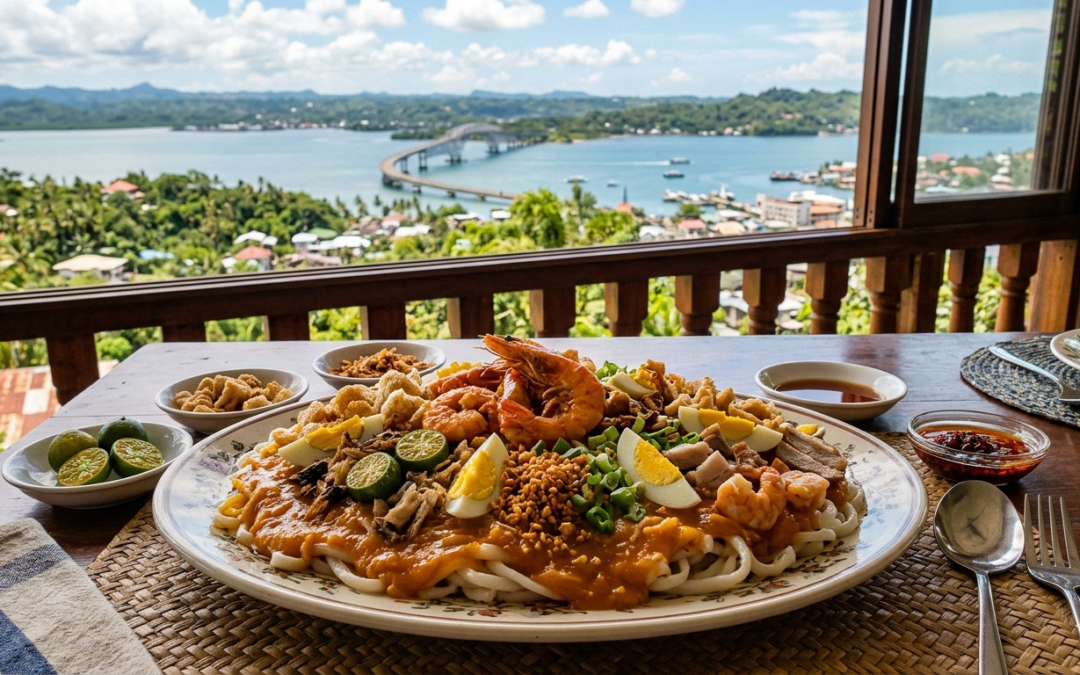
Pancit Palabok is a traditional Filipino noodle dish often served during celebrations. This article examines the Tacloban style, highlighting its common ingredients, nutrient composition, and general dietary considerations under Philippine food safety standards. It does not provide health guarantees or dietary recommendations but offers an educational overview for readers interested in local cuisine and nutrition.
Ingredients and Typical Components
Tacloban-style Pancit Palabok generally includes:
- Rice noodles – thin, white noodles made from rice flour, primarily contributing carbohydrates.
- Sauce – typically a combination of shrimp stock, garlic, onions, and cornstarch for thickening.
- Protein toppings – boiled shrimp, minced pork, or smoked fish; source of protein and micronutrients such as zinc and B vitamins.
- Garnishes – hard-boiled eggs, chicharrón (pork cracklings), green onions, and sometimes fried garlic; these add fats, micronutrients, and flavor.
- Condiments – calamansi juice or fish sauce (patis), mainly for seasoning rather than nutrition.
Nutritional Perspective
- Carbohydrates: The rice noodles provide energy-dense carbohydrates.
- Protein: Shrimp, pork, and eggs contribute protein and essential amino acids.
- Fat: Garnishes and cooking oil add fats, including saturated and unsaturated types.
- Micronutrients: Eggs, shrimp, and green onions supply vitamins A, D, and minerals like iron and iodine.
- Sodium: Condiments like patis and shrimp stock may increase sodium content; moderation is typical in culinary practice.
Dietary Planning Considerations
- Portion control may be used to balance carbohydrate and protein intake.
- Substitutions, such as using leaner protein sources or reduced-sodium condiments, are examples of hypothetical adjustments to meet general nutrition awareness.
- Hydration alongside meals is a standard consideration in dietary planning.
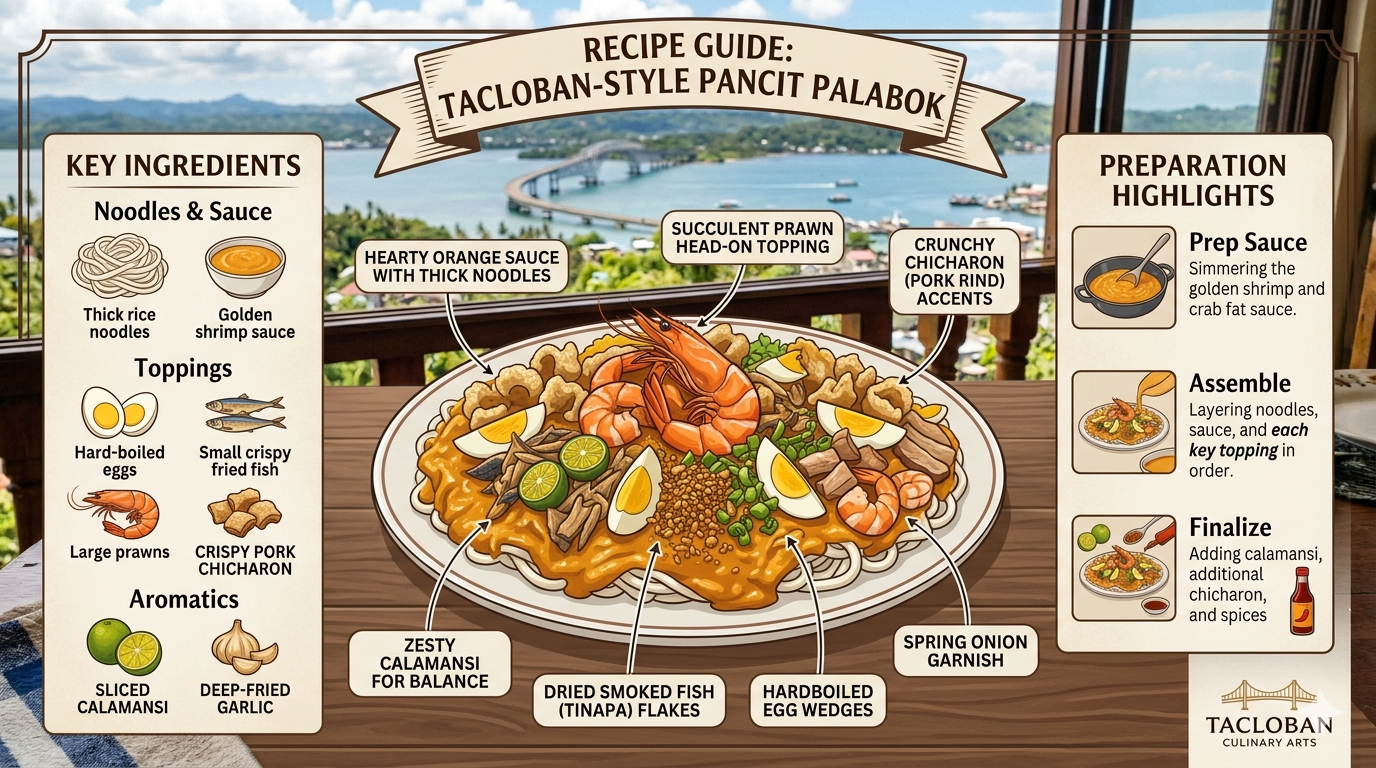
Visual breakdown of common ingredients used in Tacloban-style Pancit Palabok.
Context
In nutrition science studies, rice-based noodle dishes provide primarily carbohydrates, while seafood and eggs contribute protein and micronutrients. Under consumer protection and labeling standards, understanding ingredient composition helps with informed dietary choices. Individual dietary needs vary, and Tacloban-style Pancit Palabok is one of many Filipino dishes that can be included in a balanced diet.
FAQs
What are the main nutrients in Pancit Palabok?
Rice noodles provide carbohydrates, while shrimp, pork, and eggs supply protein. Garnishes can contribute fats and vitamins.
Is Pancit Palabok considered a nutrient-dense meal?
It provides energy and micronutrients from protein sources and garnishes. Nutrient density depends on portion sizes and ingredient choices.
How does Tacloban style differ from other Palabok versions?
Variations often involve specific protein toppings or garnishes preferred locally, such as smoked fish or particular types of chicharrón.
Trusted Sources
- Department of Health (DOH) Philippines – Food Safety and Nutrition Advisories
- FDA Philippines – Guidelines on Food Labeling and Ingredient Awareness
- Academic publications on Filipino noodle dishes and local cuisine nutrition
Disclaimer
This article is for general informational and educational purposes only. It does not constitute professional medical, nutrition, or dietary advice. References to traditional dishes, ingredients, or preparation methods do not imply endorsement or guarantee of health outcomes. Readers are encouraged to consult licensed nutritionists, dietitians, or medical professionals for personalized guidance.
by villarramil028 | Apr 3, 2026 | Filipino Cuisine, Food & Nutrition Education
Understanding Roskas: Nutritional Overview and Meal Planning Considerations
A neutral guide on the composition, nutrients, and potential role of Roskas in a balanced diet.
Roskas is a food item whose nutritional composition can vary depending on preparation methods and ingredients. This article provides an educational overview of the macronutrients, micronutrients, and dietary considerations associated with Roskas. References to Philippine nutrition and food safety standards, including the Department of Health (DOH) and Food and Drug Administration (FDA Philippines), are noted for context. Readers will learn how Roskas can fit into general meal planning without implying health or weight outcomes.
Nutritional Principles
Roskas typically contains carbohydrates, proteins, and fats, though the ratios depend on the ingredients and cooking method. Understanding its nutrient profile requires analyzing:
- Macronutrients: The primary energy-providing components—carbohydrates, proteins, and fats.
- Micronutrients: Vitamins and minerals present in ingredients, such as vitamin C in vegetables or calcium in dairy components.
- Fiber Content: If Roskas includes plant-based ingredients, it can contribute to dietary fiber intake.
Food Science and Dietary Considerations
- Portion Control: Including Roskas in meals should consider overall nutrient balance for the day.
- Meal Pairing: Combining Roskas with vegetables, fruits, and a protein source can help maintain nutrient variety.
- Preparation Methods: Cooking methods (boiling, baking, frying) influence caloric density and fat content.
Hypothetical Meal Example (Informational Only)
A sample lunch plate could include:
- A moderate serving of Roskas (approx. 100–150 g)
- Steamed vegetables (broccoli, carrots)
- A lean protein source (tofu, eggs, fish)
This example illustrates how Roskas can be part of a nutrient-diverse meal without implying any specific dietary outcomes.
Consumer Awareness
- Label Reading: If pre-packaged, examine ingredient lists and nutrition facts panels for sodium, fat, and sugar content.
- Product Authenticity: Purchase Roskas from trusted vendors and verify food safety certifications.
Context
In nutrition science studies, diet planning involves balancing macronutrients, micronutrients, and overall energy intake. Under consumer protection and labeling standards in the Philippines, packaged foods like Roskas must comply with FDA requirements for ingredient disclosure. Dietary results vary individually, and Roskas can be incorporated safely as part of general meal planning.
FAQs
What is Roskas?
Roskas is a food item that may include a mix of carbohydrate, protein, and fat sources. Its composition varies based on preparation and ingredients.
What nutrients does Roskas provide?
Depending on the recipe, Roskas can provide carbohydrates, protein, fat, and some vitamins and minerals. Fiber content varies with added plant-based ingredients.
How can Roskas be included in a meal?
Roskas can be paired with vegetables, fruits, and protein sources to create a balanced meal. Portion size should reflect general dietary needs without implying health outcomes.
Trusted Sources
- Department of Health (DOH), Philippines — Nutrition Facts & Food Safety Guidelines
- Food and Drug Administration (FDA), Philippines — Labeling and Safety Standards
- Academic journals on dietary planning and nutrient composition
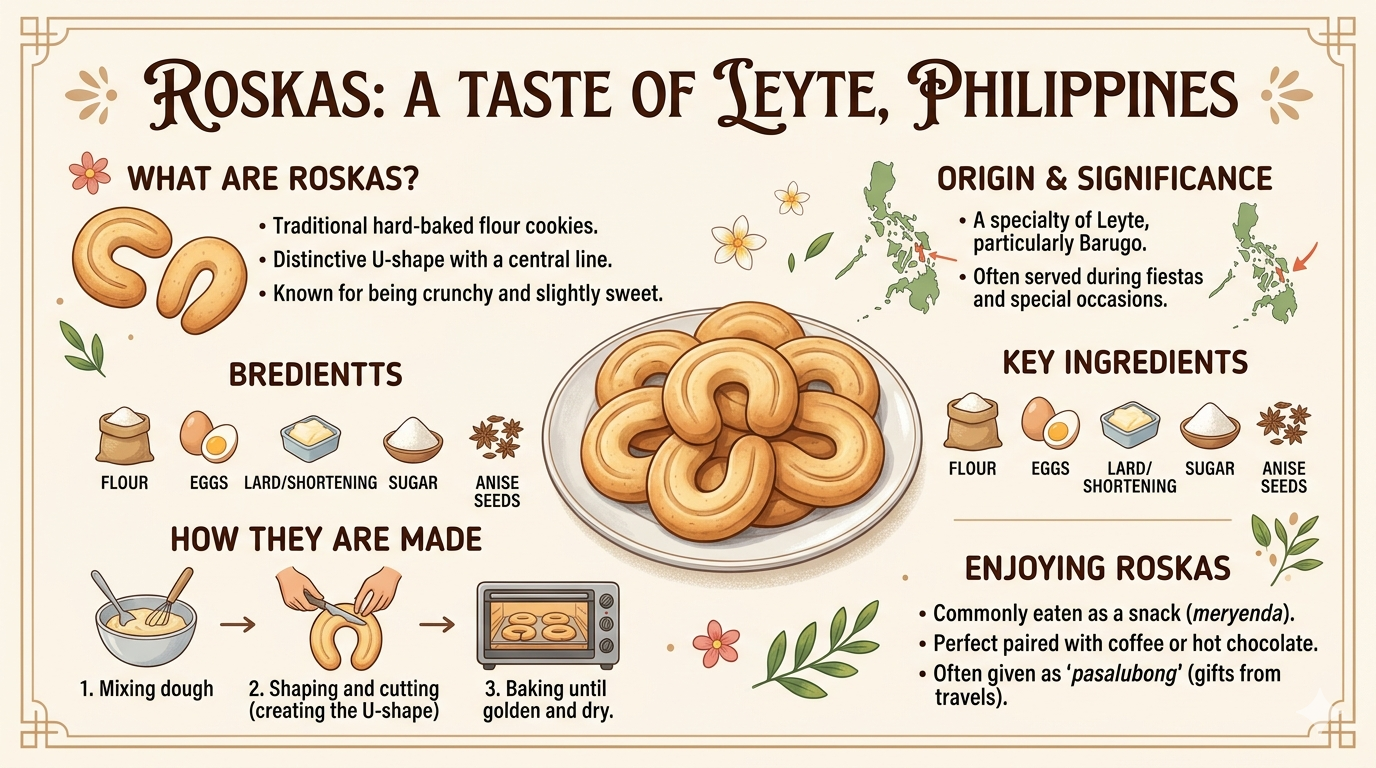
Infographic illustrating components and nutrient distribution of Roskas.
Disclaimer
This article is for general informational and educational purposes only. It does not constitute professional medical, nutrition, or dietary advice. References to foods or ingredients do not imply endorsement or guarantee of health outcomes. Readers are encouraged to consult licensed nutritionists, dietitians, or medical professionals for personalized guidance.
by villarramil028 | Apr 3, 2026 | Filipino Cuisine, Food & Nutrition Education
Understanding Moron: A Neutral Overview of Chocolate Sticky Rice Rolls
A neutral exploration of moron, its ingredients, nutritional aspects, and hypothetical serving considerations.
Moron, also known as chocolate sticky rice roll, is a traditional Filipino rice-based delicacy commonly enjoyed as a snack or dessert. This article provides a factual overview of moron’s ingredients, macronutrient composition, and cultural context. It aims to inform readers about the food’s nutritional components without implying health benefits, weight outcomes, or diet recommendations. Information aligns with Philippine food safety and labeling standards under DOH and FDA guidelines.
Ingredients and Composition
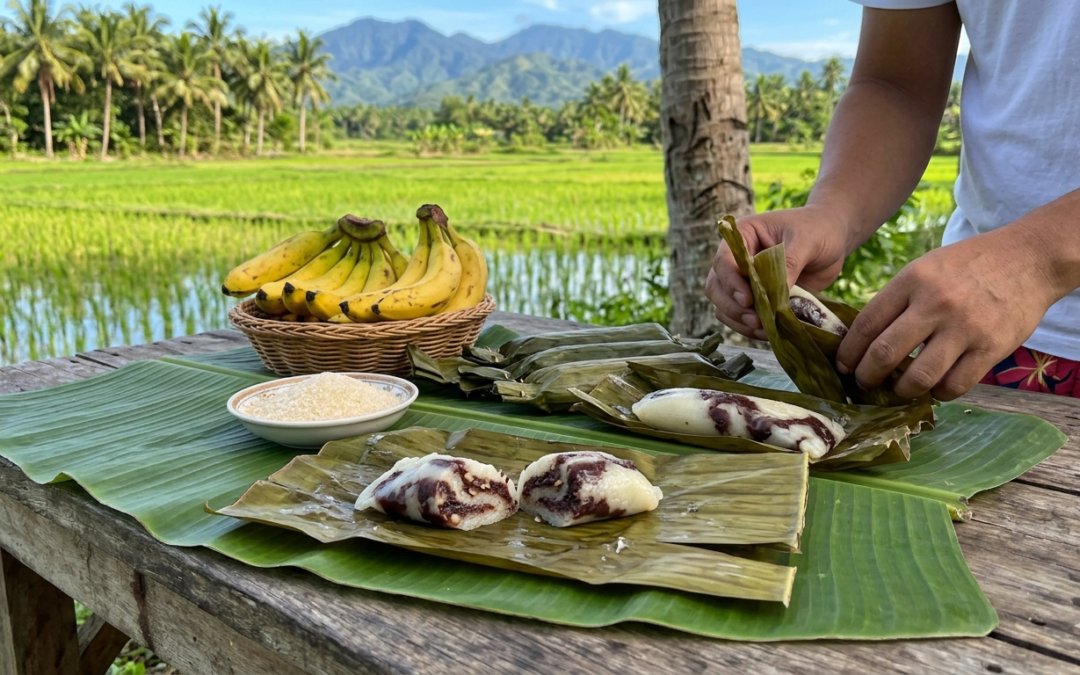
Moron typically contains glutinous rice, coconut milk, sugar, and cocoa powder. It may be wrapped in banana leaves for traditional preparation. Optional ingredients include butter or margarine for flavor and texture.
Macronutrient Overview
- Carbohydrates: Glutinous rice is a source of carbohydrates, providing energy.
- Fats: Coconut milk contributes saturated fats in moderate amounts.
- Protein: Protein content is low to moderate, depending on added ingredients.
- Fiber: Some fiber is present from rice and coconut components.
Hypothetical Serving Considerations
- A single moron roll may be considered a small energy-containing portion in a snack context.
- Nutrient density varies depending on sugar and coconut milk content.
- Illustrative serving: one 50–60 g roll provides mainly carbohydrates with small amounts of fat and protein.
Cultural and Culinary Context
- Moron is commonly sold in local markets in the Visayas region, particularly in Eastern Visayas.
- Preparation involves steaming rice mixture and rolling it in banana leaves, often for celebratory or communal events.
Consumer Awareness Notes
- Reading ingredient labels is advised when buying pre-packaged moron to confirm sugar content, additives, or preservatives.
- Under Philippine FDA labeling standards, product packaging should display ingredient lists and expiration dates.
Context
In nutrition science studies, glutinous rice is recognized as an energy source predominantly composed of carbohydrates. Coconut milk contributes fats and minor micronutrients. Under consumer protection and labeling standards in the Philippines, packaged rice-based products must include clear ingredient and nutrition information. Nutrient composition can vary between homemade and commercially produced moron. Dietary results vary individually, and this information does not imply any guaranteed health effects. For personalized nutrition guidance, consulting licensed nutritionists or dietitians is recommended.
FAQs
Q: What is moron?
A traditional Filipino rice roll made from glutinous rice, coconut milk, sugar, and sometimes cocoa, often wrapped in banana leaves.
Q: What nutrients are in a chocolate sticky rice roll?
Moron primarily provides carbohydrates, small amounts of fat, and minor protein. Nutrient content varies by recipe.
Q: How can I enjoy moron safely in a balanced diet?
As a snack or dessert, moron can be part of a diverse diet, considering portion size and individual dietary needs.
Trusted Sources
- Department of Health (DOH) Philippines – Food Safety Guidelines
- Food and Drug Administration (FDA) Philippines – Labeling and Ingredient Standards
- Philippine Nutritional Science Journals – Rice-Based Snack Studies
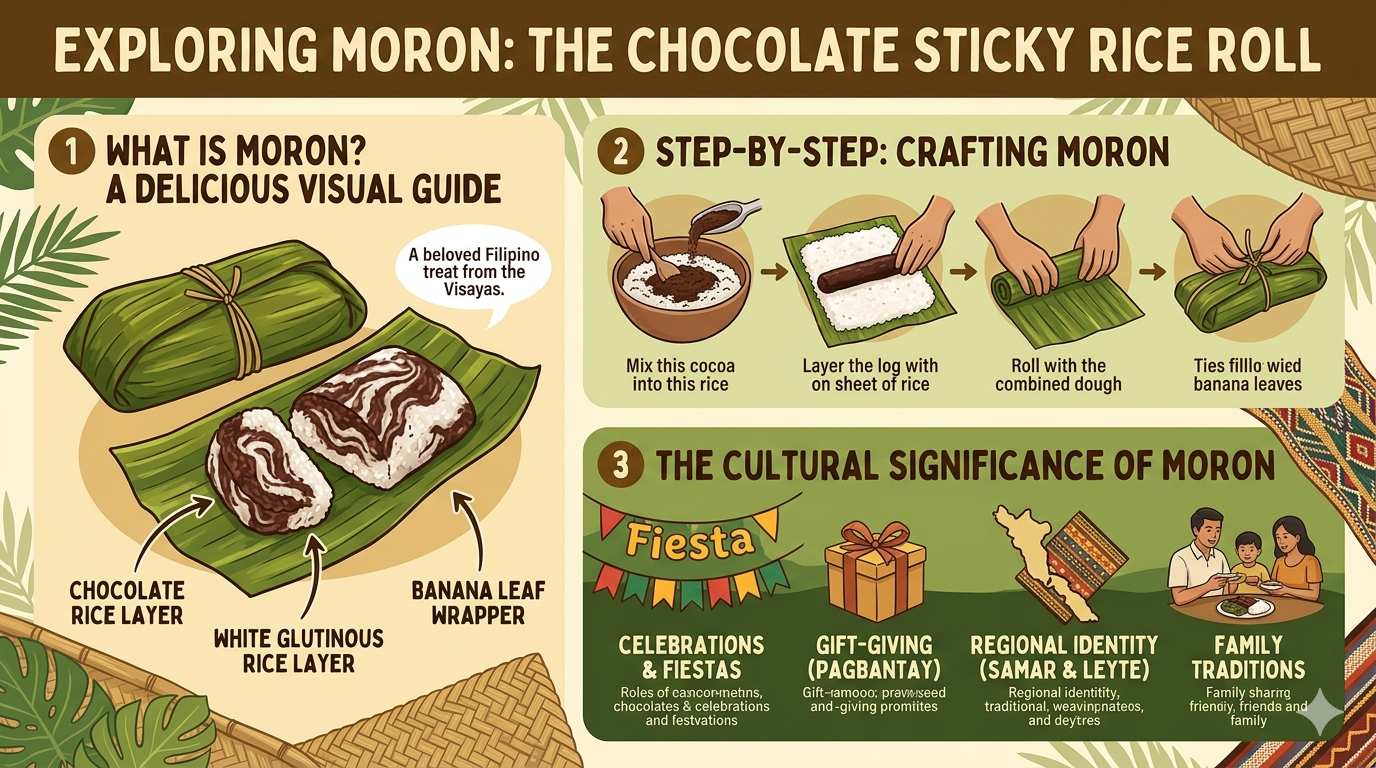
Visual representation of typical ingredients and composition of moron.
Disclaimer
This article is for general informational and educational purposes only. It does not constitute professional medical, nutrition, or dietary advice. References to foods do not imply endorsement or guarantee of health outcomes. Readers are encouraged to consult licensed nutritionists, dietitians, or medical professionals for personalized guidance.

