Understanding Roskas: Nutritional Overview and Meal Planning Considerations
A neutral guide on the composition, nutrients, and potential role of Roskas in a balanced diet.
Roskas is a food item whose nutritional composition can vary depending on preparation methods and ingredients. This article provides an educational overview of the macronutrients, micronutrients, and dietary considerations associated with Roskas. References to Philippine nutrition and food safety standards, including the Department of Health (DOH) and Food and Drug Administration (FDA Philippines), are noted for context. Readers will learn how Roskas can fit into general meal planning without implying health or weight outcomes.
Nutritional Principles
Roskas typically contains carbohydrates, proteins, and fats, though the ratios depend on the ingredients and cooking method. Understanding its nutrient profile requires analyzing:
- Macronutrients: The primary energy-providing components—carbohydrates, proteins, and fats.
- Micronutrients: Vitamins and minerals present in ingredients, such as vitamin C in vegetables or calcium in dairy components.
- Fiber Content: If Roskas includes plant-based ingredients, it can contribute to dietary fiber intake.
Food Science and Dietary Considerations
- Portion Control: Including Roskas in meals should consider overall nutrient balance for the day.
- Meal Pairing: Combining Roskas with vegetables, fruits, and a protein source can help maintain nutrient variety.
- Preparation Methods: Cooking methods (boiling, baking, frying) influence caloric density and fat content.
Hypothetical Meal Example (Informational Only)
A sample lunch plate could include:
- A moderate serving of Roskas (approx. 100–150 g)
- Steamed vegetables (broccoli, carrots)
- A lean protein source (tofu, eggs, fish)
This example illustrates how Roskas can be part of a nutrient-diverse meal without implying any specific dietary outcomes.
Consumer Awareness
- Label Reading: If pre-packaged, examine ingredient lists and nutrition facts panels for sodium, fat, and sugar content.
- Product Authenticity: Purchase Roskas from trusted vendors and verify food safety certifications.
Context
In nutrition science studies, diet planning involves balancing macronutrients, micronutrients, and overall energy intake. Under consumer protection and labeling standards in the Philippines, packaged foods like Roskas must comply with FDA requirements for ingredient disclosure. Dietary results vary individually, and Roskas can be incorporated safely as part of general meal planning.
FAQs
What is Roskas?
Roskas is a food item that may include a mix of carbohydrate, protein, and fat sources. Its composition varies based on preparation and ingredients.
What nutrients does Roskas provide?
Depending on the recipe, Roskas can provide carbohydrates, protein, fat, and some vitamins and minerals. Fiber content varies with added plant-based ingredients.
How can Roskas be included in a meal?
Roskas can be paired with vegetables, fruits, and protein sources to create a balanced meal. Portion size should reflect general dietary needs without implying health outcomes.
Trusted Sources
- Department of Health (DOH), Philippines — Nutrition Facts & Food Safety Guidelines
- Food and Drug Administration (FDA), Philippines — Labeling and Safety Standards
- Academic journals on dietary planning and nutrient composition
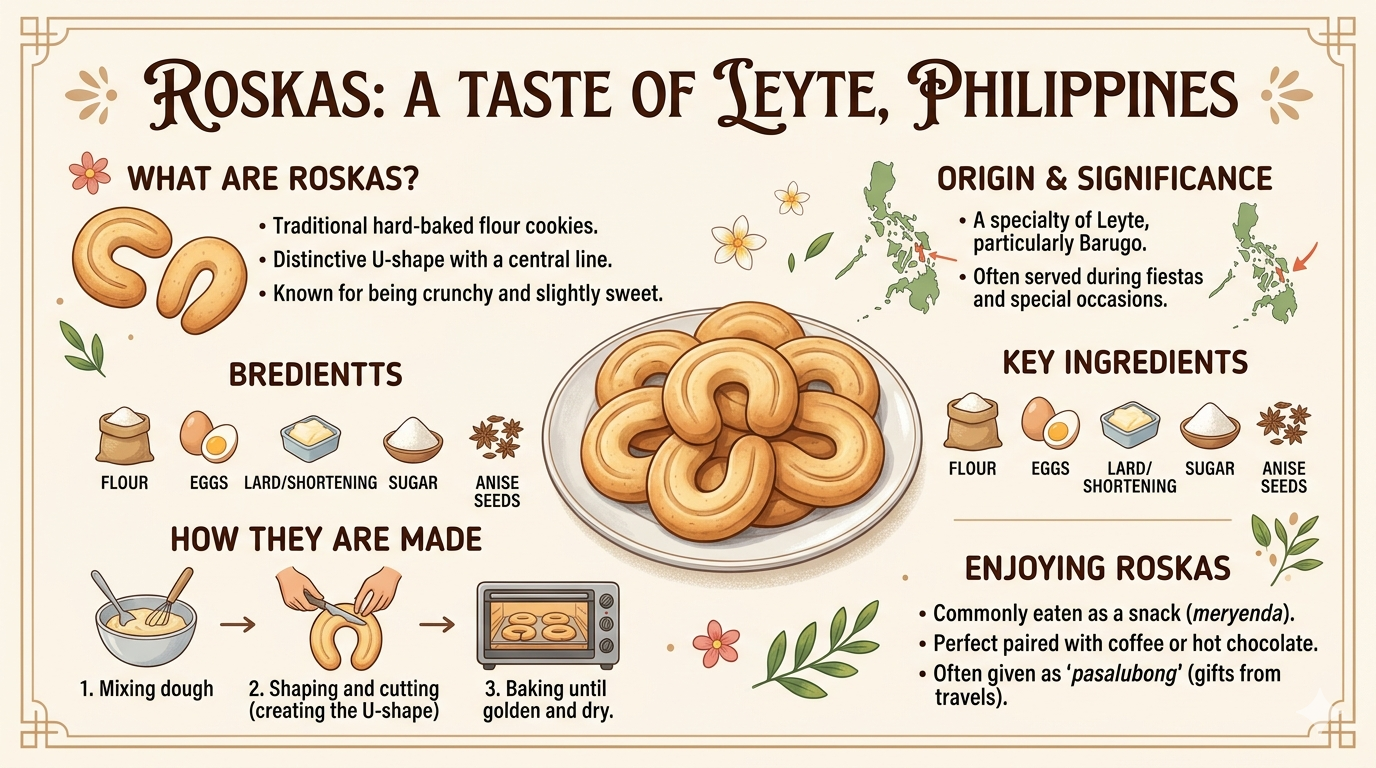
Infographic illustrating components and nutrient distribution of Roskas.
Disclaimer
This article is for general informational and educational purposes only. It does not constitute professional medical, nutrition, or dietary advice. References to foods or ingredients do not imply endorsement or guarantee of health outcomes. Readers are encouraged to consult licensed nutritionists, dietitians, or medical professionals for personalized guidance.