Chicharon Bulacan: An Educational Overview of a Traditional Filipino Food
Understanding its ingredients, preparation, and nutritional considerations
Chicharon Bulacan is a well-known Filipino food product originating from the province of Bulacan. This article provides a neutral, educational overview of its composition, preparation methods, and general nutrition considerations within the context of Philippine food standards and consumer awareness.
What Is Chicharon Bulacan?
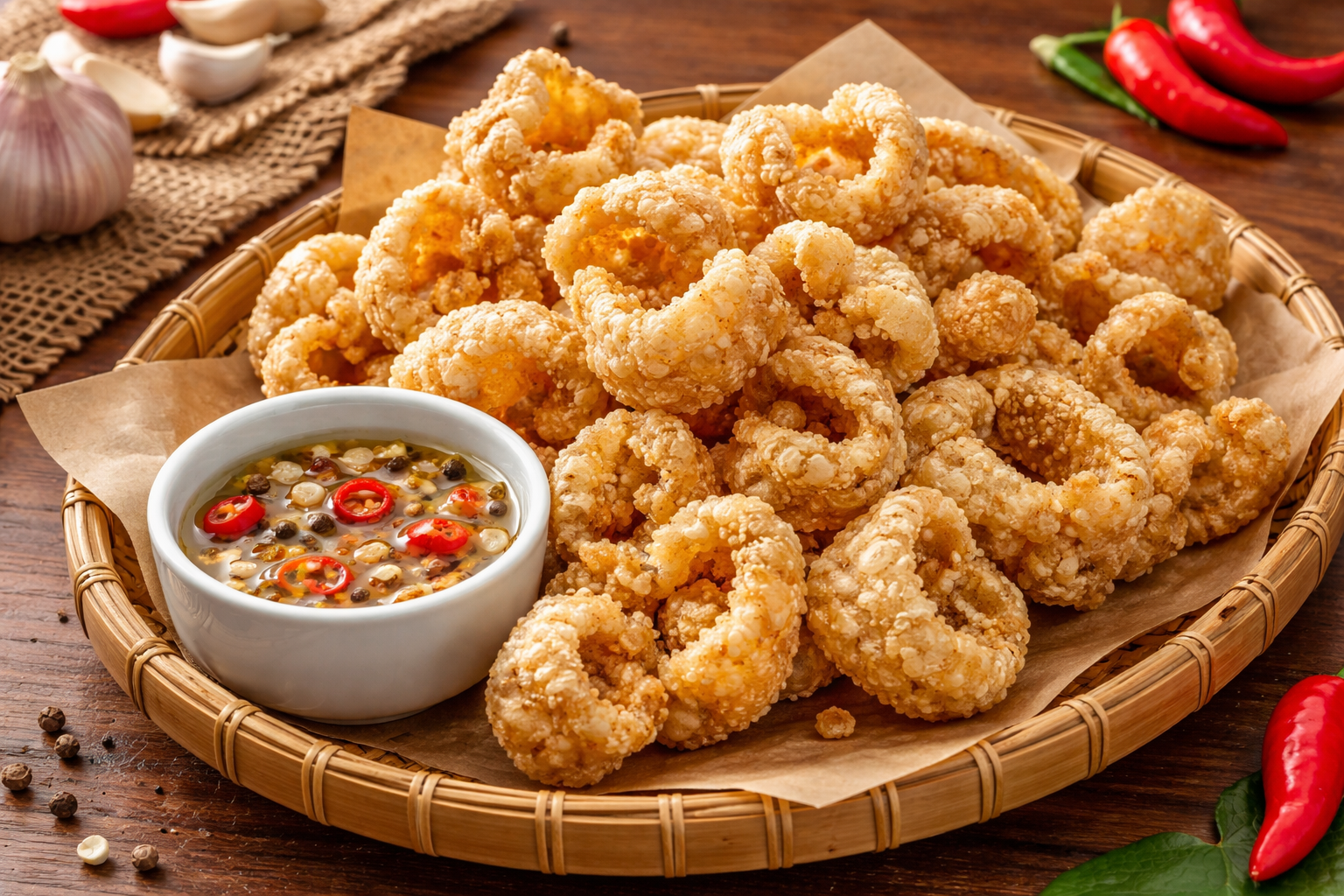
Chicharon Bulacan refers to deep-fried pork rinds that are typically seasoned with salt. It is commonly consumed as a snack or paired with dishes such as rice meals or vinegar-based dips.
Traditional preparation involves:
- Cleaning and boiling pork skin
- Drying the skin
- Deep-frying until it becomes crisp
The product is widely available in local markets and packaged forms.
Nutritional Composition
Chicharon is primarily composed of:
- Fat – due to the frying process
- Protein – derived from pork skin
- Sodium – depending on added salt or seasoning
It is considered an energy-dense food, meaning it contains a relatively high number of calories per serving.
Portin and Consumption Context
In general nutrition education, foods that are high in fat and sodium are often consumed in moderation as part of a varied diet. Portion sizes and frequency of intake can vary depending on individual dietary patterns.
Chicharon is typically eaten:
- As an occasional snack
- In small portions alongside meals
- With condiments such as vinegar
No specific intake level applies universally.
Food Safety and Label Awareness
Under Philippine food safety and consumer protection regulations:
- Packaged chicharon products should display ingredient lists and nutrition labels
- Consumers are encouraged to check manufacturing and expiration dates
- Storage conditions (e.g., keeping the product sealed and dry) help maintain quality
For unpackaged or locally sold products, buyers may consider sourcing from vendors that follow proper food handling practices.
Context
In nutrition science discussions, traditional foods like chicharon are part of cultural dietary patterns. Balanced eating typically involves a variety of food groups, including vegetables, fruits, grains, and protein sources.
Individual dietary needs differ, and food choices may be adjusted based on personal preferences, lifestyle, and professional guidance.
FAQs
What is Chicharon Bulacan made of?
It is made primarily from pork skin that is boiled, dried, and deep-fried. Salt or other seasonings may be added.
Is chicharon considered a high-fat food?
Yes. Due to deep-frying, it contains a significant amount of fat compared to many other snack foods.
How is chicharon usually eaten?
It is commonly eaten as a snack or paired with meals, often with vinegar or other dipping sauces.
Trusted Sources
- Department of Health (DOH) Philippines – General nutrition guidance
- Food and Drug Administration (FDA Philippines) – Food safety and labeling regulations
- Food and Nutrition Research Institute (FNRI-DOST) – Philippine food composition data
- World Health Organization (WHO) – Healthy diet resources
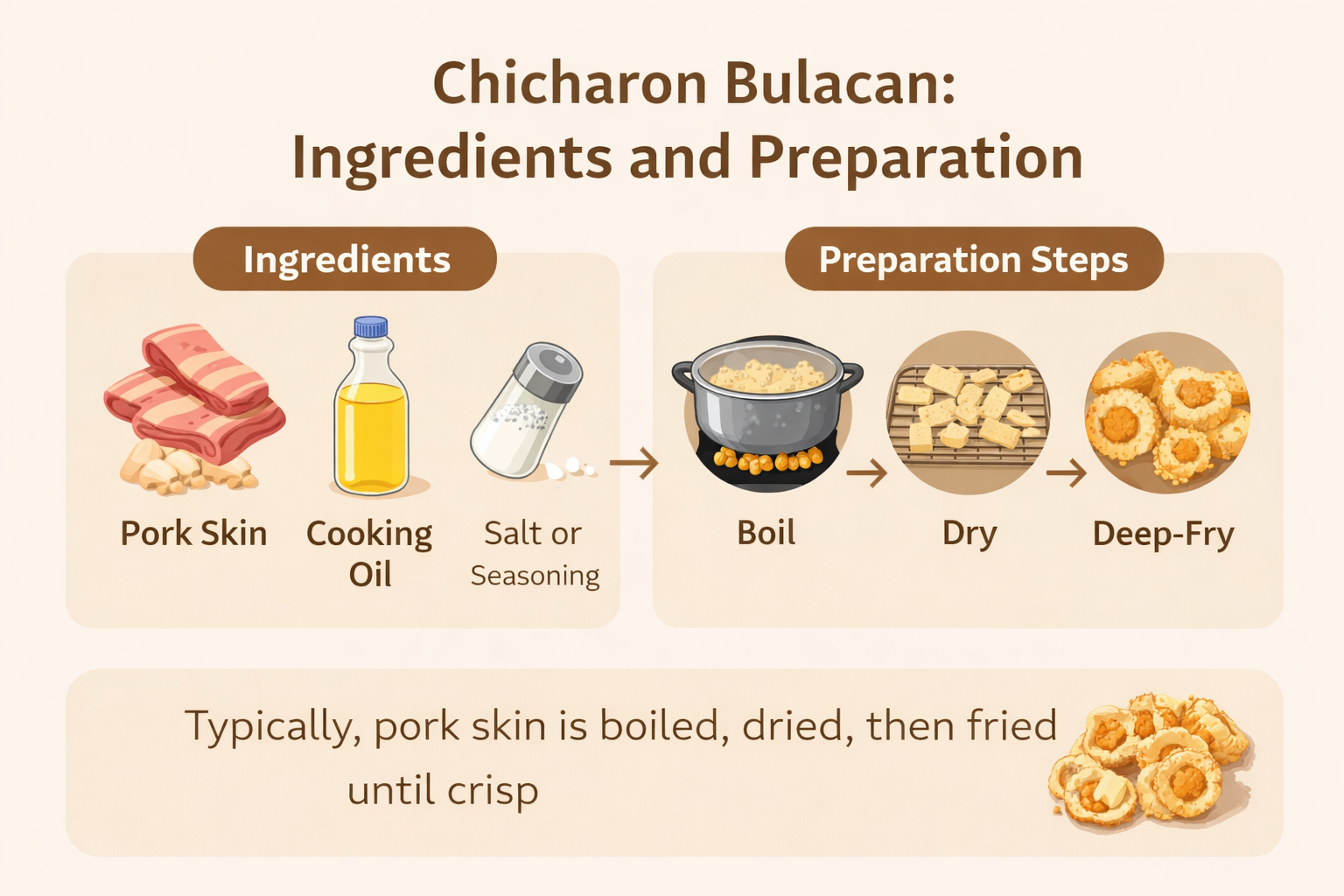
Visual breakdown of ingredients and preparation steps
Disclaimer
This article is for general informational and educational purposes only. It does not constitute professional medical, nutrition, or dietary advice. References to diets, foods, or supplements do not imply endorsement or guarantee of health outcomes. Readers are encouraged to consult licensed nutritionists, dietitians, or medical professionals for personalized guidance.