Understanding Laing: A Nutritional Overview of a Traditional Bicol Dish
A neutral guide to the ingredients, nutrients, and dietary considerations of Laing.
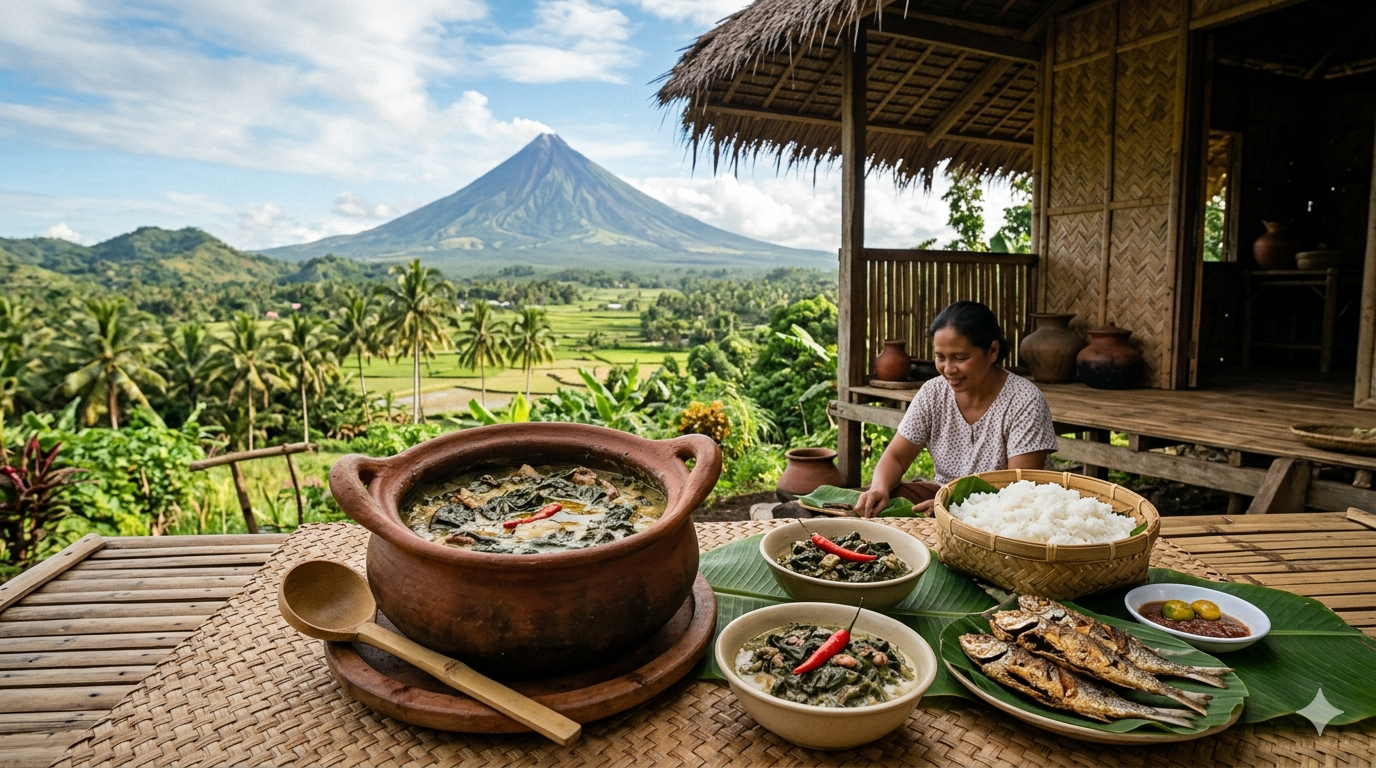
Laing is a traditional dish from the Bicol region of the Philippines, typically made from dried taro leaves cooked in coconut milk with chili and spices. Under Philippine nutrition and consumer protection standards, understanding Laing’s composition can help individuals make informed choices about its inclusion in meals. This article outlines Laing’s common ingredients, macronutrient and micronutrient content, and safe dietary considerations.
Ingredients and Nutritional Components
- Taro Leaves: Source of dietary fiber, vitamins A and C, and minerals such as calcium and iron. Taro leaves must be properly cooked to reduce natural compounds that can cause irritation if consumed raw.
- Coconut Milk: Provides dietary fats, including medium-chain triglycerides (MCTs), which contribute to caloric intake. It also contains small amounts of minerals like potassium and magnesium.
- Chili Peppers: Contain capsaicin, vitamin C, and antioxidants. Spiciness varies by recipe.
- Seasonings (garlic, onion, shrimp paste): Add flavor and micronutrients, but sodium content should be considered for individuals monitoring salt intake.
Nutrient Profile
A typical serving (100g) of Laing may contain:
- Calories: 120–150 kcal
- Carbohydrates: 5–8 g
- Protein: 2–4 g
- Fat: 10–12 g (mainly from coconut milk)
- Fiber: 2–3 g
- Vitamins and Minerals: Vitamin A, Vitamin C, Calcium, Iron
These values can vary based on preparation method, portion size, and ingredient ratios.
Safe Dietary Considerations
- Cooking Safety: Taro leaves should be thoroughly cooked to neutralize naturally occurring oxalates.
- Portion Awareness: Coconut milk is high in saturated fat; moderate portioning may help manage overall fat intake.
- Allergen Awareness: Some recipes include shrimp paste; individuals with seafood allergies should check ingredients.
- Balanced Meal Planning: Pairing Laing with lean protein sources and complex carbohydrates can contribute to a nutrient-balanced meal.
Context
In nutrition science studies, leafy vegetables like taro leaves are recognized for their contribution to vitamins, minerals, and dietary fiber. Under Philippine consumer protection and labeling standards, awareness of ingredients, cooking methods, and potential allergens supports safe consumption. Dietary results vary individually, and readers are encouraged to consult licensed nutrition or medical professionals for personalized guidance.
FAQs
What is Laing?
Laing is a traditional Bicolano dish made from dried taro leaves cooked in coconut milk with spices.
What nutrients are found in Laing?
Laing contains dietary fiber, fat from coconut milk, protein, and vitamins A and C, as well as minerals like calcium and iron.
Are there any safety considerations?
Yes. Taro leaves must be cooked thoroughly to reduce natural compounds, and individuals with seafood allergies should be cautious if shrimp paste is used.
Trusted Sources
- Department of Health (DOH Philippines) – Leafy Vegetables and Safe Preparation Guidelines
- Food and Nutrition Research Institute (FNRI) – Philippine Food Composition Tables
- FDA Philippines – Food Labeling and Consumer Awareness Resources
- Peer-reviewed nutrition journals on tropical leafy vegetables and coconut milk
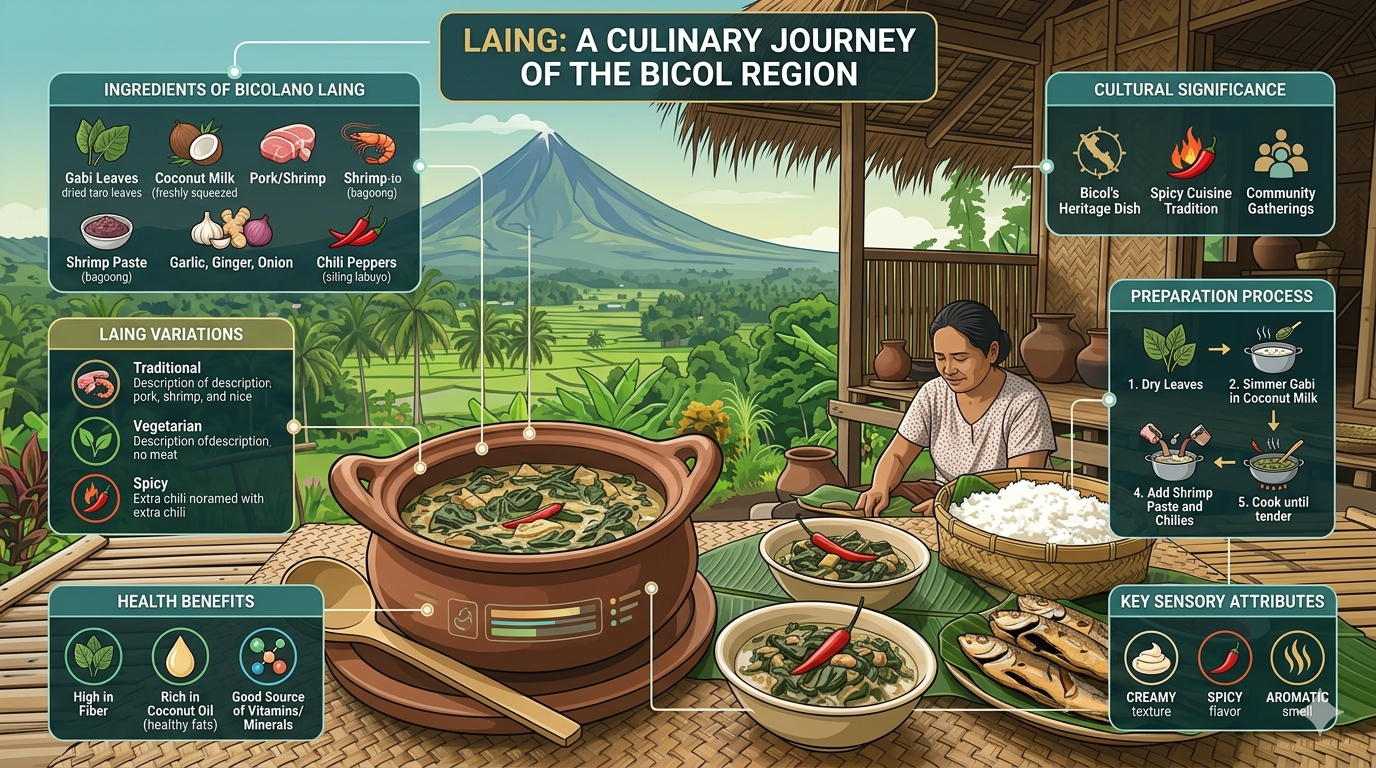
Illustration of Laing’s ingredients and nutritional components.
Disclaimer
This article is for general informational and educational purposes only. It does not constitute professional medical, nutrition, or dietary advice. References to foods or dishes do not imply endorsement or guarantee of health outcomes. Readers are encouraged to consult licensed nutritionists, dietitians, or medical professionals for personalized guidance.