
Tocino Kapampangan: Educational Overview of a Traditional Filipino Food
A neutral look at ingredients, preparation, and nutritional considerations
Tocino Kapampangan refers to a traditional Filipino cured meat dish associated with the culinary heritage of Pampanga. It is commonly prepared using pork and is known for its sweet and savory flavor profile. This article explains its basic composition, preparation methods, and general nutritional considerations within the context of food safety and consumer awareness in the Philippines.
What Is Tocino Kapampangan?
Tocino is a type of cured meat that is typically marinated in a mixture of sugar, salt, and spices. The Kapampangan version is often associated with regional cooking practices that emphasize balanced seasoning and preservation techniques.
Common Ingredients
- Pork (often sliced into thin pieces)
- Sugar
- Salt
- Garlic
- Food coloring (optional, depending on preparation)
The curing process allows the meat to absorb flavor and extends its shelf life when stored properly.
Preparation and Cooking Methods
Tocino is usually prepared by marinating pork for several hours or longer under refrigerated conditions. After curing, it is commonly cooked by:
- Pan-frying with minimal added oil
- Simmering in its own marinade until cooked through
Proper cooking is important to ensure food safety, particularly for meat products.
Nutritional Composition
Tocino Kapampangan contains a mix of macronutrients:
- Protein from pork
- Fat from the meat and cooking process
- Carbohydrates mainly from added sugar in the marinade
Because of the curing process, it may also contain higher levels of sodium. Nutrient content can vary depending on preparation methods and ingredient proportions.
Meal Context and Serving Practices
Tocino is often served as part of a traditional Filipino breakfast, sometimes paired with rice and eggs. In meal planning, it may be combined with:
- Rice (source of carbohydrates)
- Eggs (additional protein)
- Vegetables or fruits (for dietary variety)
Portion size and frequency of consumption may vary depending on individual dietary patterns.
Consumer Awareness and Food Labeling
For commercially available tocino products, Philippine food safety regulations require labeling that includes:
- Ingredient list
- Nutrition information (if applicable)
- Expiration or best-before date
- Manufacturer or distributor details
Consumers are encouraged to review labels and storage instructions. Claims on packaging should be interpreted as manufacturer-provided information.
Context and Considerations
In food science, cured meats are prepared using preservation methods that involve salt and sometimes sugar. These processes influence both flavor and shelf stability.
Under Philippine food safety standards, proper handling, storage, and cooking of meat products are important to reduce foodborne risks. Dietary patterns involving processed or cured foods are typically discussed in moderation within general nutrition frameworks.
Individual dietary needs may vary. Consultation with qualified nutrition professionals may provide personalized guidance.
FAQ
What is tocino made of?
Tocino is typically made from pork that has been cured with sugar, salt, and spices.
Why is tocino sweet?
The sweetness comes from added sugar in the curing process.
Is tocino considered processed food?
Yes, tocino is generally classified as a processed or cured meat due to its preparation method.
Trusted Sources
- Department of Health (DOH) Philippines
- Food and Drug Administration (FDA) Philippines
- Food safety and nutrition guidelines from academic food science references
- World Health Organization (WHO) resources on processed foods
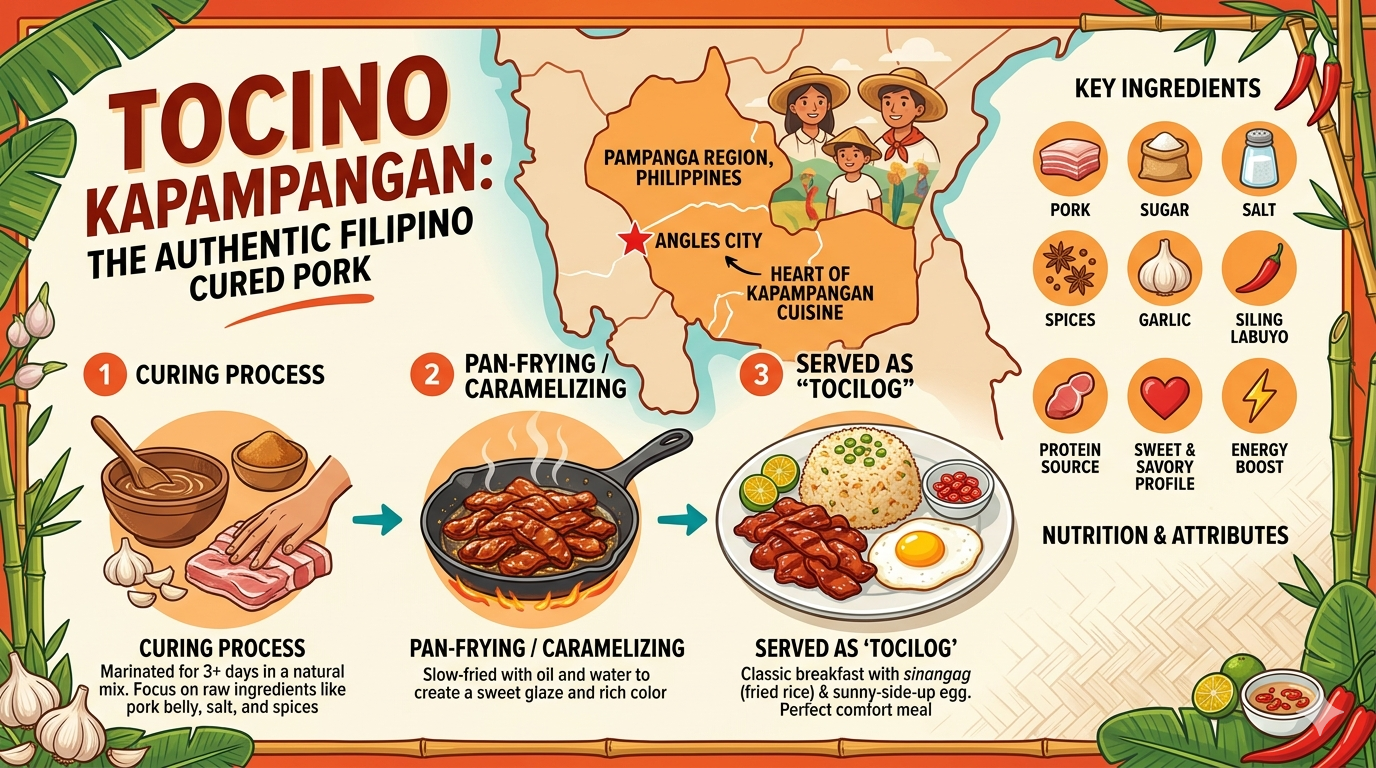
Infographic showing ingredients and preparation stages of tocino
Disclaimer
This article is for general informational and educational purposes only. It does not constitute professional medical, nutrition, or dietary advice. References to foods or preparation methods do not imply endorsement or guarantee of health outcomes. Readers are encouraged to consult licensed nutritionists, dietitians, or medical professionals for personalized guidance.