Tamales Kapampangan: An Educational Overview of a Traditional Filipino Dish
A neutral look at ingredients, preparation, and nutritional components
This article provides an educational overview of Tamales Kapampangan, a traditional dish from Pampanga, Philippines. It explains typical ingredients, preparation methods, and general nutritional components. The discussion aligns with food safety and labeling awareness principles under the Department of Health (DOH) and Food and Drug Administration (FDA) Philippines.
What Is Tamales Kapampangan?
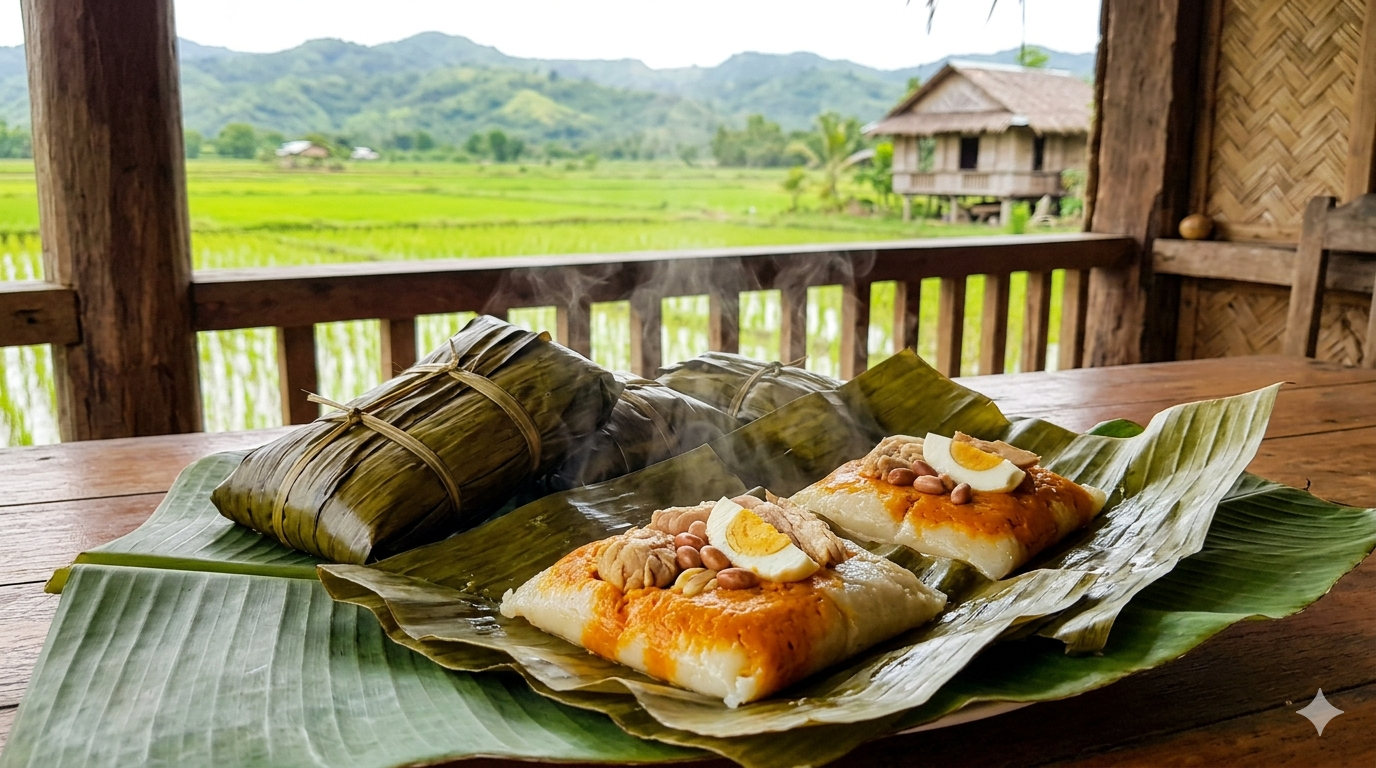
Tamales Kapampangan is a Filipino dish made from a rice-based mixture combined with savory ingredients. Despite sharing a name with Latin American tamales, its preparation and flavor profile are distinct and reflect local culinary practices in Pampanga.
It is commonly prepared during holidays and gatherings and is typically wrapped in banana leaves.
Common Ingredients
The dish usually includes:
- Rice flour or ground rice
- Coconut milk
- Chicken or pork
- Hard-boiled eggs
- Peanuts or peanut-based sauce
- Garlic, onions, and seasonings
- Banana leaves (for wrapping)
Ingredient combinations may vary depending on household or regional preferences.
Basic Preparation Process (General Overview)
Preparation often involves:
- Cooking a rice-based batter with coconut milk
- Preparing a savory filling (meat, eggs, sauce)
- Wrapping portions in banana leaves
- Steaming or simmering until fully cooked
This process reflects traditional cooking techniques used in many Filipino dishes.
Nutritional Components (General)
Tamales Kapampangan contains a mix of macronutrients:
- Carbohydrates: Primarily from rice flour
- Protein: From meat and eggs
- Fats: From coconut milk and peanuts
It may also provide small amounts of vitamins and minerals depending on the ingredients used. Portion size and preparation method influence the overall nutritional profile.
Food Safety and Storage Considerations
Under Philippine food safety practices:
- Cooked tamales are typically consumed fresh or stored under refrigeration
- Proper reheating is recommended before consumption
- Clean food handling and preparation help reduce contamination risks
Context
In Philippine culinary traditions, dishes like Tamales Kapampangan are part of cultural heritage and are often prepared for special occasions. From a nutrition perspective, such dishes are usually considered within the broader context of total daily food intake.
Under consumer and food safety standards, understanding ingredients and preparation methods supports informed dietary awareness. Individual dietary needs vary, and traditional foods can be incorporated into different eating patterns depending on portion and frequency.
FAQs
What makes Tamales Kapampangan different from other tamales?
Tamales Kapampangan uses rice flour and coconut milk, with savory fillings, and is wrapped in banana leaves. Its flavor and preparation differ from Latin American versions.
What nutrients are found in Tamales Kapampangan?
It generally contains carbohydrates, protein, and fats from its main ingredients. The exact nutrient content depends on the recipe.
Is Tamales Kapampangan a complete meal?
It can contain multiple food components, but whether it functions as a complete meal depends on portion size and overall dietary context.
Trusted Sources
- Department of Health (DOH) Philippines – Food Safety Guidelines
- Food and Drug Administration (FDA) Philippines – Safe Food Handling
- National Commission for Culture and the Arts (NCCA) – Filipino Food Heritage Resources
- Academic food science and nutrition publications
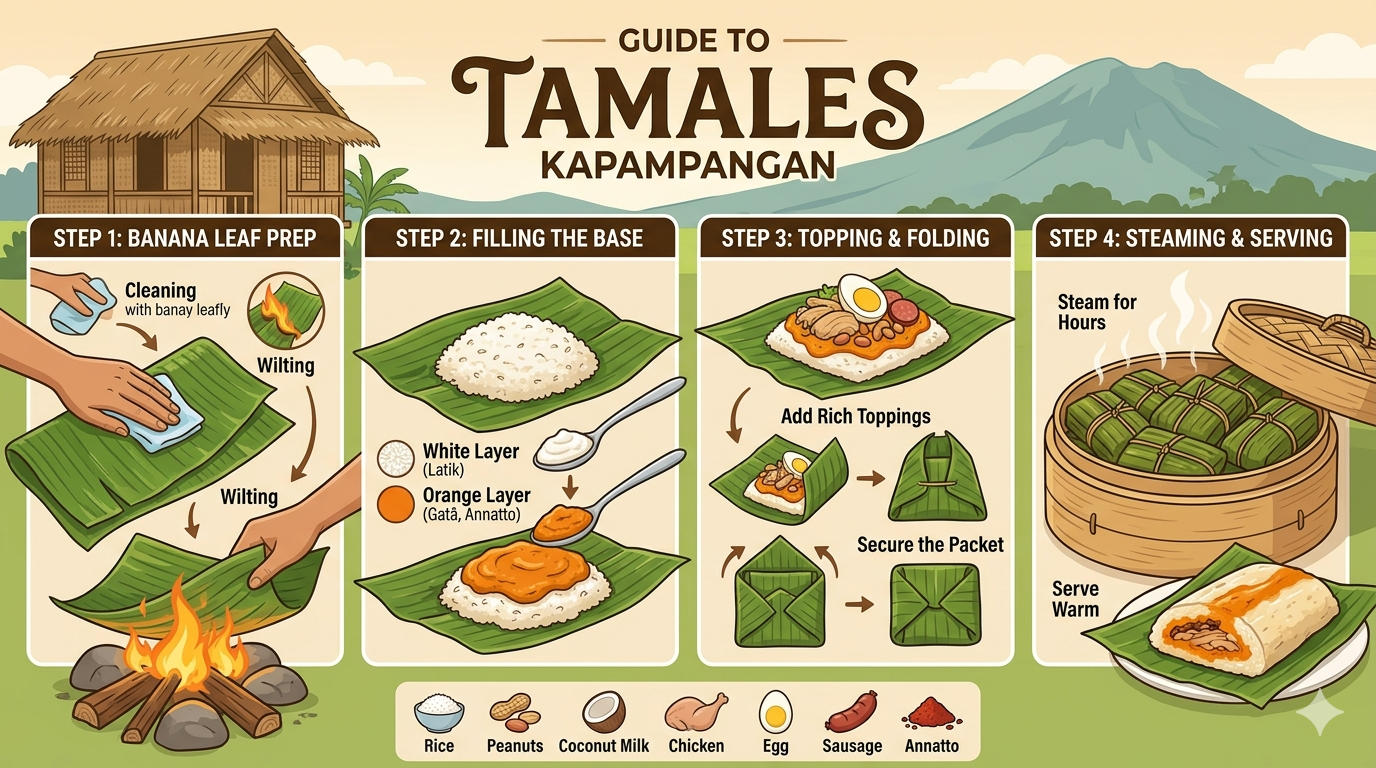
Visual outline of Tamales Kapampangan components and preparation steps
Disclaimer
This article is for general informational and educational purposes only. It does not constitute professional medical, nutrition, or dietary advice. References to foods or preparation methods do not imply endorsement or guarantee of health outcomes. Readers are encouraged to consult licensed nutritionists, dietitians, or medical professionals for personalized guidance.