Lomi Batangas: An Educational Overview of a Regional Filipino Dish
Understanding its ingredients, nutritional components, and dietary context
Lomi Batangas is a regional noodle dish commonly associated with the province of Batangas in the Philippines. It is known for its thick broth and hearty ingredients. From a nutrition perspective, this article explains its typical components, general nutrient profile, and how it may fit into a balanced dietary pattern under Philippine food and consumer awareness standards.
What Is Lomi Batangas?
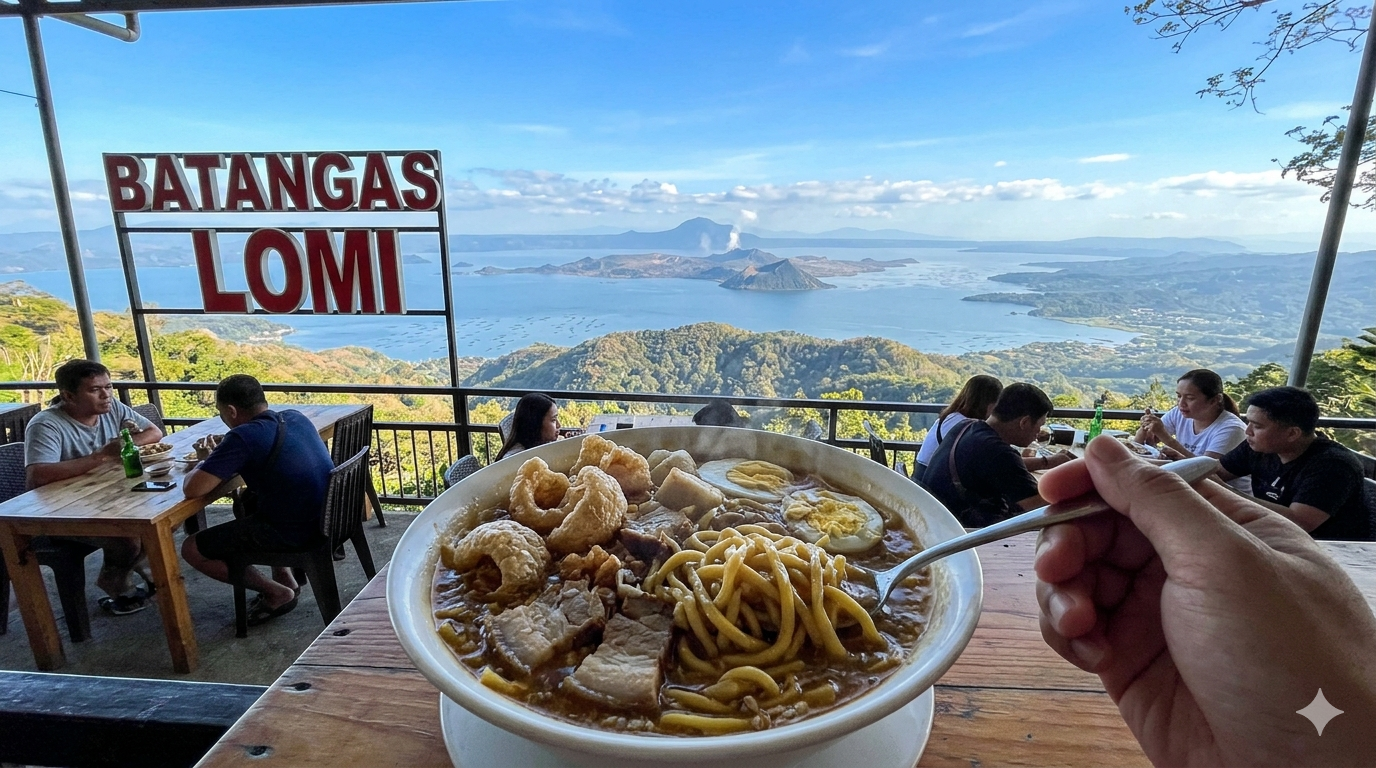
Lomi Batangas is a noodle soup dish traditionally prepared using thick egg noodles, a rich broth, and a variety of toppings. The broth is often thickened using starch, giving it a distinct texture compared to other Filipino noodle dishes.
Common ingredients may include:
- Egg noodles (lomi noodles)
- Pork, chicken, or seafood
- Liver (in some variations)
- Vegetables such as cabbage or carrots
- Garlic, onions, and seasonings
- Egg (sometimes added to the broth)
Preparation methods and ingredient combinations can vary depending on local practices.
Nutritional Components
The nutritional profile of Lomi Batangas depends on its ingredients and portion size. Generally, it contains:
Macronutrients:
- Carbohydrates from noodles
- Protein from meat, eggs, or seafood
- Fats from cooking oil and animal-based ingredients
Micronutrients:
- Iron and B vitamins from meat and liver
- Vitamins from vegetables
- Sodium from broth and seasonings
Because of the broth and added ingredients, sodium content may vary depending on preparation.
Food Group Representation
Lomi Batangas can include several food groups:
- Grains (noodles)
- Protein sources (meat, egg, seafood)
- Vegetables (depending on recipe)
- Fats and oils (used in cooking)
The proportion of each group may differ based on serving style and recipe variation.
Hypothetical Serving Context
A typical serving of Lomi Batangas may be consumed as:
- A main meal due to its combination of carbohydrates and protein
- A shared dish in group dining settings
- A warm meal during cooler weather or rainy seasons
Portion size and frequency of consumption vary among individuals.
Consumer Awareness and Food Safety
Under Philippine food safety and consumer protection frameworks:
- Ingredients used in food preparation should follow hygiene and handling standards
- Street food and local eateries are subject to local government sanitation regulations
- Consumers may consider visible preparation practices when choosing where to eat
For packaged or instant lomi products, labeling should include:
- Ingredient list
- Nutrition information (if applicable)
- Manufacturer or distributor details
Context
In nutrition science discussions, traditional dishes like Lomi Batangas are often viewed as part of cultural dietary patterns. Their nutritional contribution depends on ingredient composition and preparation methods.
Dietary intake varies widely across individuals. Including a variety of foods from different groups is a commonly referenced principle in general nutrition guidance.
For personalized dietary considerations, consulting licensed nutrition professionals may provide more specific guidance.
FAQs
What is Lomi Batangas made of?
Lomi Batangas typically includes thick egg noodles, meat or seafood, vegetables, and a starch-thickened broth. Ingredients vary depending on preparation.
Is Lomi Batangas considered a complete meal?
It can contain carbohydrates, protein, and some vegetables, which may represent multiple food groups. The exact nutritional balance depends on the ingredients used.
Why is Lomi Batangas broth thick?
The broth is often thickened using starch, which gives it a heavier consistency compared to clear soups.
Trusted Sources
- Department of Health (Philippines) – General nutrition guidelines
- Food and Drug Administration (Philippines) – Food safety and labeling standards
- Local Government Unit (LGU) food safety and sanitation regulations
- Academic resources on Filipino cuisine and food science
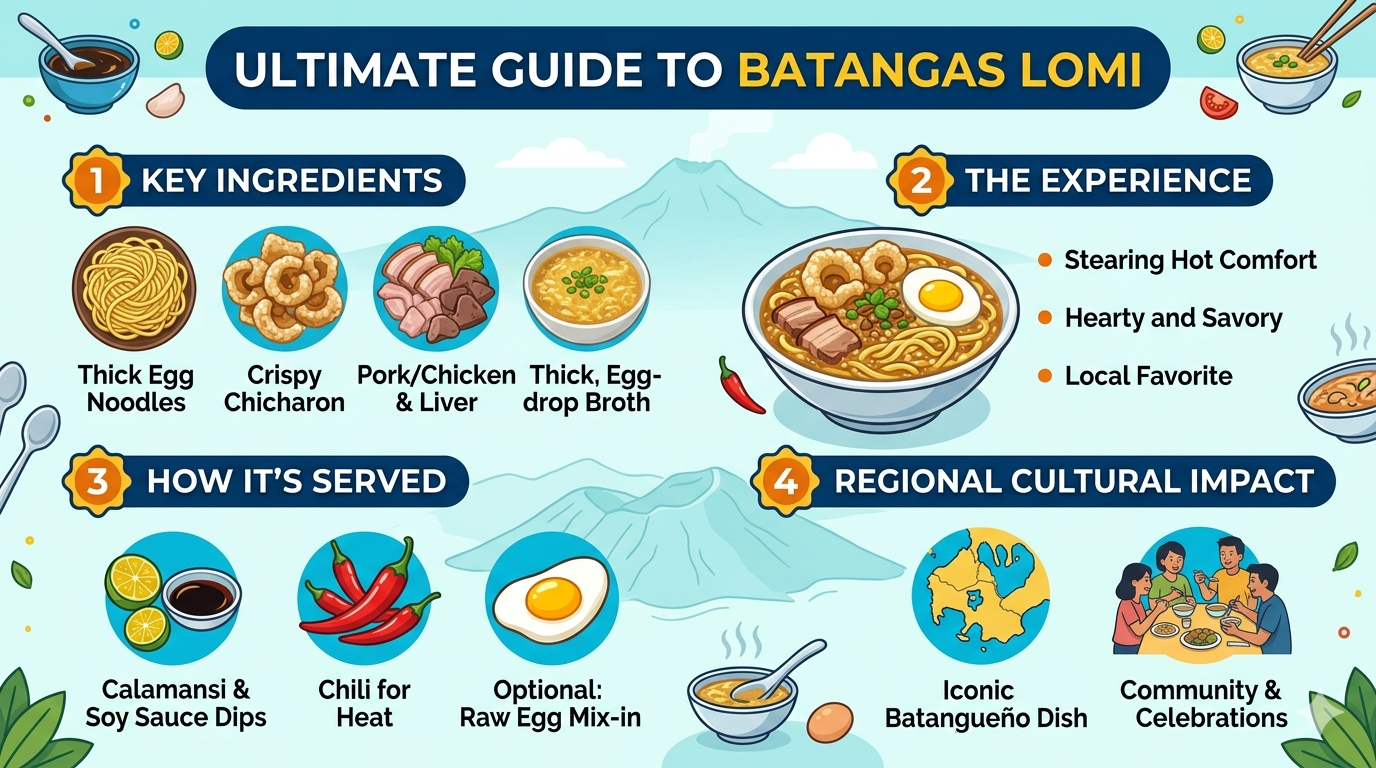
Visual layout of common ingredients and preparation elements of Lomi Batangas
Disclaimer
This article is for general informational and educational purposes only. It does not constitute professional medical, nutrition, or dietary advice. References to foods or dietary patterns do not imply endorsement or guarantee of health outcomes. Readers are encouraged to consult licensed nutritionists, dietitians, or medical professionals for personalized guidance.