Iniruban (Cassava Dessert): A Traditional Filipino Food Overview
A neutral introduction to ingredients, preparation, and nutritional considerations.
This article provides an educational overview of iniruban, a traditional Filipino cassava-based dessert commonly prepared in parts of Northern Philippines. It discusses its ingredients, preparation methods, and general nutritional components in alignment with food safety and labeling awareness promoted by the Department of Health (Philippines) and the Food and Drug Administration (Philippines).
What Is Iniruban?
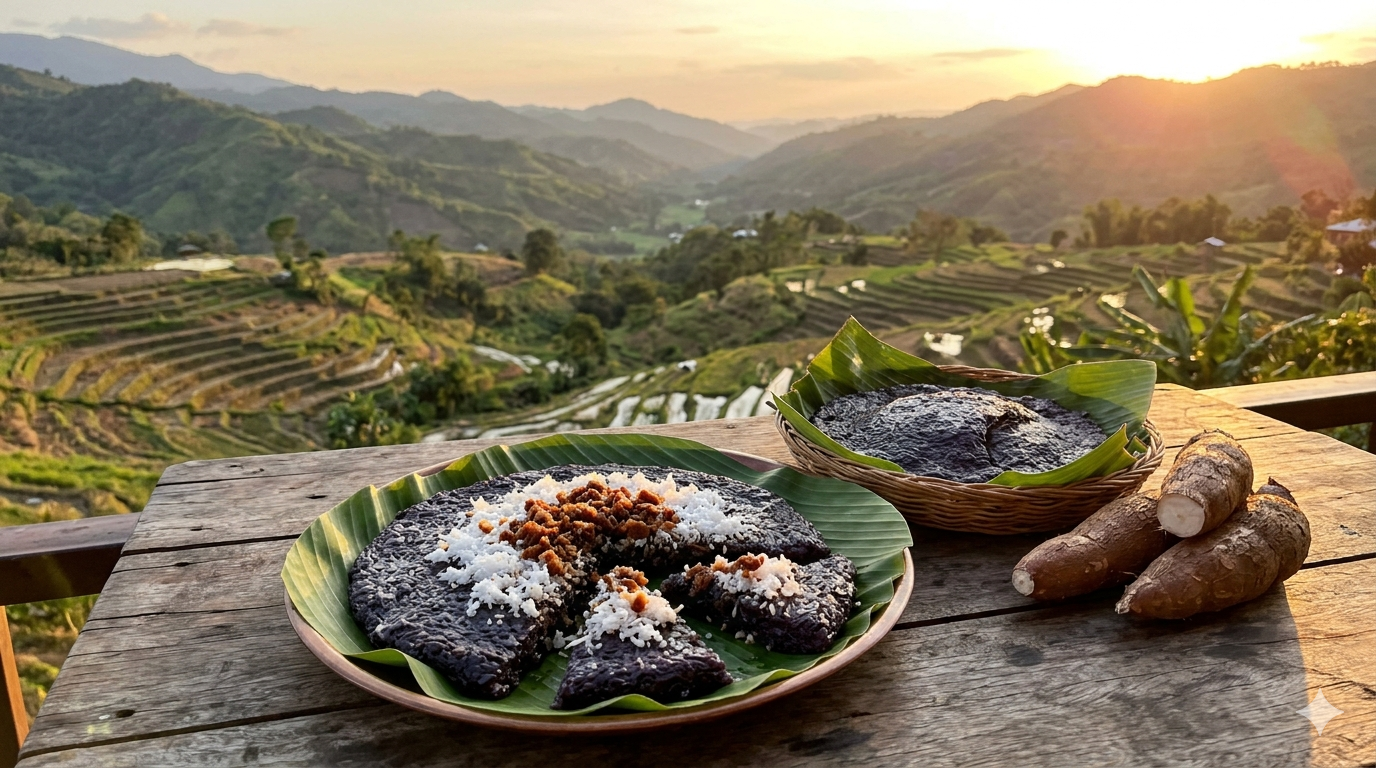
Iniruban is a local Filipino dessert made primarily from grated cassava. It is often combined with coconut milk and sugar, then cooked until thick. The dish is sometimes associated with regional culinary traditions and may be prepared during community gatherings or local occasions.
Common Ingredients
Typical ingredients used in iniruban include:
- Cassava (kamoteng kahoy) – a root crop rich in carbohydrates
- Coconut milk (gata) – contributes fat and flavor
- Sugar – adds sweetness
- Optional additions: mashed banana, young coconut strips, or margarine
Ingredient variations depend on local practices and household preferences.
Preparation Overview
The preparation process generally involves:
- Grating fresh cassava
- Mixing it with coconut milk and sugar
- Cooking the mixture over low heat while stirring continuously
- Heating until a thick, sticky consistency forms
Cooking methods may vary by region.
Nutritional Components
From a nutrition perspective, iniruban typically contains:
- Carbohydrates from cassava and sugar
- Fats from coconut milk
- Small amounts of fiber depending on cassava preparation
The exact nutritional content varies based on ingredient proportions and serving size.
Food Safety Considerations
Cassava should be properly prepared before cooking. Raw cassava contains naturally occurring compounds that require adequate processing (such as peeling, grating, and cooking) to ensure safe consumption.
Under Philippine food safety guidance, proper handling and cooking of root crops are part of general safe food preparation practices.
Context
In food science and traditional cooking practices, cassava-based dishes are widely consumed in tropical regions due to the crop’s availability. Desserts like iniruban reflect local ingredient use and culinary methods.
Under food safety and consumer protection regulations, including the Consumer Act (RA 7394), accurate ingredient disclosure and safe preparation practices are emphasized, particularly for commercially prepared products.
Nutritional effects of foods vary depending on overall dietary patterns. Individuals may consider consulting licensed nutrition professionals for dietary planning.
FAQs
What is cassava used in iniruban?
Cassava is a starchy root crop commonly used in Filipino cooking. It serves as the main ingredient in iniruban.
Is iniruban considered a dessert?
Yes, iniruban is generally categorized as a dessert due to its sweet taste and ingredients like sugar and coconut milk.
Why is cassava cooked before eating?
Cassava is typically cooked to make it safe for consumption and to improve texture and flavor.
Trusted Sources
- Department of Health (Philippines)
- Food and Drug Administration (Philippines)
- Philippine Food Composition Tables (FNRI-DOST)
- Food science and nutrition journals on root crops
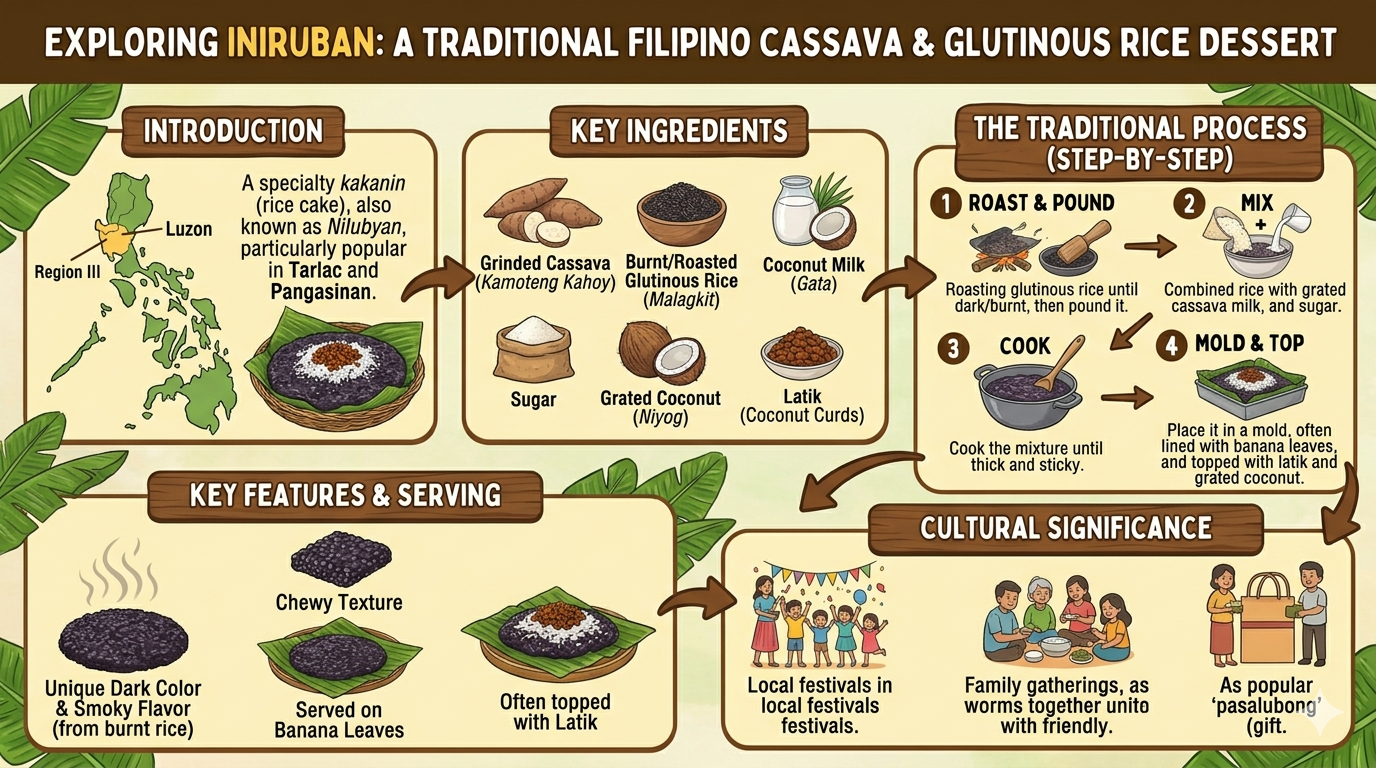
Visual layout of ingredients and preparation steps for a cassava-based dessert
Disclaimer
This article is for general informational and educational purposes only. It does not constitute professional medical, nutrition, or dietary advice. References to foods or ingredients do not imply endorsement or guarantee of health outcomes. Readers are encouraged to consult licensed nutritionists, dietitians, or medical professionals for personalized guidance.