Pastillas de Leche: A Nutritional Overview of a Traditional Filipino Milk Confection
Understanding ingredients, preparation, and dietary considerations
Pastillas de leche is a traditional Filipino confection made primarily from milk and sugar. It is commonly associated with local food heritage and is often prepared for household consumption or cultural occasions. This article provides a neutral overview of its ingredients, basic preparation, and general nutrition-related considerations within the context of Philippine food safety and labeling standards.
What Is Pastillas de Leche?
Pastillas de leche is a soft, sweet candy typically made by combining:
- Powdered or condensed milk
- Sugar
- Butter or margarine (optional)
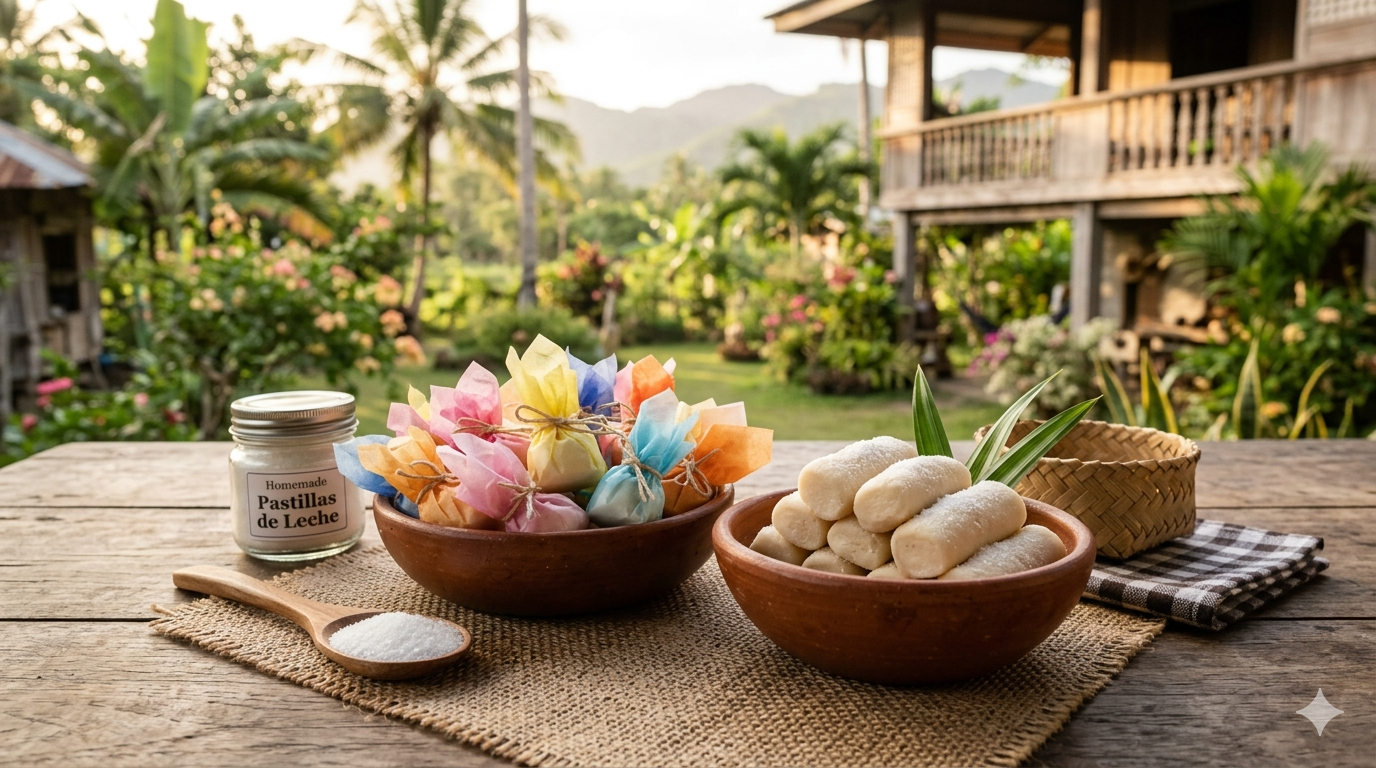
The mixture is blended until smooth and shaped into small cylindrical or bite-sized pieces. It may be coated with sugar or wrapped in decorative paper.
Basic Preparation
A common preparation method may include:
- Mixing powdered milk and condensed milk until a dough-like consistency forms
- Adding a small amount of butter or margarine for texture
- Shaping the mixture into small rolls or balls
- Rolling pieces in sugar (optional)
Preparation methods may vary depending on regional practices and household preferences.
Nutritional Components
The nutritional profile of pastillas de leche is influenced by its ingredients:
- Milk: Provides protein, calcium, and certain vitamins
- Sugar: Contributes carbohydrates and energy
- Fats (if added): May come from butter or margarine
Because it contains added sugar and dairy, it is generally categorized as an energy-dense food. Portion size and frequency of consumption are factors often considered in dietary planning.
Food Safety and Label Awareness
For commercially sold pastillas de leche in the Philippines, regulations from the Food and Drug Administration (FDA) and Department of Trade and Industry (DTI) require:
- Proper labeling of ingredients
- Indication of expiration or best-before dates
- Manufacturer or distributor details
- Compliance with food safety handling standards
Consumers may review packaging information to understand ingredient composition and storage instructions.
Context
In nutrition science discussions, sweets such as milk-based confections are typically included as occasional components within a varied diet. Dietary planning often considers balance across food groups and moderation in foods with added sugars.
Individual dietary needs vary, and responses to specific foods may differ. For personalized dietary guidance, consultation with licensed nutrition professionals may be appropriate.
FAQs
What is pastillas de leche made of?
It is commonly made from milk (powdered or condensed) and sugar, sometimes with added butter or margarine.
Is pastillas de leche considered a dairy product?
It contains dairy-derived ingredients, so it may be classified as a milk-based confection.
How should pastillas de leche be stored?
Storage recommendations vary, but commercially packaged products typically include instructions on the label regarding temperature and shelf life.
Trusted Sources
- Department of Health (Philippines)
- Food and Drug Administration (Philippines)
- Food and Nutrition Research Institute (FNRI-DOST)
- World Health Organization (WHO) – Healthy Diet Guidelines
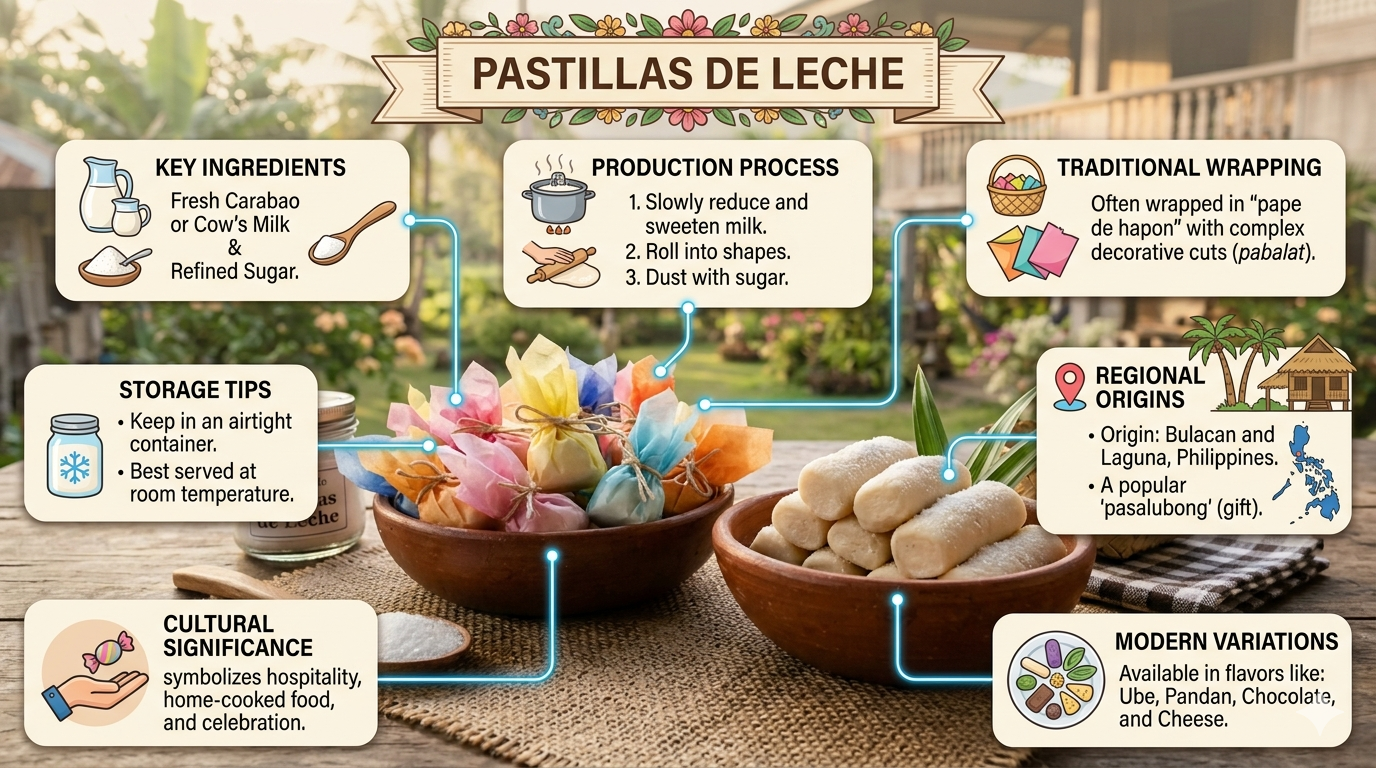
Illustrated breakdown of pastillas de leche ingredients and preparation stages
Disclaimer
This article is for general informational and educational purposes only. It does not constitute professional medical, nutrition, or dietary advice. References to diets, foods, or supplements do not imply endorsement or guarantee of health outcomes. Readers are encouraged to consult licensed nutritionists, dietitians, or medical professionals for personalized guidance.