
Tapey (Rice Wine): Educational Overview of Composition and Dietary Context
A Neutral Explanation of Traditional Fermented Rice Beverage and Nutrition Considerations
Tapey, also spelled tapuy or tapai, is a traditional fermented rice beverage commonly prepared in parts of Southeast Asia, including the Philippines. In general, it is produced through the fermentation of glutinous rice using naturally occurring microorganisms. In the Philippine context, food safety and labeling considerations for fermented beverages fall under oversight from agencies such as the Food and Drug Administration. This article therefore explains how tapey is made, its general composition, and relevant nutrition and consumer awareness considerations.
What Is Tapey?
Tapey is created by fermenting cooked rice with a starter culture, often referred to as bubod in the Philippines. Specifically, this starter contains yeast and molds that break down rice starches into sugars and, subsequently, into alcohol and other compounds.
Typically, the fermentation process involves:
- Cooking and cooling glutinous rice
- Adding the fermentation starter
- Allowing the mixture to ferment over several days
As a result, the final product may vary in texture and flavor depending on preparation methods and fermentation duration.
Nutritional Composition
Tapey contains a mixture of components formed during fermentation. For example:
- Carbohydrates: Residual sugars from rice
- Alcohol (ethanol): Produced during fermentation
- Small amounts of vitamins and organic acids: Byproducts of microbial activity
However, the exact composition can vary widely depending on ingredients, fermentation time, and storage conditions.
Fermentation and Food Science Context
In food science, fermentation is a process where microorganisms convert carbohydrates into alcohol or acids. Similarly, this process is also used in other foods such as yogurt, vinegar, and bread.
In the case of tapey:
- Yeasts convert sugars into alcohol
- Molds help break down complex starches into simpler sugars
Consequently, this transformation influences taste, aroma, and texture.
Consumer Awareness and Safety Considerations
When consuming traditionally prepared or commercially available tapey, several general considerations may apply. For instance:
- Alcohol Content Awareness: Tapey contains alcohol due to fermentation
- Storage Conditions: Improper storage may affect quality and safety
- Labeling (for packaged products): Should include ingredients and manufacturer details in line with regulatory guidance
In addition, under Philippine consumer protection frameworks, including the Consumer Act (RA 7394), food products should not carry misleading claims about health or effects.
Cultural and Dietary Role
Tapey is often associated with cultural practices and traditional food preparation. From a nutrition perspective, fermented foods are studied for their biochemical changes during processing rather than as primary nutrient sources.
At the same time, dietary inclusion of fermented beverages varies depending on individual preferences, cultural practices, and dietary considerations. Therefore, nutritional effects may differ between individuals.
FAQs
What is tapey made from?
Tapey is made from glutinous rice fermented with a starter culture containing yeast and molds.
Does tapey contain alcohol?
Yes. Alcohol is produced naturally during the fermentation process.
Is tapey considered a nutrient-rich food?
Tapey contains some nutrients and fermentation byproducts; however, its composition varies and it is not typically classified as a primary nutrient source.
Trusted Sources
- Food and Drug Administration — Food safety and labeling guidance
- Department of Health — General nutrition advisories
- World Health Organization — Food safety and fermentation references
- Academic journals on food science and fermentation
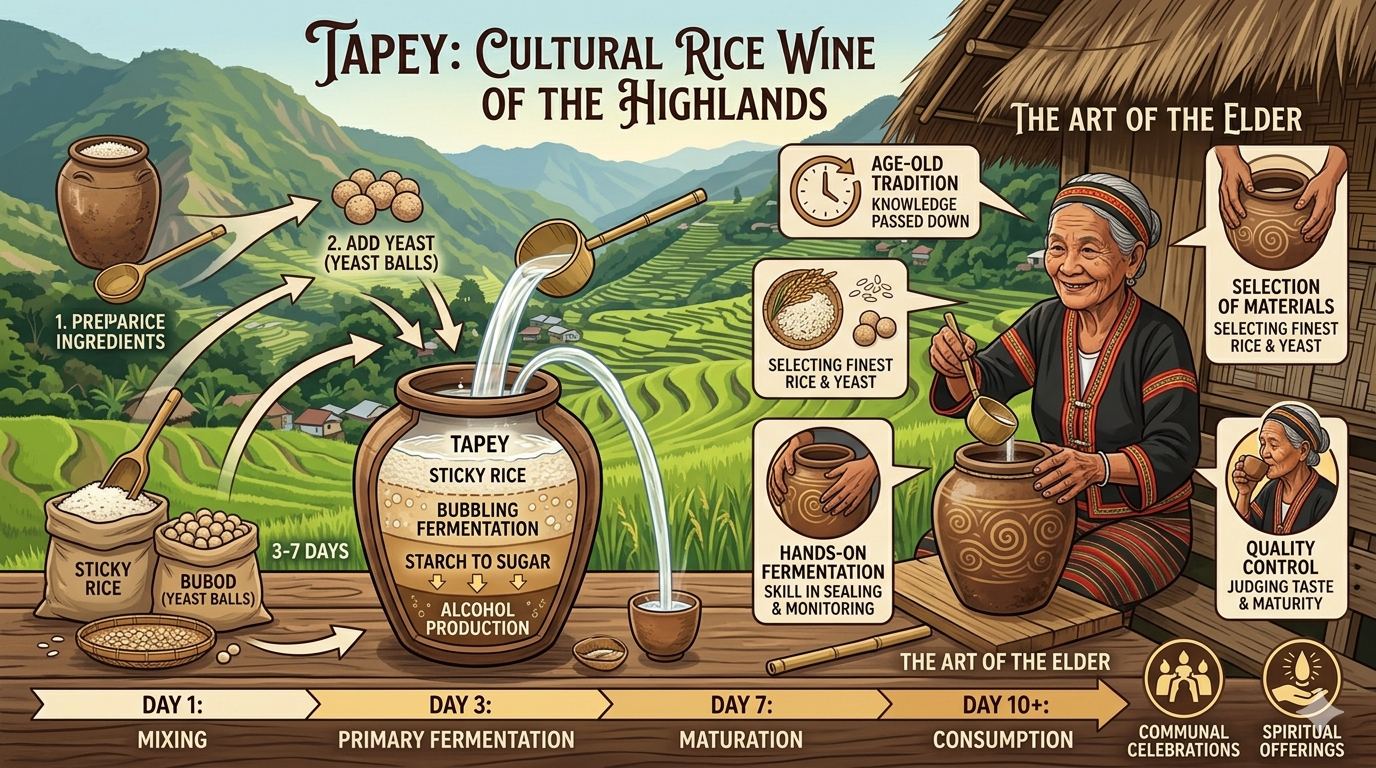
Process flow of tapey rice wine fermentation from rice preparation to final product
Disclaimer
This article is for general informational and educational purposes only. It does not constitute professional medical, nutrition, or dietary advice. References to foods or beverages do not imply endorsement or guarantee of health outcomes. Readers are encouraged to consult licensed nutritionists, dietitians, or medical professionals for personalized guidance.