by villarramil028 | Mar 25, 2026 | Cultural Food Heritage, Traditional Food
Chicharon Bulacan: An Educational Overview of a Traditional Filipino Food
Understanding its ingredients, preparation, and nutritional considerations
Chicharon Bulacan is a well-known Filipino food product originating from the province of Bulacan. This article provides a neutral, educational overview of its composition, preparation methods, and general nutrition considerations within the context of Philippine food standards and consumer awareness.
What Is Chicharon Bulacan?
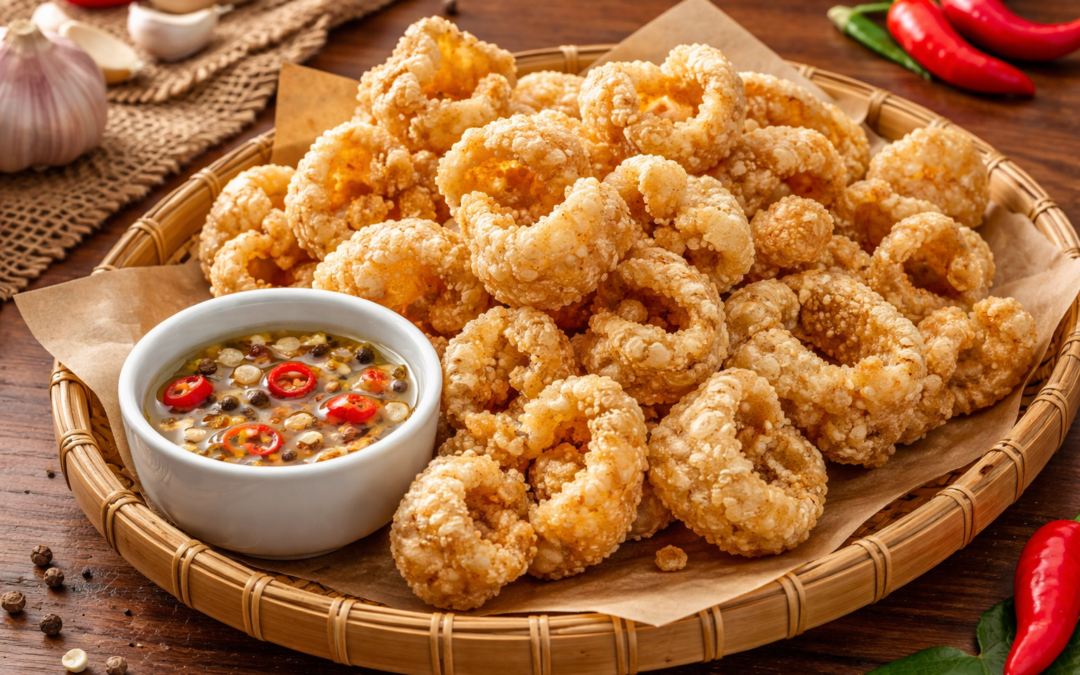
Chicharon Bulacan refers to deep-fried pork rinds that are typically seasoned with salt. It is commonly consumed as a snack or paired with dishes such as rice meals or vinegar-based dips.
Traditional preparation involves:
- Cleaning and boiling pork skin
- Drying the skin
- Deep-frying until it becomes crisp
The product is widely available in local markets and packaged forms.
Nutritional Composition
Chicharon is primarily composed of:
- Fat – due to the frying process
- Protein – derived from pork skin
- Sodium – depending on added salt or seasoning
It is considered an energy-dense food, meaning it contains a relatively high number of calories per serving.
Portin and Consumption Context
In general nutrition education, foods that are high in fat and sodium are often consumed in moderation as part of a varied diet. Portion sizes and frequency of intake can vary depending on individual dietary patterns.
Chicharon is typically eaten:
- As an occasional snack
- In small portions alongside meals
- With condiments such as vinegar
No specific intake level applies universally.
Food Safety and Label Awareness
Under Philippine food safety and consumer protection regulations:
- Packaged chicharon products should display ingredient lists and nutrition labels
- Consumers are encouraged to check manufacturing and expiration dates
- Storage conditions (e.g., keeping the product sealed and dry) help maintain quality
For unpackaged or locally sold products, buyers may consider sourcing from vendors that follow proper food handling practices.
Context
In nutrition science discussions, traditional foods like chicharon are part of cultural dietary patterns. Balanced eating typically involves a variety of food groups, including vegetables, fruits, grains, and protein sources.
Individual dietary needs differ, and food choices may be adjusted based on personal preferences, lifestyle, and professional guidance.
FAQs
What is Chicharon Bulacan made of?
It is made primarily from pork skin that is boiled, dried, and deep-fried. Salt or other seasonings may be added.
Is chicharon considered a high-fat food?
Yes. Due to deep-frying, it contains a significant amount of fat compared to many other snack foods.
How is chicharon usually eaten?
It is commonly eaten as a snack or paired with meals, often with vinegar or other dipping sauces.
Trusted Sources
- Department of Health (DOH) Philippines – General nutrition guidance
- Food and Drug Administration (FDA Philippines) – Food safety and labeling regulations
- Food and Nutrition Research Institute (FNRI-DOST) – Philippine food composition data
- World Health Organization (WHO) – Healthy diet resources
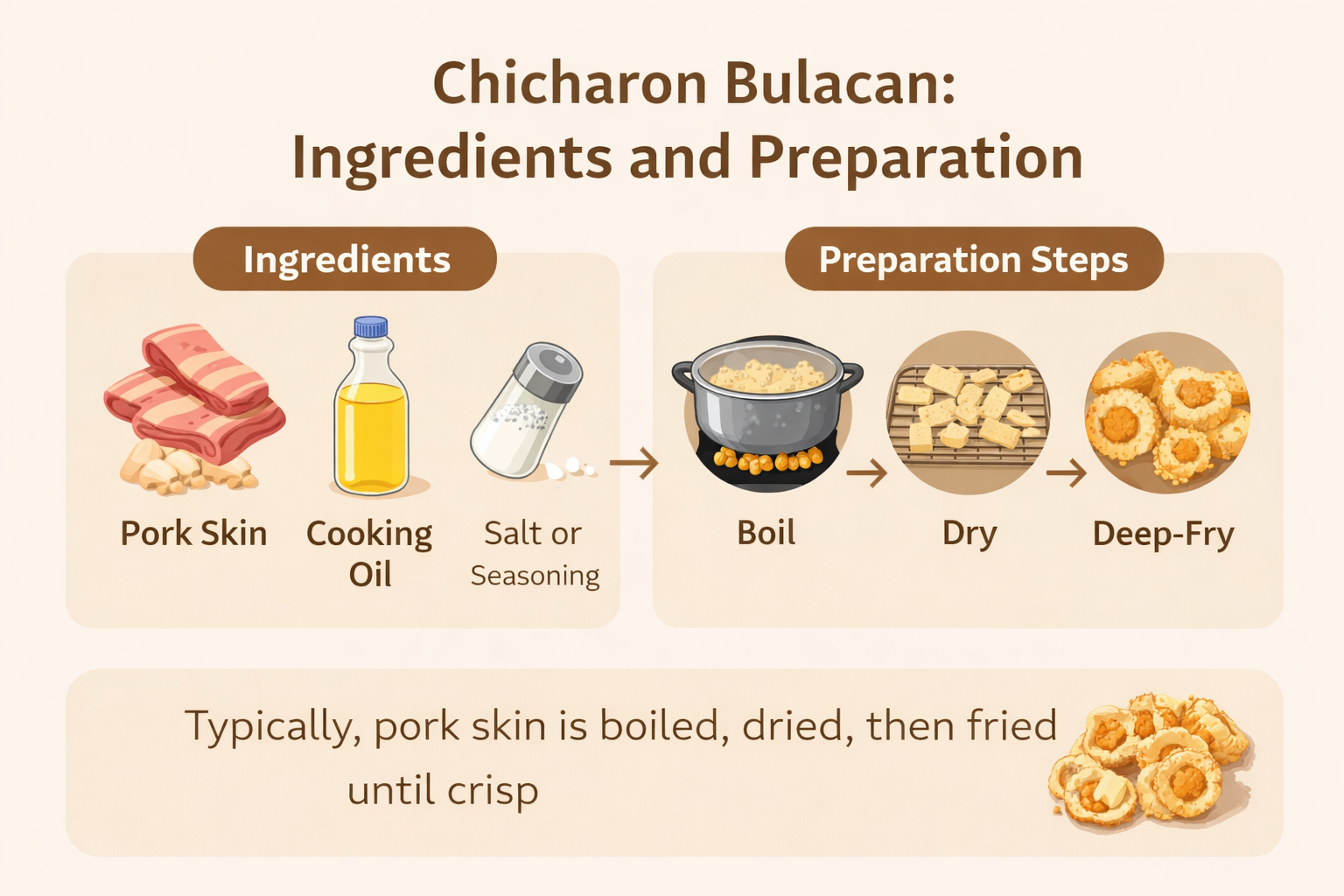
Visual breakdown of ingredients and preparation steps
Disclaimer
This article is for general informational and educational purposes only. It does not constitute professional medical, nutrition, or dietary advice. References to diets, foods, or supplements do not imply endorsement or guarantee of health outcomes. Readers are encouraged to consult licensed nutritionists, dietitians, or medical professionals for personalized guidance.
by villarramil028 | Mar 25, 2026 | Cultural Food Heritage
Chicharabao (Carabao Chicharon): Nutritional Overview and Consumer Awareness
A neutral look at its ingredients, preparation, and dietary considerations
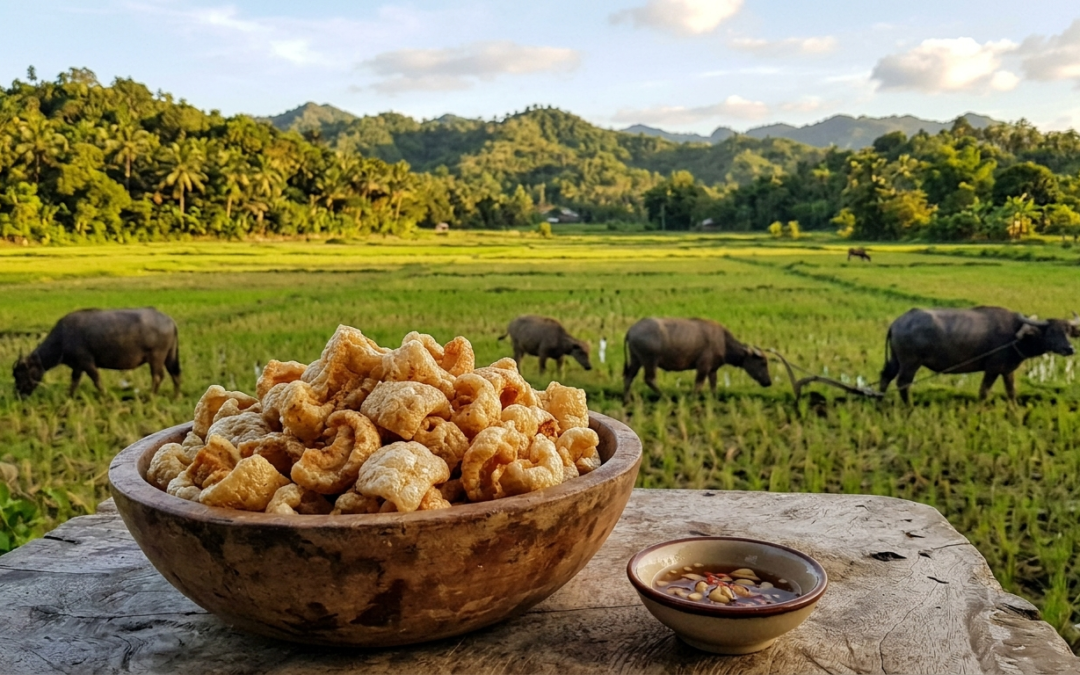
Chicharabao, commonly known as carabao chicharon, is a traditional Filipino snack made from the skin of the Carabao. It is typically deep-fried until crisp and is often consumed as a snack or accompaniment to meals. This article explains its general nutritional characteristics, preparation methods, and considerations aligned with guidance from the Department of Health (DOH) Philippines and Food and Drug Administration Philippines.
What Is Chicharabao?
Chicharabao is prepared by cleaning and boiling carabao skin, drying it, and then deep-frying it in oil. The result is a crunchy product that may be seasoned with salt, vinegar, or spices depending on regional preferences.
It is categorized as a processed, fried food product and is typically energy-dense due to its preparation method.
Nutritional Components (General Overview)
The nutritional profile of chicharabao can vary depending on preparation and portion size. Common components include:
- Protein: Derived from animal skin
- Fat: Increased during deep-frying
- Calories: Typically higher due to fat content
- Sodium: May be present if salt or seasoning is added
As a fried snack, it is generally considered an energy-dense food rather than a primary source of diverse nutrients.
Food Group Context
Chicharabao does not fall neatly into core food groups such as fruits, vegetables, or whole grains. It is more appropriately classified under:
- Processed or occasional foods
- Foods high in fat due to frying
Balanced dietary patterns typically emphasize a variety of minimally processed foods alongside moderation in energy-dense items.
Hypothetical Consumption Context
In a general meal setting, chicharabao may be consumed:
- As a small side portion with meals
- As a snack paired with vinegar or dipping sauces
- Occasionally, rather than as a primary protein source
Portion size and frequency of intake may vary depending on individual dietary patterns and preferences.
Consumer Awareness and Food Safety
Under Philippine food safety and labeling regulations, consumers are encouraged to:
- Check packaging for proper labeling and ingredient lists
- Verify if the product is registered with the FDA Philippines when commercially sold
- Store and handle properly to maintain food safety
The Department of Trade and Industry (DTI) Philippines oversees fair trade practices, including labeling and product representation.
Dietary Patterns and Moderation
In nutrition science, fried and processed foods are often discussed in the context of overall dietary patterns. These foods may be included in diets in varying amounts, depending on cultural practices and individual preferences.
Dietary needs differ among individuals. Factors such as age, activity level, and health status may influence food choices. For personalized dietary guidance, consultation with a licensed nutrition professional is recommended.
FAQs
What is chicharabao made from?
Chicharabao is made from carabao (water buffalo) skin that is boiled, dried, and deep-fried until crisp.
Is chicharabao considered a protein source?
It contains protein from animal skin, but it is typically not categorized as a primary or complete protein source in balanced diets.
Why is chicharabao energy-dense?
Its preparation involves deep-frying, which increases fat content and overall calorie density.
Trusted Sources
- Department of Health (DOH) Philippines
- Food and Drug Administration Philippines
- World Health Organization
- Peer-reviewed food science and nutrition journals
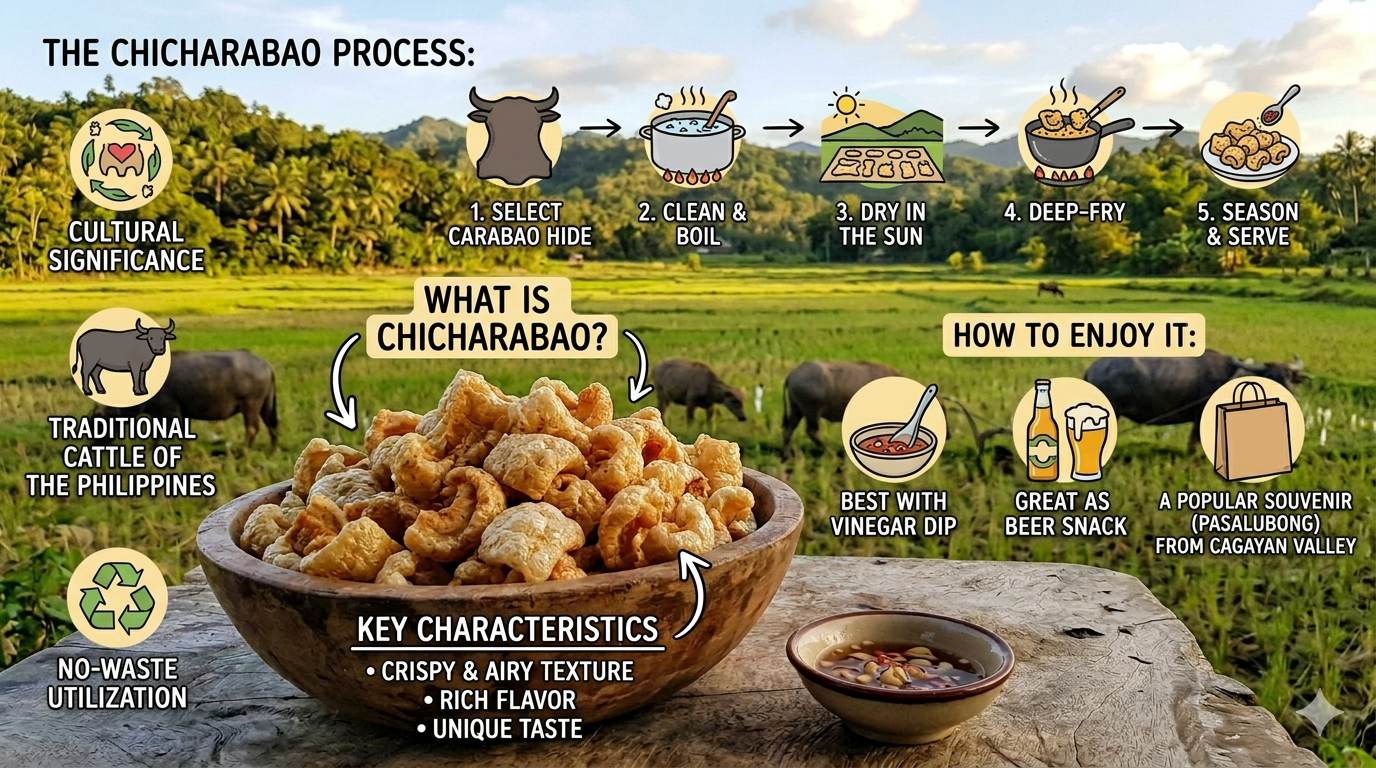
Visual summary of chicharabao ingredients and preparation steps
Disclaimer
This article is for general informational and educational purposes only. It does not constitute professional medical, nutrition, or dietary advice. References to foods or preparation methods do not imply endorsement or guarantee of health outcomes. Readers are encouraged to consult licensed nutritionists, dietitians, or medical professionals for personalized guidance.

