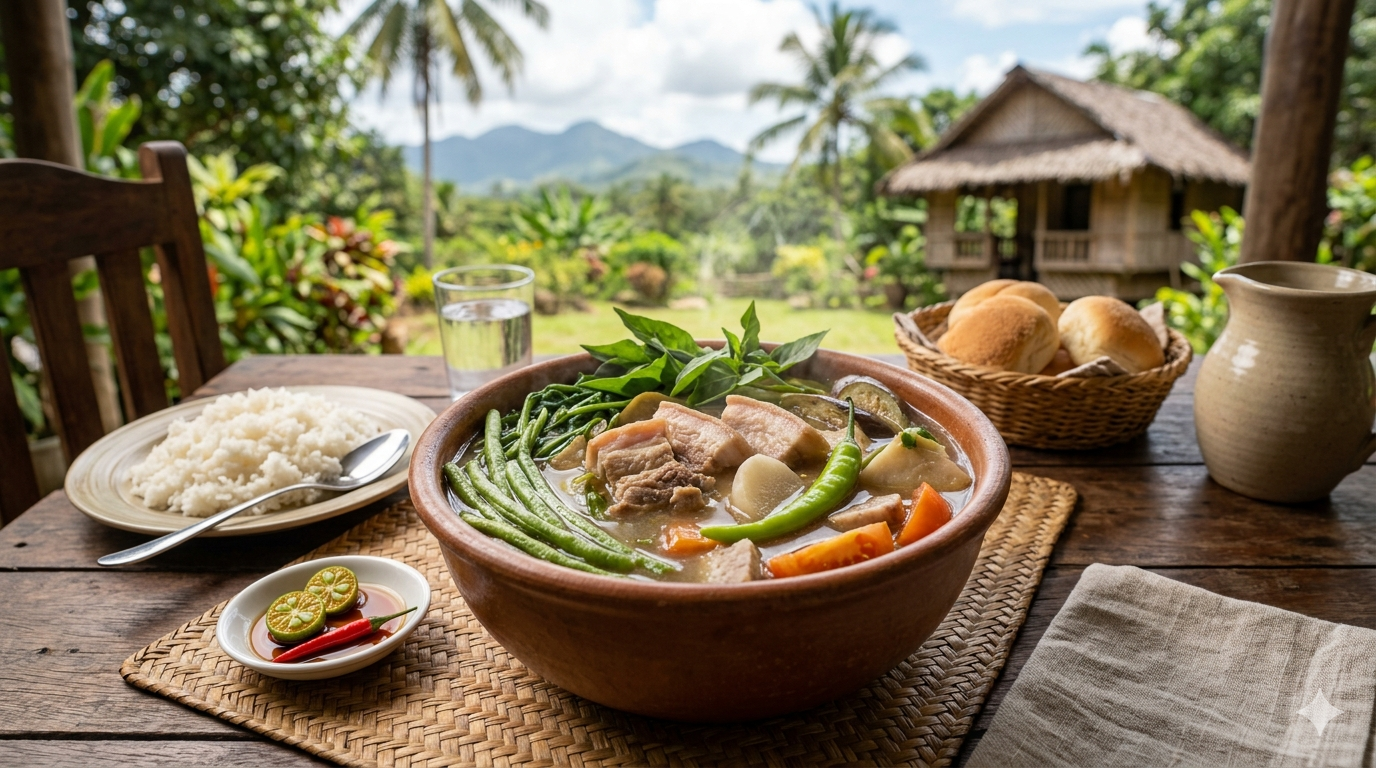
Understanding Sinigang: A Nutritional Perspective
A neutral overview of its ingredients, nutrient composition, and dietary considerations
Sinigang is a traditional Filipino soup known for its characteristic sour flavor, typically achieved using tamarind, calamansi, or other souring agents. This article provides an educational overview of sinigang’s common ingredients, macronutrient and micronutrient content, and considerations for balanced meal planning. It references dietary guidance from the Department of Health (DOH) and food labeling standards from the Food and Drug Administration (FDA Philippines).
Nutritional Principles in Sinigang
Sinigang generally combines a protein source (e.g., pork, fish, shrimp, or chicken) with various vegetables (e.g., kangkong, sitaw, radish, eggplant, tomatoes) and a souring agent. From a nutritional perspective:
- Protein: Found in meat, fish, or shrimp. Supports general body maintenance but does not guarantee specific muscle or weight outcomes.
- Carbohydrates: Primarily from vegetables. These provide fiber, which contributes to digestive health and satiety.
- Vitamins and Minerals: Vegetables in sinigang supply vitamin C, potassium, folate, and antioxidants.
- Fat: Depending on the cut of meat, fat content varies. Leaner protein options typically contain less saturated fat.
Hypothetical Meal Example
A neutral illustration of a sinigang meal could include:
- 1 cup cooked rice (carbohydrates)
- 1 serving pork sinigang with assorted vegetables (protein, fiber, vitamins, minerals)
- 1 small serving of fresh fruit for dessert (optional, micronutrient support)
This example demonstrates nutrient variety and portion awareness. Individual nutrient needs vary, and dietary planning may consider factors such as caloric intake, activity level, and personal health conditions.
Safe Eating Practices
- Monitor sodium: Commercial broths or flavoring mixes may contain high sodium. Consumers can adjust by using natural souring agents and fresh ingredients.
- Balanced portions: Include vegetables to increase fiber and vitamins, and moderate protein portions according to personal dietary needs.
- Ingredient verification: Check labels of prepackaged sinigang mixes for allergens or additives, in line with FDA labeling guidelines.
Context
In nutrition science studies, traditional dishes like sinigang are considered nutrient-dense when prepared with a variety of vegetables and lean proteins. Under consumer protection and labeling standards in the Philippines, processed food products associated with sinigang (e.g., seasoning mixes) must display ingredients, allergens, and expiration dates. Diet planning typically involves balancing macronutrients (protein, carbohydrates, fat) and ensuring adequate micronutrient intake. Dietary results vary individually; consultation with licensed nutritionists or medical professionals is recommended for personalized guidance.
FAQs
What is sinigang?
Sinigang is a Filipino soup dish characterized by a sour broth, often prepared with meat, seafood, or vegetables.
What nutrients are commonly found in sinigang?
It contains protein from the main protein source, fiber and vitamins from vegetables, and variable fat depending on the meat used.
How can sinigang fit into a balanced meal?
Including a portion of rice, a variety of vegetables, and a protein source in sinigang can contribute to overall nutrient variety without implying specific health outcomes.
Trusted Sources
- Department of Health (DOH) Philippines — Nutrition Guidelines
- Food and Drug Administration (FDA Philippines) — Food Labeling and Safety Advisories
- Philippine Journal of Nutrition and Dietetics — Peer-Reviewed Articles on Filipino Foods
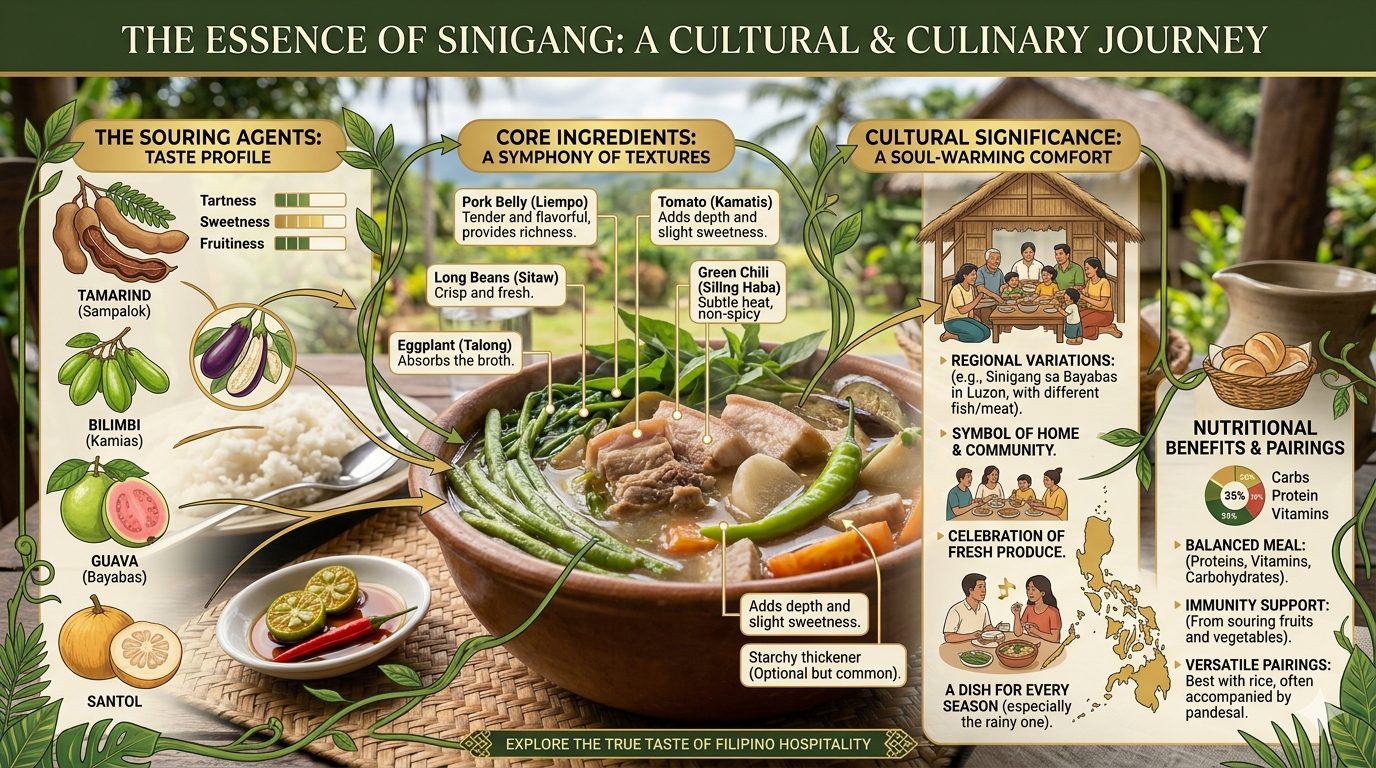
Visual representation of sinigang ingredients grouped by protein, vegetables, and
Disclaimer
This article is for general informational and educational purposes only. It does not constitute professional medical, nutrition, or dietary advice. References to foods or ingredients do not imply endorsement or guarantee of health outcomes. Readers are encouraged to consult licensed nutritionists, dietitians, or medical professionals for personalized guidance.