Understanding Sikwate: Traditional Filipino Hot Chocolate and Its Nutritional Context
A neutral overview of a traditional cacao-based beverage commonly prepared in parts of the Philippines.
Sikwate is a traditional hot chocolate beverage prepared using ground cacao tablets and hot water or milk. It is commonly associated with culinary traditions in regions such as Cebu and other parts of the Philippines. This article explains how the beverage is typically prepared, the basic ingredients used, and general nutrition considerations related to cacao-based drinks.
What Is Sikwate?
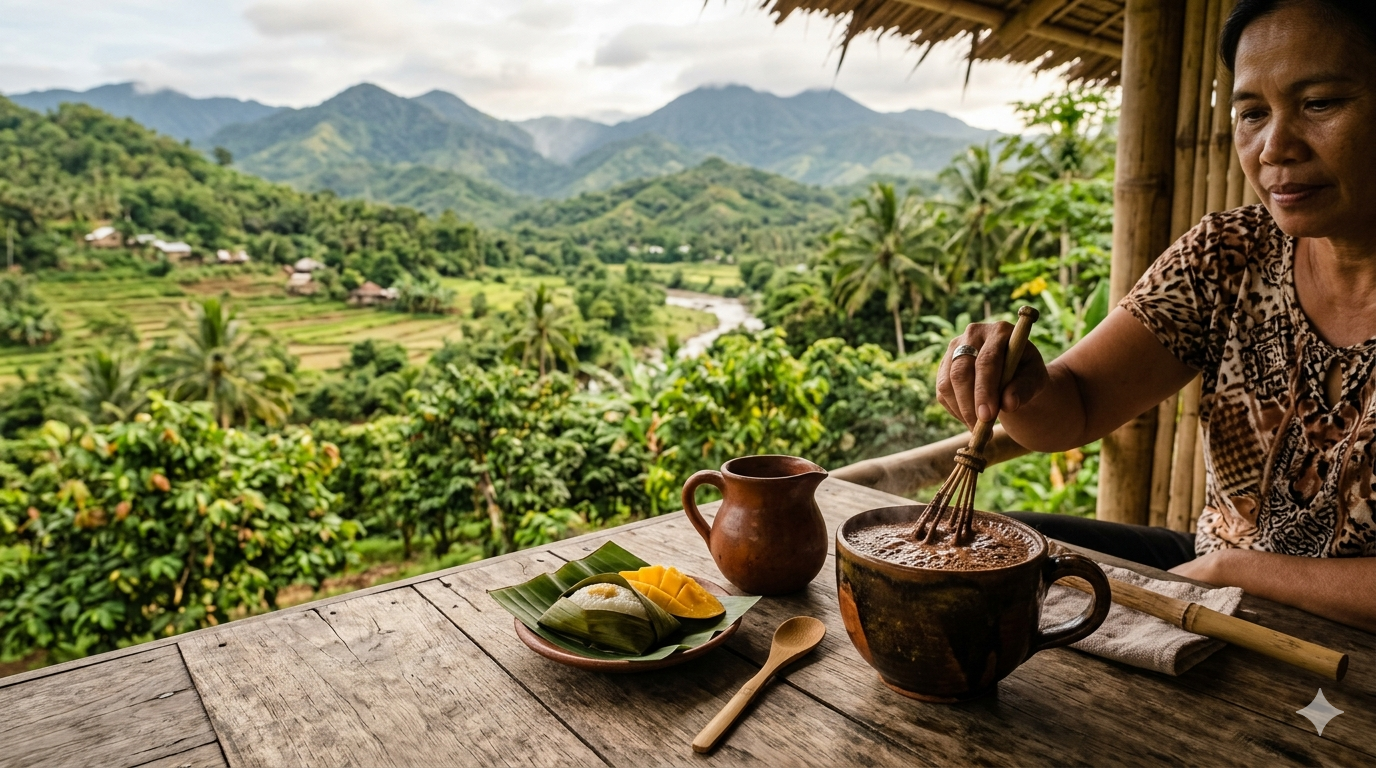
Sikwate is a beverage made by dissolving tablets of roasted and ground cacao beans—often called tablea—in hot water. The mixture is traditionally whisked using a wooden tool known as a batirol, which helps create a smooth and foamy texture.
Cacao beans used for tablea originate from the tropical cacao tree, scientifically known as Theobroma cacao. The preparation method focuses on minimal processing, which distinguishes traditional tablea from many commercial chocolate powders that may contain added sugar or flavoring.
Basic Ingredients
A typical preparation may include:
- Cacao tablea (pure cacao tablets)
- Hot water or milk
- Optional sweetener such as sugar, depending on taste preference
The beverage is sometimes served with local foods such as bread or rice-based snacks, although combinations vary by region and household practices.
General Nutrition Context
Cacao contains several naturally occurring nutrients and compounds. Depending on the preparation method and added ingredients, a serving of sikwate may contain:
- Carbohydrates (primarily from added sugar if included)
- Dietary fats naturally present in cacao
- Small amounts of minerals such as magnesium and iron
- Plant compounds often described in nutrition research as polyphenols
The exact nutrient content varies based on factors such as the amount of tablea used, whether milk is added, and the level of sweetening.
Traditional Preparation Method
In many households, sikwate is prepared through the following steps:
- Boil water in a pot.
- Add pieces of cacao tablea.
- Stir or whisk the mixture until the cacao dissolves.
- Use a wooden whisk (batirol) to aerate and blend the drink.
- Add optional sweetener if desired.
This method emphasizes dissolving the cacao rather than using pre-sweetened chocolate mixes.
Cacao and Food Label Awareness
Under food safety and labeling standards enforced by authorities such as the Food and Drug Administration (Philippines) and the Department of Health (Philippines), packaged cacao products may include ingredient lists and nutrition information. Consumers reviewing cacao-based beverages often examine:
- ingredient lists
- sugar content
- serving size information
- presence of added flavorings or dairy components
Traditional tablea products may vary in composition depending on processing methods used by producers.
FAQs
What is tablea?
Tablea refers to tablets made from roasted and ground cacao beans that are shaped into small discs or blocks. They are commonly used to prepare traditional Filipino hot chocolate beverages.
Is sikwate the same as commercial hot chocolate?
Sikwate typically uses cacao tablea with minimal processing, while many commercial hot chocolate mixes may contain sugar, milk powder, or flavoring agents.
How is sikwate usually served?
The beverage is often served hot and sometimes paired with local snacks such as bread or rice-based foods. Serving practices vary depending on regional traditions and household preferences.
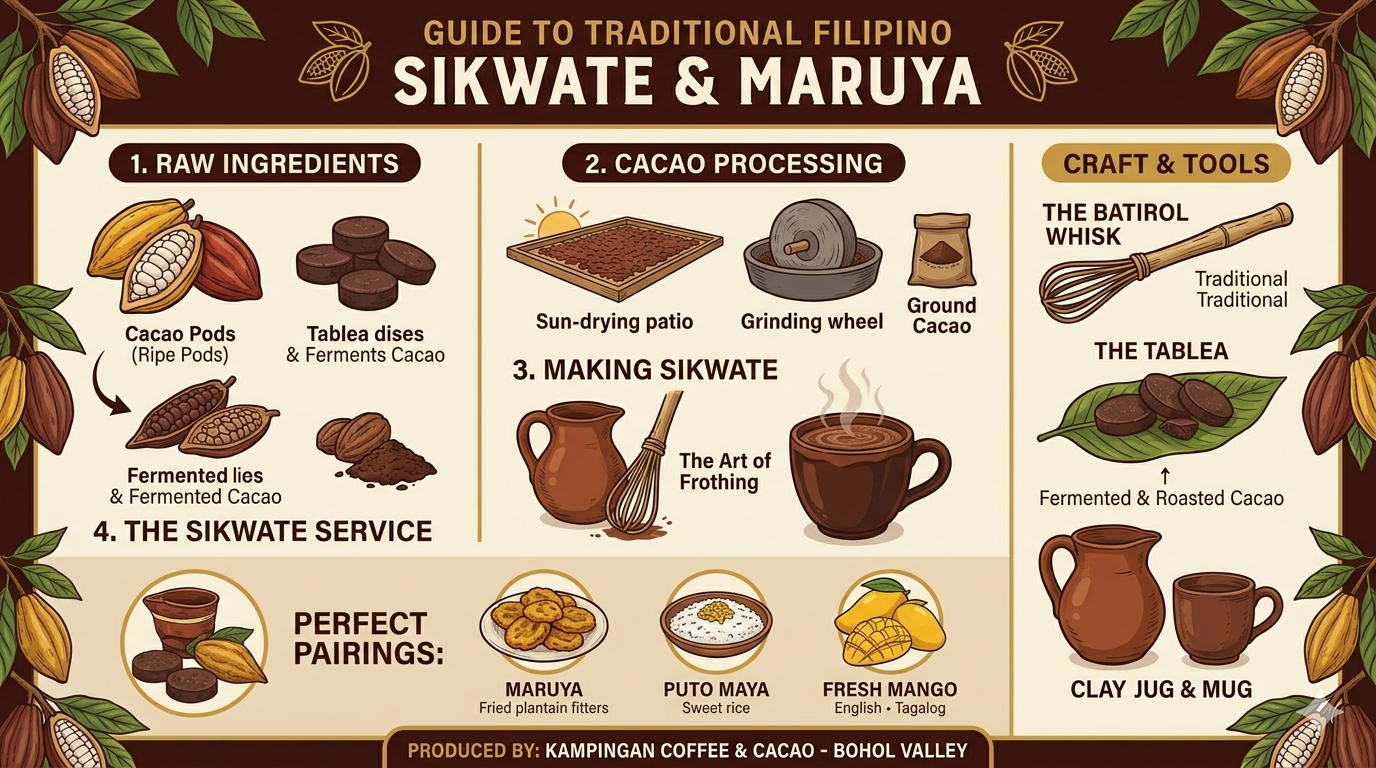
Diagram presenting cacao tablea tablets, whisking tools, and a cup of sikwate.
Trusted Sources
- Department of Health (Philippines) nutrition education materials
- Food and Drug Administration (Philippines) food labeling guidance
- Academic publications in food science and nutrition journals covering cacao composition and traditional foods
Disclaimer
This article is for general informational and educational purposes only. It does not constitute professional medical, nutrition, or dietary advice. References to diets, foods, or supplements do not imply endorsement or guarantee of health outcomes. Readers are encouraged to consult licensed nutritionists, dietitians, or medical professionals for personalized guidance.