Understanding Satti: Cultural Food and Nutritional Overview
This article provides an educational overview of Satti, a traditional dish from Southern Philippines. It explains the dish’s cultural background, typical ingredients, and general nutritional considerations within the context of balanced dietary awareness. The discussion is informational and aligns with general consumer education principles referenced by Philippine food safety and nutrition guidance.
What Is Satti?
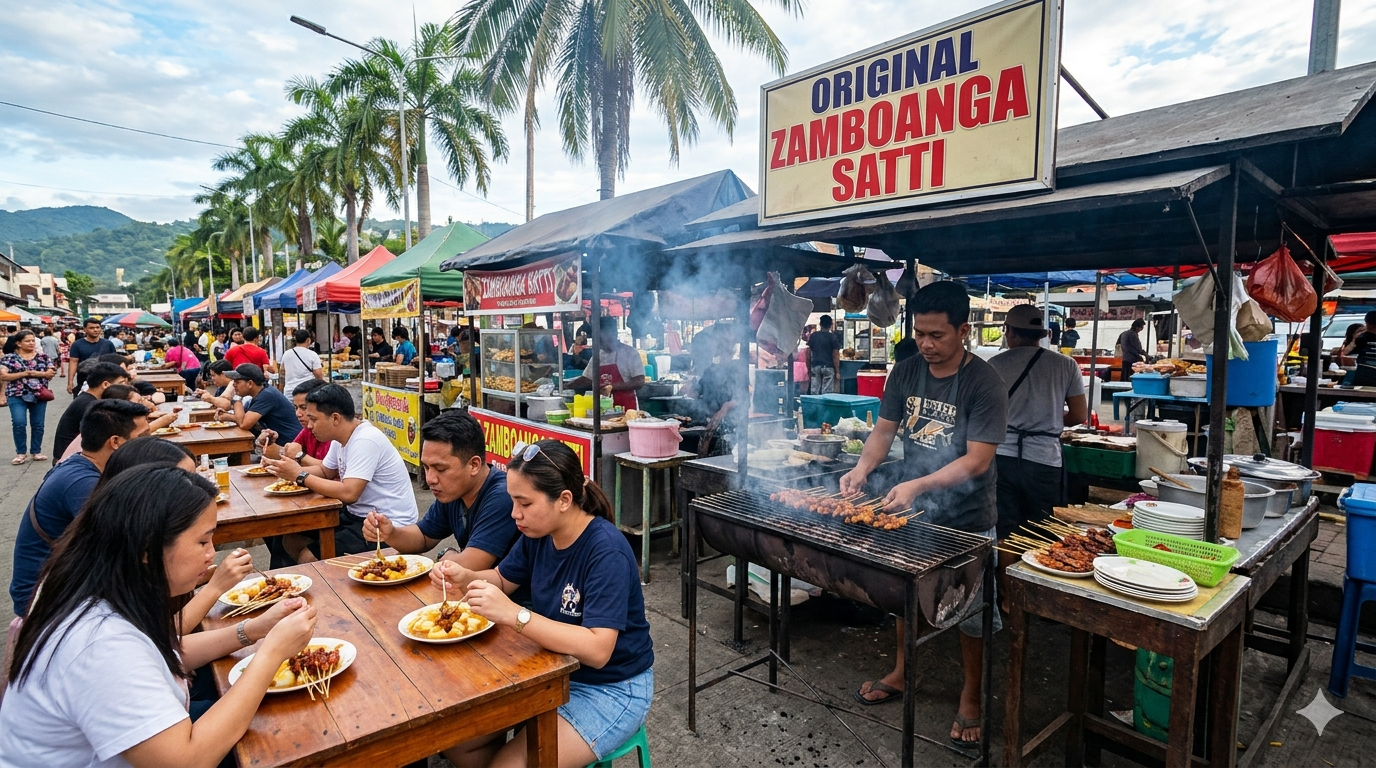
Satti is a grilled meat dish traditionally associated with Muslim Filipino communities in Mindanao, particularly in Zamboanga, Sulu, and nearby areas. It typically consists of small skewers of grilled meat served with a warm sauce and rice wrapped in coconut leaves.
The meat is commonly chicken or beef, though variations may include other proteins depending on local preparation practices. The skewers are usually grilled over charcoal, producing a smoky flavor that is characteristic of many Southeast Asian grilled dishes.
Satti is often associated with breakfast in some regions, where specialized eateries may open early in the morning to serve the dish.
Typical Components of a Satti Meal
A traditional serving may include the following elements:
1. Grilled Meat Skewers
- Small strips of marinated meat placed on wooden skewers
- Seasonings may include garlic, pepper, and other spices depending on the recipe
2. Sauce
- A warm, often spiced sauce served alongside the skewers
- The exact composition varies by region and cook
3. Rice (Ta’mu or Pusô)
- Rice wrapped in woven coconut leaves and steamed
- The rice acts as a carbohydrate source in the meal
These elements combine protein, carbohydrates, and flavor components typical of many Southeast Asian grilled food traditions.
Nutritional Considerations
From a general nutrition perspective, meals containing grilled meat and rice provide a combination of macronutrients:
- Protein from meat sources
- Carbohydrates from rice
- Fats depending on the meat cut and sauce preparation
Portion sizes, cooking methods, and ingredients influence the overall nutritional profile of any dish. Grilling is one cooking method that can reduce added cooking oils compared with some frying techniques, though the final nutrient composition varies by preparation.
Balanced diets generally consider variety across food groups, including vegetables, fruits, protein sources, and whole grains.
Cultural and Culinary Context
Food historians note that Satti shares similarities with satay-style dishes found across Southeast Asia. These dishes typically involve skewered meat grilled over charcoal and served with a sauce.
Local adaptations in the southern Philippines reflect regional ingredients and culinary traditions shaped by cultural exchange in maritime Southeast Asia.
Dietary Awareness and Food Variety
In nutrition science and public health discussions, traditional regional foods are often considered within the broader context of dietary diversity. Balanced eating patterns typically involve a variety of foods that contribute essential nutrients throughout the day.
Individual dietary needs may vary based on factors such as age, activity level, and health considerations. Guidance from licensed nutrition professionals may help individuals tailor dietary patterns according to their personal circumstances.
FAQs
What type of food is Satti?
Satti is a grilled meat dish served on skewers with sauce and rice. It is commonly associated with Tausug and other Muslim Filipino culinary traditions in southern Philippines.
Is Satti similar to satay?
Yes. Many researchers describe Satti as related to Southeast Asian satay dishes because both involve skewered meat cooked over charcoal and served with sauce.
What nutrients are typically present in a Satti meal?
A typical serving may provide protein from meat and carbohydrates from rice. The exact nutrient composition depends on ingredients, cooking methods, and portion sizes.
Trusted Sources
- Department of Health Philippines — Nutrition and health advisories
- Food and Drug Administration Philippines — Food safety and labeling guidance
- Peer-reviewed nutrition and food science journals
- Culinary and food culture references on Southeast Asian cuisine
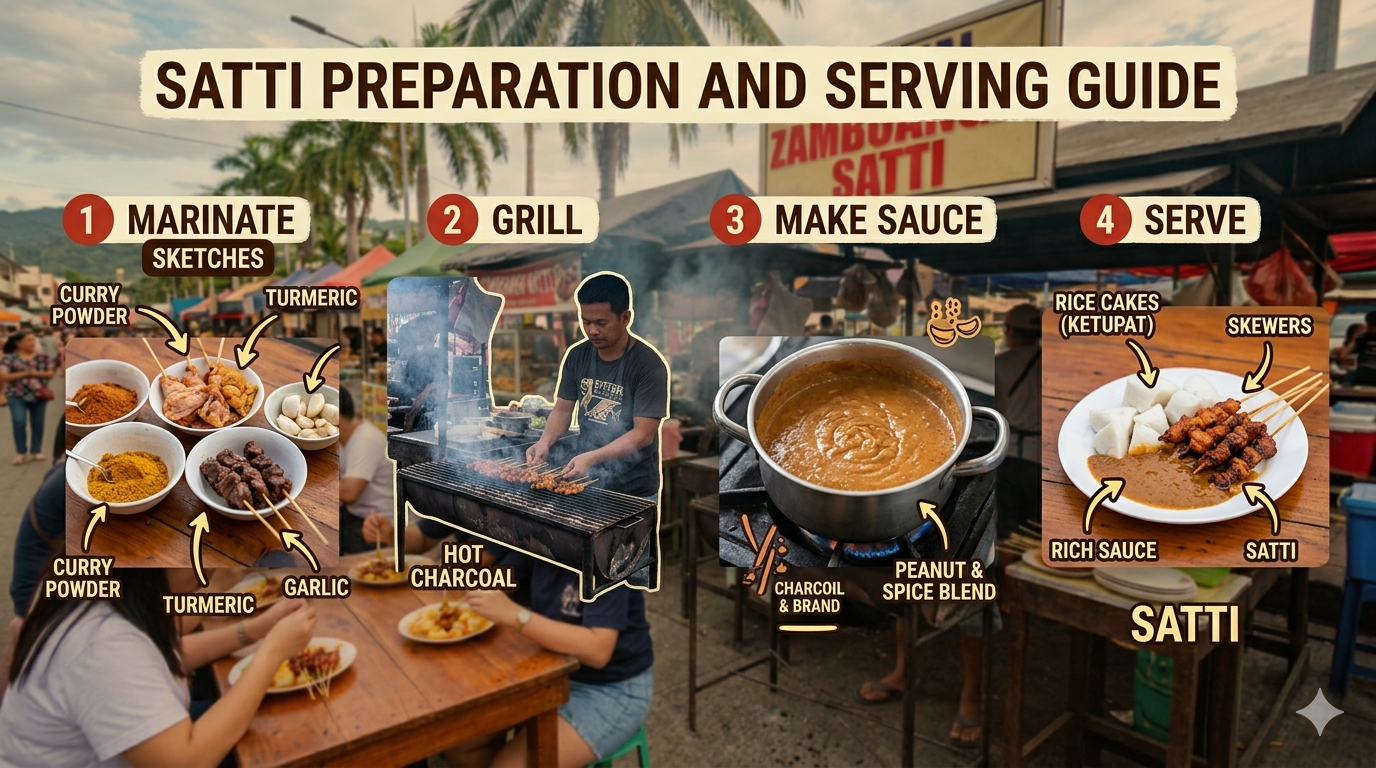
Diagram displaying skewered meat, sauce, and rice in Satti preparation.
Disclaimer
This article is for general informational and educational purposes only. It does not constitute professional medical, nutrition, or dietary advice. References to diets, foods, or supplements do not imply endorsement or guarantee of health outcomes. Readers are encouraged to consult licensed nutritionists, dietitians, or medical professionals for personalized guidance.