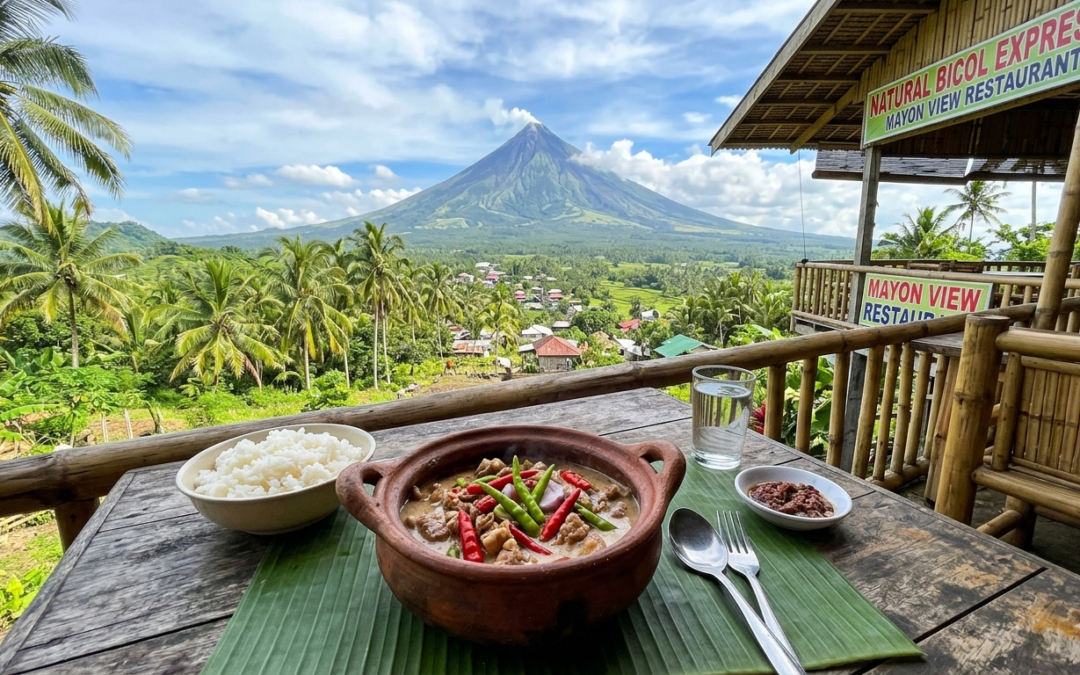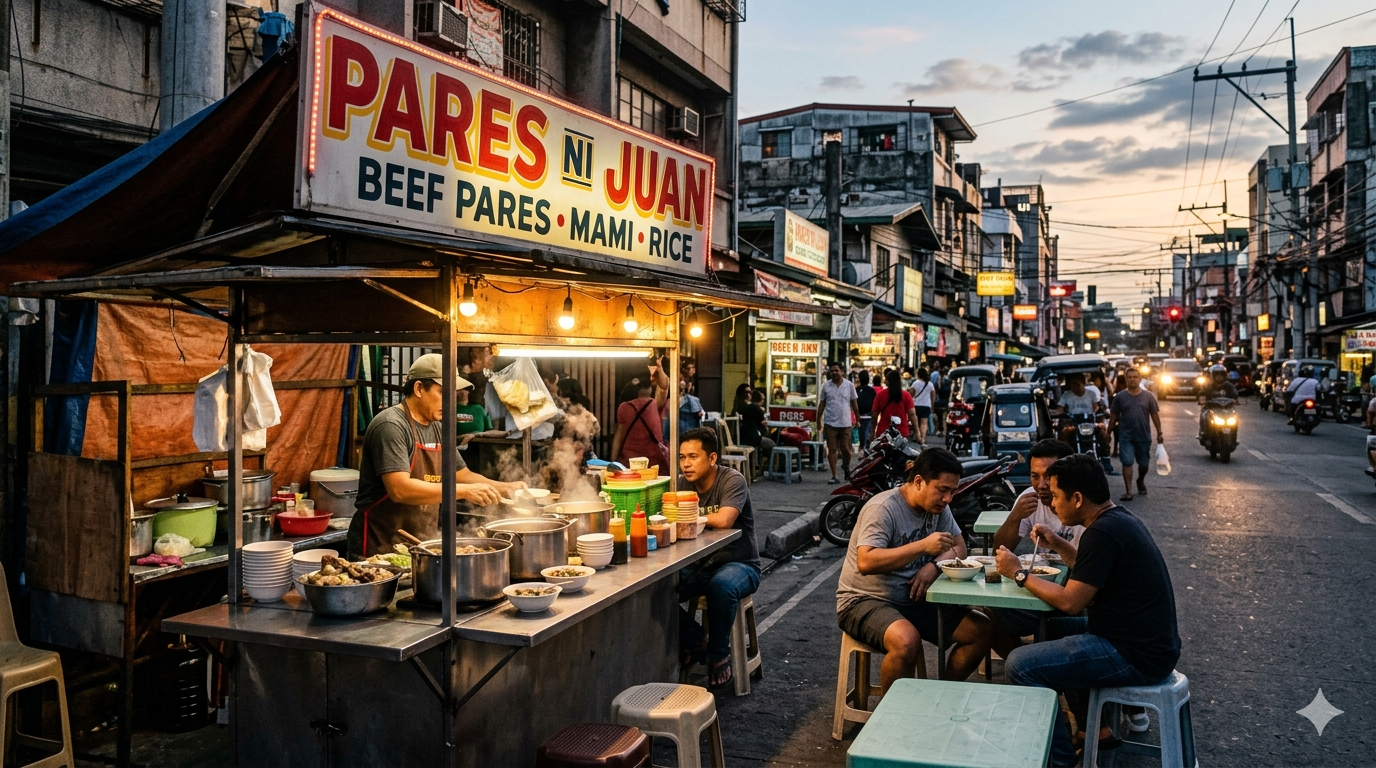
Understanding Pares: Nutritional and Culinary Overview
A neutral guide to the ingredients, nutrient content, and meal considerations of the Filipino dish Pares.
Pares is a traditional Filipino dish, typically consisting of braised beef, a sweet-savory sauce, and a side of garlic fried rice or noodles. This article provides an educational overview of its typical ingredients, macronutrient contributions, and ways it can be incorporated into a meal plan. Information aligns with Philippine food safety standards (DOH, FDA, DTI) and general nutrition principles.
Ingredients and Nutrient Overview
A standard Pares meal usually includes:
- Beef – Provides protein and micronutrients such as iron and zinc. The fat content varies depending on the cut used.
- Soy sauce and garlic – Primarily used for flavor; soy sauce contributes sodium.
- Sugar or sweeteners – Adds simple carbohydrates; sugar content can be moderated to reduce excess calorie intake.
- Rice or noodles – Main source of complex carbohydrates and energy.
Macronutrient Breakdown (Approximate, per serving)
| Component | Typical Amount | Notes |
|---|---|---|
| Protein (g) | 20–25 | From beef; varies by cut |
| Carbohydrates (g) | 45–60 | From rice/noodles and sugar |
| Fat (g) | 10–20 | From beef and cooking oil |
| Sodium (mg) | 600–900 | Mainly from soy sauce; can be adjusted |
Meal Planning Considerations
- Portion control: A standard serving of Pares can be adjusted to fit within balanced meal guidelines.
- Vegetable inclusion: Adding steamed or sautéed vegetables can increase fiber, vitamins, and minerals.
- Frequency: Pares can be part of a varied diet, but moderation of sodium and added sugar is recommended for general nutrition safety.
Context
In nutrition science studies, mixed meals like Pares contribute to daily energy and macronutrient intake. Under Philippine food safety regulations, beef should be sourced from licensed suppliers and cooked to safe temperatures to reduce risk of foodborne illness. Dietary results, including nutrient adequacy, vary individually based on overall eating patterns, activity level, and health status.
FAQs
What is Pares?
Pares is a Filipino dish consisting of braised beef in a sweet-savory sauce, typically served with rice or noodles.
What nutrients does Pares provide?
Pares contains protein from beef, carbohydrates from rice or noodles, and micronutrients such as iron and zinc. Sodium and fat content depend on preparation methods.
Can Pares be part of a balanced diet?
Paired with vegetables and controlled portions of rice or noodles, Pares can contribute to overall nutrient intake. Individual needs vary.
Trusted Sources
- Department of Health Philippines, “Nutrition Facts and Guidelines”
- Food and Drug Administration Philippines, “Food Safety Advisory”
- Academy of Nutrition and Dietetics, peer-reviewed nutrition journals
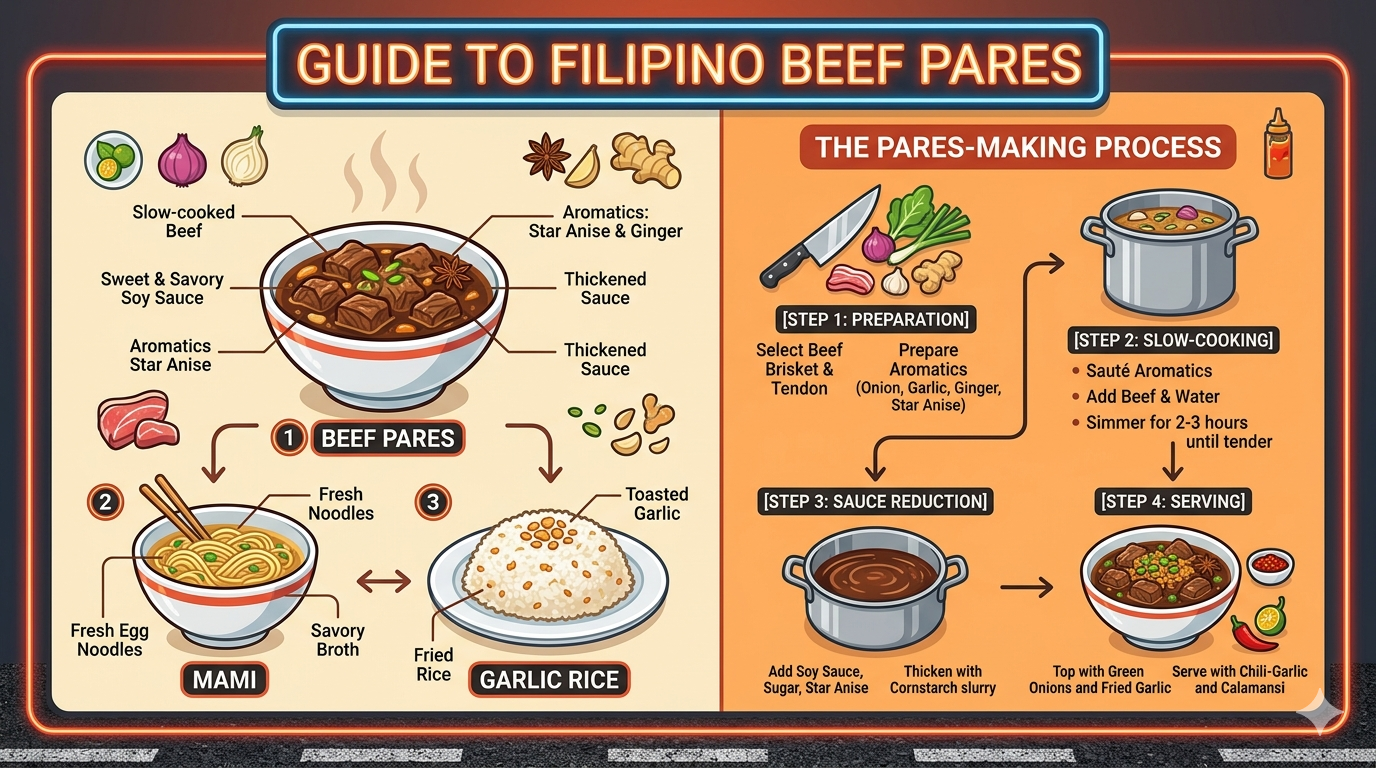
Descriptive infographic showing components and cooking steps of Pares.
Mandatory Disclaimer
This article is for general informational and educational purposes only. It does not constitute professional medical, nutrition, or dietary advice. References to foods or dishes do not imply endorsement or guarantee of health outcomes. Readers are encouraged to consult licensed nutritionists, dietitians, or medical professionals for personalized guidance.