Understanding Ngohiong: Nutritional and Culinary Overview
An educational look at the ingredients, preparation, and nutritional considerations of ngohiong in the Philippine context.
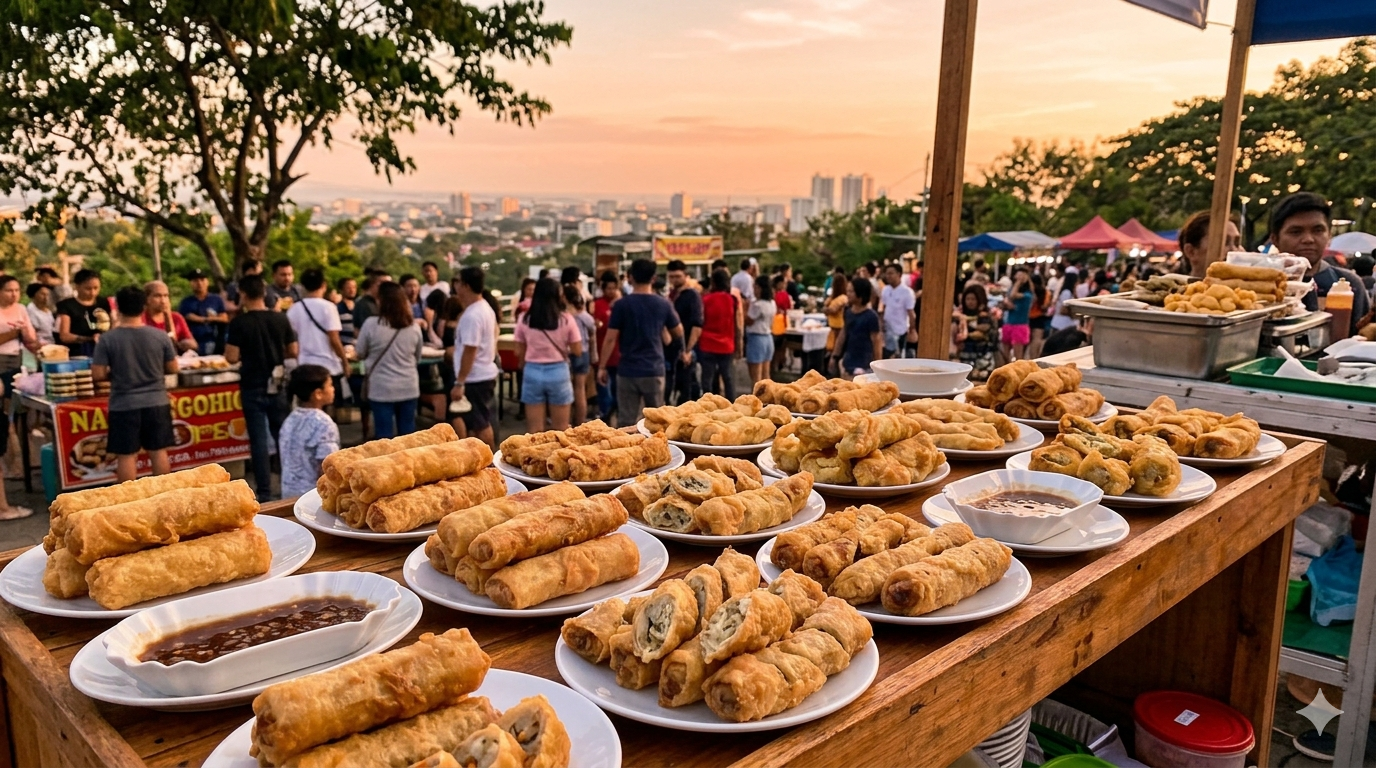
Ngohiong is a deep-fried Filipino snack influenced by Chinese spring rolls. It is commonly made with a mixture of ground pork, shrimp, vegetables, and spices, wrapped in a thin dough or bean-curd sheet. This article provides a neutral overview of its composition, potential nutritional contributions, and considerations for safe consumption.
Ingredients and Food Groups:
- Protein sources: ground pork, shrimp
- Vegetables: jicama, carrots, or other shredded vegetables
- Carbohydrates: wrapper made from flour or bean-curd sheets
- Fats: cooking oil used for deep-frying
Ngohiong can be part of a diet when consumed in moderation. Its preparation method, particularly deep-frying, contributes to higher energy (calorie) content and fat levels.
Nutritional Considerations:
- Macronutrients: Ngohiong provides protein from meat and seafood, carbohydrates from the wrapper, and fats from frying oil.
- Micronutrients: Vegetables contribute fiber, vitamin C, and potassium, though the frying process may reduce some heat-sensitive nutrients.
- Portion control: Because deep-fried foods are energy-dense, smaller portions can help maintain overall nutrient balance.
Consumer Awareness:
- Verify freshness of ingredients, especially seafood and meat, following FDA and LGU food safety standards.
- Proper cooking to safe internal temperatures reduces risk of foodborne illness.
- Commercial ngohiong products may include additives or preservatives; reading labels helps in understanding contents and verifying claims.
Context
In nutrition science studies, fried snacks are generally considered energy-dense foods, meaning they supply a high number of calories per serving. Under consumer protection and labeling standards, ingredient transparency and food safety practices are emphasized. Diet planning typically involves balancing nutrient intake across meals, while considering moderation of fried foods. Individual dietary results vary depending on age, activity level, and overall dietary patterns. For personalized guidance, consulting a licensed nutritionist or dietitian is recommended.
FAQs
What is ngohiong?
Ngohiong is a Filipino snack influenced by Chinese spring rolls, typically made with ground pork, shrimp, vegetables, and a thin wrapper, then deep-fried.
Is ngohiong a source of protein?
Yes, the meat and seafood ingredients provide protein, while the vegetables and wrapper contribute carbohydrates and fiber.
How can ngohiong be consumed safely?
Safe consumption involves moderate portion sizes, ensuring proper cooking, and verifying the freshness of ingredients according to food safety guidelines.
Trusted Sources
- Department of Health (DOH Philippines) – Food Safety Advisories
- FDA Philippines – Guidelines on Meat and Seafood Safety
- Philippine Nutrition Foundation (PhilNutri) – Food Composition Data
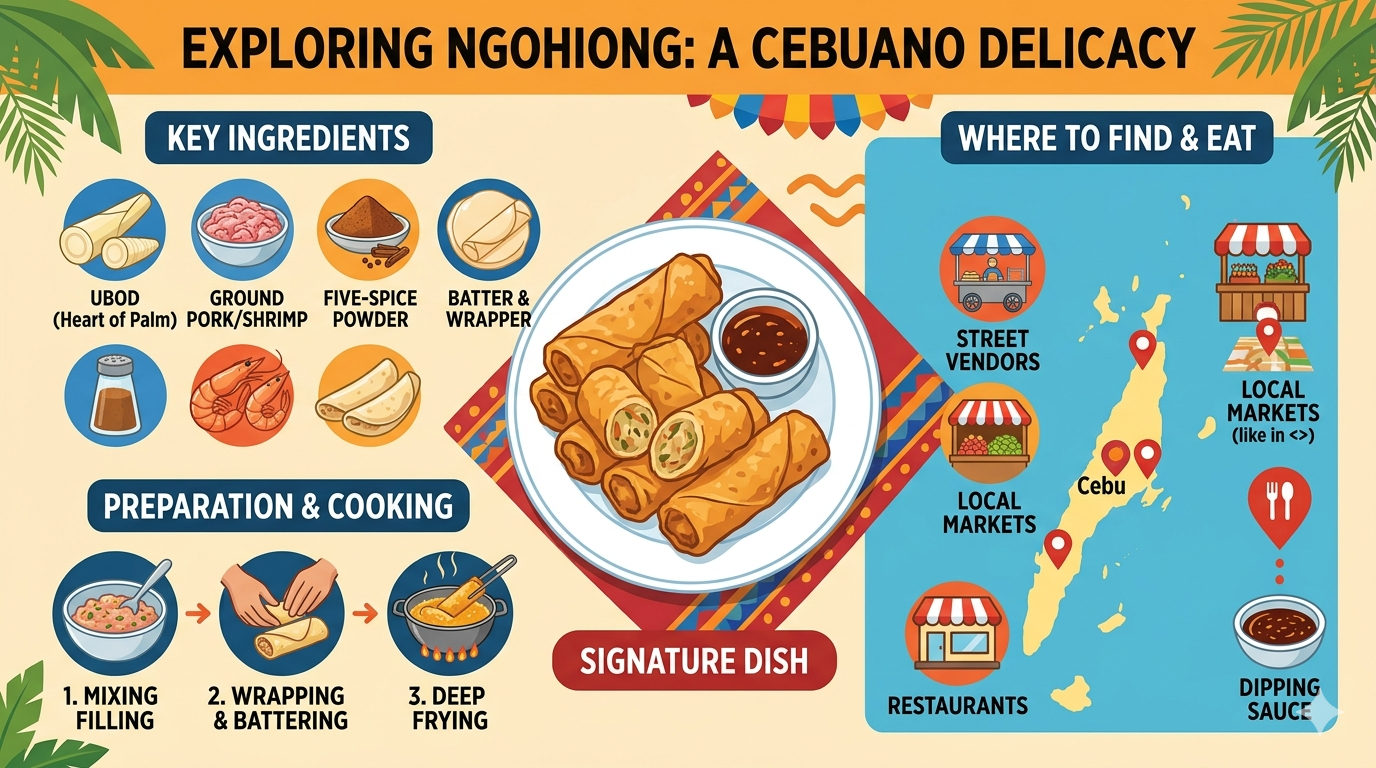
Infographic illustrating components and preparation steps of ngohiong.
Disclaimer
This article is for general informational and educational purposes only. It does not constitute professional medical, nutrition, or dietary advice. References to foods or cooking methods do not imply endorsement or guarantee of health outcomes. Readers are encouraged to consult licensed nutritionists, dietitians, or medical professionals for personalized guidance.