Kare-Kare: An Educational Overview of a Traditional Filipino Dish
A neutral guide on ingredients, nutritional aspects, and meal planning considerations.
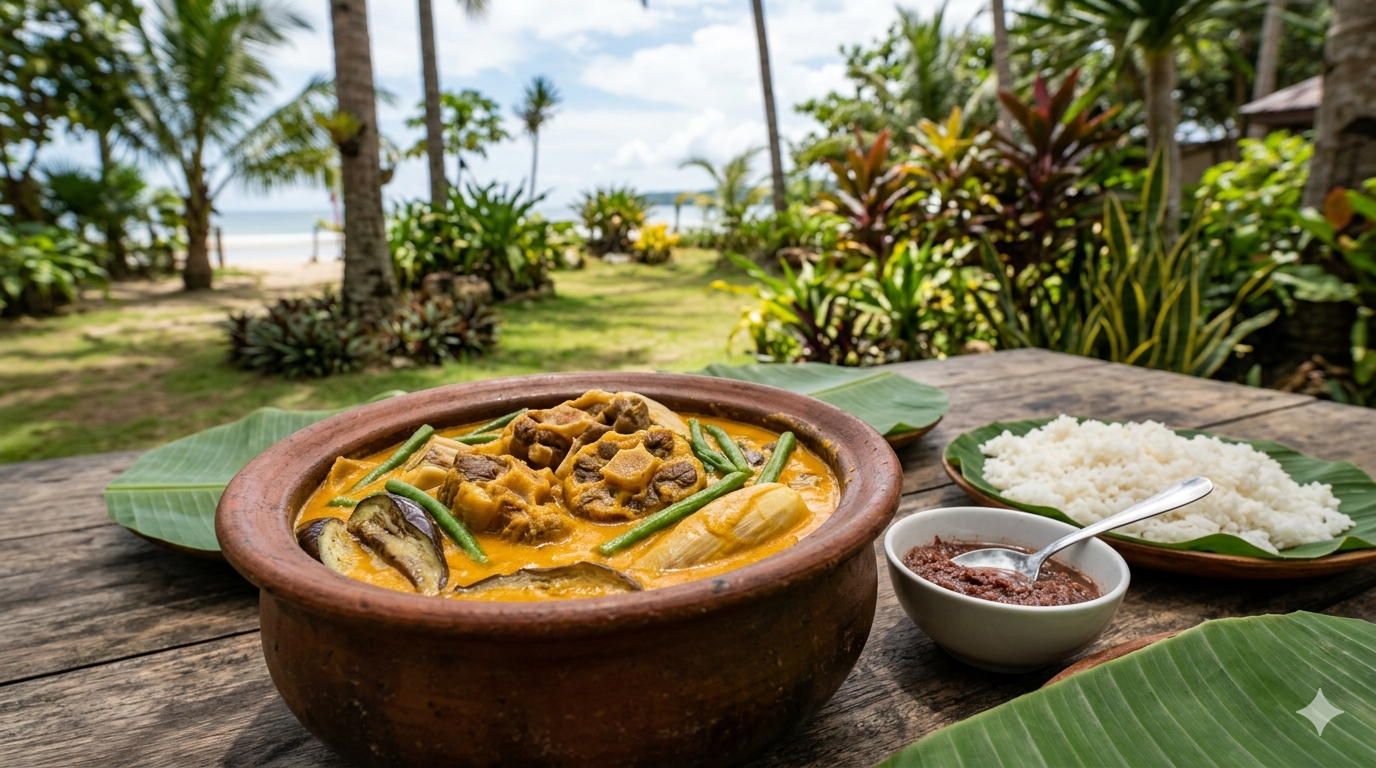
Kare-Kare is a traditional Filipino stew typically made with a peanut-based sauce, vegetables, and meat. Under Philippine food safety and consumer protection standards, understanding its nutritional components and preparation methods can help individuals make informed decisions about meal planning. This article provides a neutral, educational overview of Kare-Kare, highlighting common ingredients, nutrient contributions, and hypothetical portion considerations.
1. Ingredients and Macronutrients
Kare-Kare often includes:
- Proteins: oxtail, tripe, beef, pork, or seafood alternatives
- Vegetables: eggplant, string beans, banana blossoms, pechay
- Sauce components: roasted peanuts or peanut butter, rice flour or ground glutinous rice for thickening
From a nutritional perspective:
- Proteins provide essential amino acids for body function.
- Vegetables contribute dietary fiber, vitamins A and C, and minerals such as potassium.
- Peanuts add plant-based protein, healthy fats, and micronutrients like magnesium.
2. Portion and Balance Considerations
- A typical serving includes one to two portions of protein and a generous portion of vegetables.
- Peanut-based sauces are energy-dense; moderation is relevant for overall calorie intake.
- Carbohydrate accompaniments (e.g., rice) provide additional energy and should be considered as part of total meal planning.
3. Hypothetical Meal Planning Scenario (Informational Only)
- Lunch Example:
-
- ½ cup cooked rice
- ½ cup Kare-Kare with 2–3 pieces of meat and ½ cup vegetables
- 1 small serving of bagoong (fermented shrimp paste) on the side
This example demonstrates potential nutrient diversity, including protein, complex carbohydrates, fiber, and fats, without implying specific health outcomes.
4. Consumer Awareness and Preparation Safety
- Check freshness of meat and vegetables to reduce foodborne risks.
- Peanut products should be stored properly to prevent spoilage.
- Reading ingredient labels of packaged peanut butter can help avoid additives or allergens.
Context
In nutrition science studies, traditional Filipino dishes like Kare-Kare are often discussed in terms of macronutrient distribution and cultural dietary patterns. Under Philippine consumer protection and labeling standards, individuals are encouraged to consider nutrient balance, portion control, and safe food handling. Dietary results vary individually, and consulting licensed nutrition or medical professionals is advisable for personalized guidance.
FAQs
What nutrients are in Kare-Kare?
Kare-Kare contains proteins from meat, fats from peanuts, and vitamins and fiber from vegetables.
Is Kare-Kare considered energy-dense?
Yes, due to peanut-based sauce and potential rice accompaniment, it provides a higher calorie content per serving.
How can Kare-Kare be included in a meal plan?
It can be part of a balanced meal, alongside other vegetables, grains, and protein sources, keeping portion sizes in mind.
Trusted Sources
- Department of Health (DOH) Philippines — Nutrition Guidelines
- FDA Philippines — Food Labeling and Safety References
- Philippine Journal of Nutrition — Peer-Reviewed Studies on Traditional Filipino Dishes
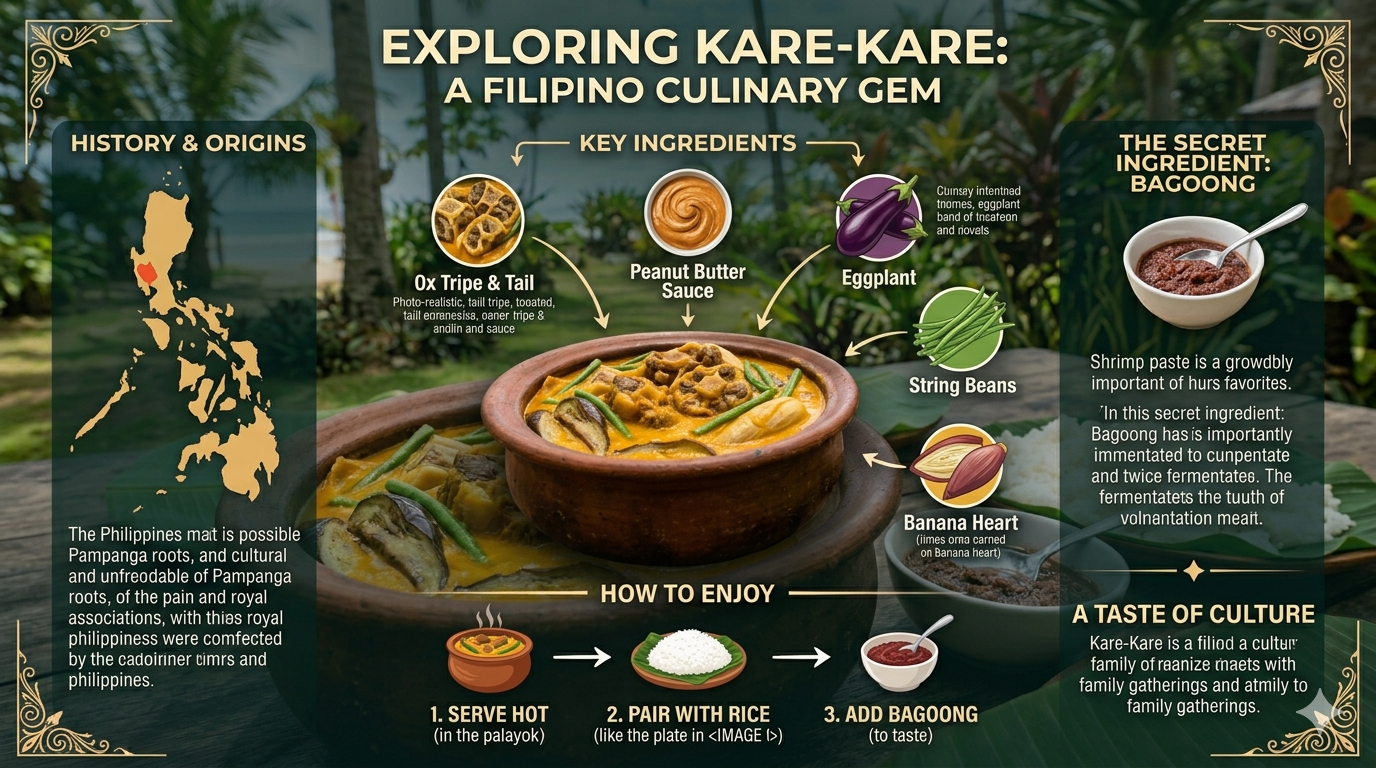
Infographic displaying typical components of Kare-Kare with corresponding macronutrient types.
Disclaimer
This article is for general informational and educational purposes only. It does not constitute professional medical, nutrition, or dietary advice. References to Kare-Kare ingredients or preparation methods do not imply endorsement or guarantee of health outcomes. Readers are encouraged to consult licensed nutritionists, dietitians, or medical professionals for personalized guidance.