
Understanding Halo-Halo: A Nutritional Overview
A neutral look at the ingredients, nutrient balance, and consumption context
Halo-halo is a traditional Filipino dessert composed of mixed ingredients such as sweetened beans, fruits, jellies, and shaved ice, often topped with evaporated milk or ube (purple yam). This article provides an educational overview of halo-halo’s typical components, macronutrient and micronutrient contributions, and considerations for incorporating such treats in a balanced diet, aligned with Philippine food safety standards.
Ingredients and Nutritional Components
- Sweetened beans and legumes – sources of plant protein and dietary fiber.
- Fruits (jackfruit, banana, mango) – provide vitamins such as vitamin C, minerals, and natural sugars.
- Jellies and nata de coco – primarily carbohydrate-based, offering texture but minimal micronutrients.
- Shaved ice – contributes water content, low in calories.
- Evaporated milk or ube halaya – adds protein, calcium, and fat.
Macronutrient Considerations
Halo-halo combines carbohydrates, proteins, and fats, though sugar content can be high depending on sweeteners. Fiber comes from beans and fruits. Individuals monitoring sugar intake may consider portion control.
Consumption Context
Under Philippine food safety standards, halo-halo ingredients should be properly prepared and stored to avoid contamination. Awareness of added sugar, portion sizes, and ingredient quality can support informed dietary choices.
Context
In nutrition science studies, desserts like halo-halo are considered occasional treats rather than core dietary staples. Dietary planning typically involves balancing nutrient-dense foods with occasional energy-dense foods. Nutrient intake and effects vary among individuals. For personalized guidance, consultation with licensed nutritionists or dietitians is recommended.
FAQs
What is halo-halo?
Halo-halo is a Filipino dessert made by combining shaved ice with various sweetened ingredients, fruits, and milk or cream.
What nutrients are present in halo-halo?
It provides carbohydrates, some protein, dietary fiber, vitamins from fruits, and minerals from beans and milk.
Is halo-halo considered a healthy food?
As a mixed dessert, halo-halo can be part of a balanced diet if consumed occasionally, with attention to portion size and added sugars.
Trusted Sources
- Department of Health, Philippines – Food Safety and Nutrition Advisories
- Food and Drug Administration, Philippines – Guidelines on Safe Food Handling
- Academic journals on Philippine dietary patterns and traditional foods
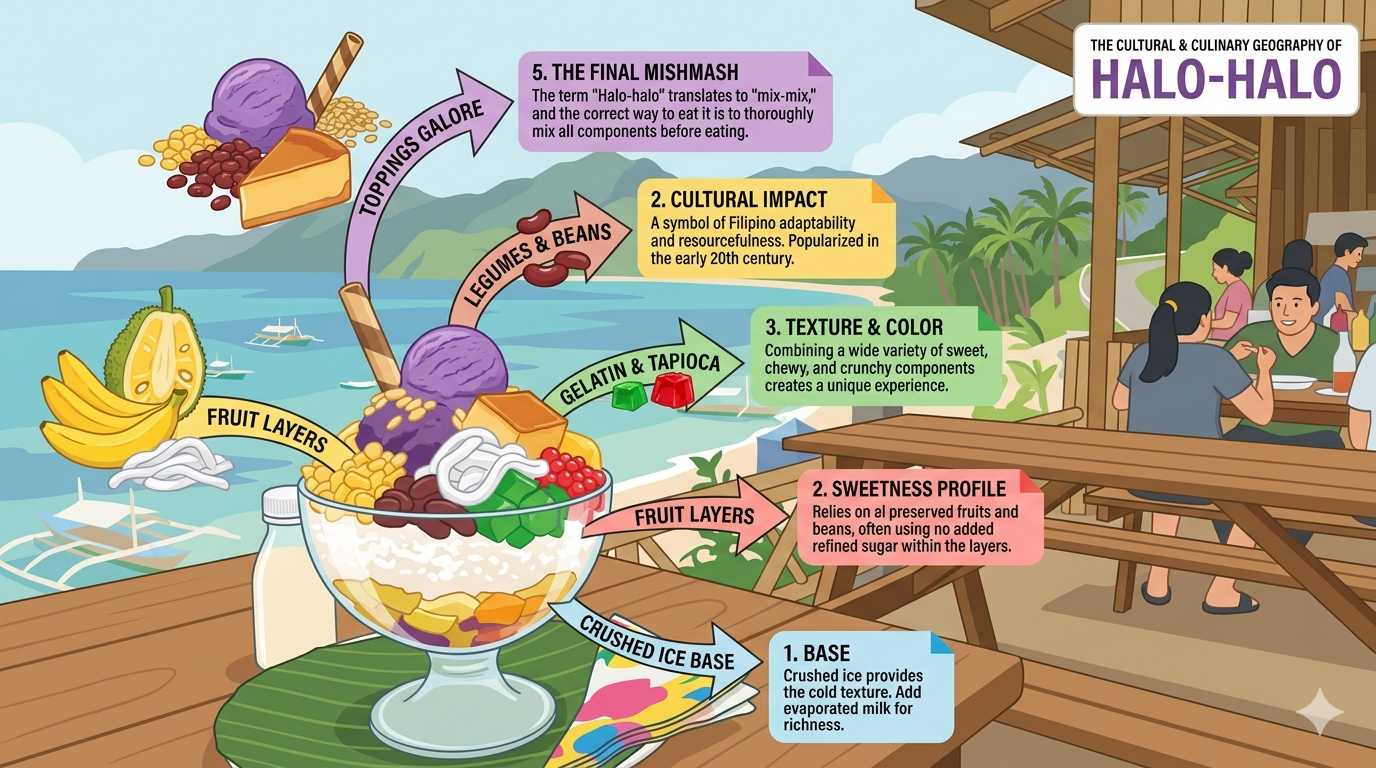
Infographic showing typical components and arrangement of halo-halo dessert ingredients.
Mandatory Disclaimer
This article is for general informational and educational purposes only. It does not constitute professional medical, nutrition, or dietary advice. References to foods or ingredients do not imply endorsement or guarantee of health outcomes. Readers are encouraged to consult licensed nutritionists, dietitians, or medical professionals for personalized guidance.