
Halo-Halo (Pampanga Style): An Educational Overview of Ingredients and Nutritional Components
A neutral look at a traditional Filipino dessert and its typical composition
This article provides an informational overview of Halo-halo (Pampanga style), a traditional Filipino dessert known for its combination of sweetened ingredients, ice, and milk. It focuses on ingredient composition, food groups, and general nutritional considerations, aligned with guidance from the Department of Health (Philippines) and Food and Drug Administration Philippines.
Readers will learn about the common components used in this regional variation and how they relate to basic nutrition concepts.
What Is Halo-Halo (Pampanga Style)?
Halo-halo is a mixed dessert widely consumed in the Philippines. The Pampanga-style version is often associated with a carefully layered presentation and a combination of traditional and locally preferred ingredients.
Typical preparation involves:
- Crushed or shaved ice
- Evaporated or fresh milk
- A mix of sweetened fruits, beans, and root crops
- Toppings such as leche flan or ube (purple yam)
Common Ingredients and Food Groups
Pampanga-style Halo-halo may include the following components:
Carbohydrate Sources
- Sweetened bananas (saba)
- Jackfruit (langka)
- Sweetened beans (e.g., red mung beans)
- Tapioca pearls or gelatin
These ingredients contribute carbohydrates, which are commonly used by the body as a source of energy.
Protein and Fat Sources
- Milk (evaporated or fresh)
- Leche flan (egg-based custard)
These may provide small amounts of protein and fat depending on preparation.
Additional Components
- Ube (purple yam)
- Sugar or syrup
- Ice (for texture and temperature)
Nutritional Considerations
Halo-halo is generally categorized as a dessert. Its nutritional profile depends on ingredient choices and portion size.
General observations:
- Often contains carbohydrates from sweetened ingredients
- May include added sugars depending on preparation
- Provides varying amounts of micronutrients from fruits and beans
As with many desserts, it is typically consumed occasionally within a varied diet.
Hypothetical Serving Composition Example
An illustrative serving of Pampanga-style Halo-halo may include:
- 1 cup shaved ice
- 2–3 tablespoons mixed sweetened fruits and beans
- 2 tablespoons milk
- 1 small slice leche flan
- 1 tablespoon ube
This example demonstrates ingredient balance rather than specific dietary recommendations.
Food Labeling and Consumer Awareness
When ingredients such as canned fruits, sweetened beans, or packaged toppings are used, consumers may refer to labels for:
- Sugar content
- Ingredient lists
- Serving sizes
Under Philippine food safety and labeling standards, manufacturers are required to provide accurate nutritional information to support informed choices.
Context
In food studies, Halo-halo is often cited as an example of a mixed-ingredient dessert reflecting regional preferences. Pampanga, sometimes referred to as a culinary center in the Philippines, has variations that emphasize ingredient quality and preparation style.
Dietary intake patterns vary widely, and desserts like Halo-halo are typically part of broader eating habits rather than primary nutrient sources.
FAQs
What makes Pampanga-style Halo-halo different?
It often features a curated selection of ingredients and layered preparation, though variations exist depending on the maker.
Is Halo-halo considered a complete meal?
It is generally classified as a dessert rather than a full meal due to its ingredient composition.
What nutrients are found in Halo-halo?
It may contain carbohydrates, small amounts of protein and fat, and some vitamins and minerals depending on the ingredients used.
Trusted Sources
- Department of Health (Philippines) — General nutrition guidance
- Food and Drug Administration Philippines — Food labeling standards
- Academic food science and cultural studies publications on Filipino cuisine
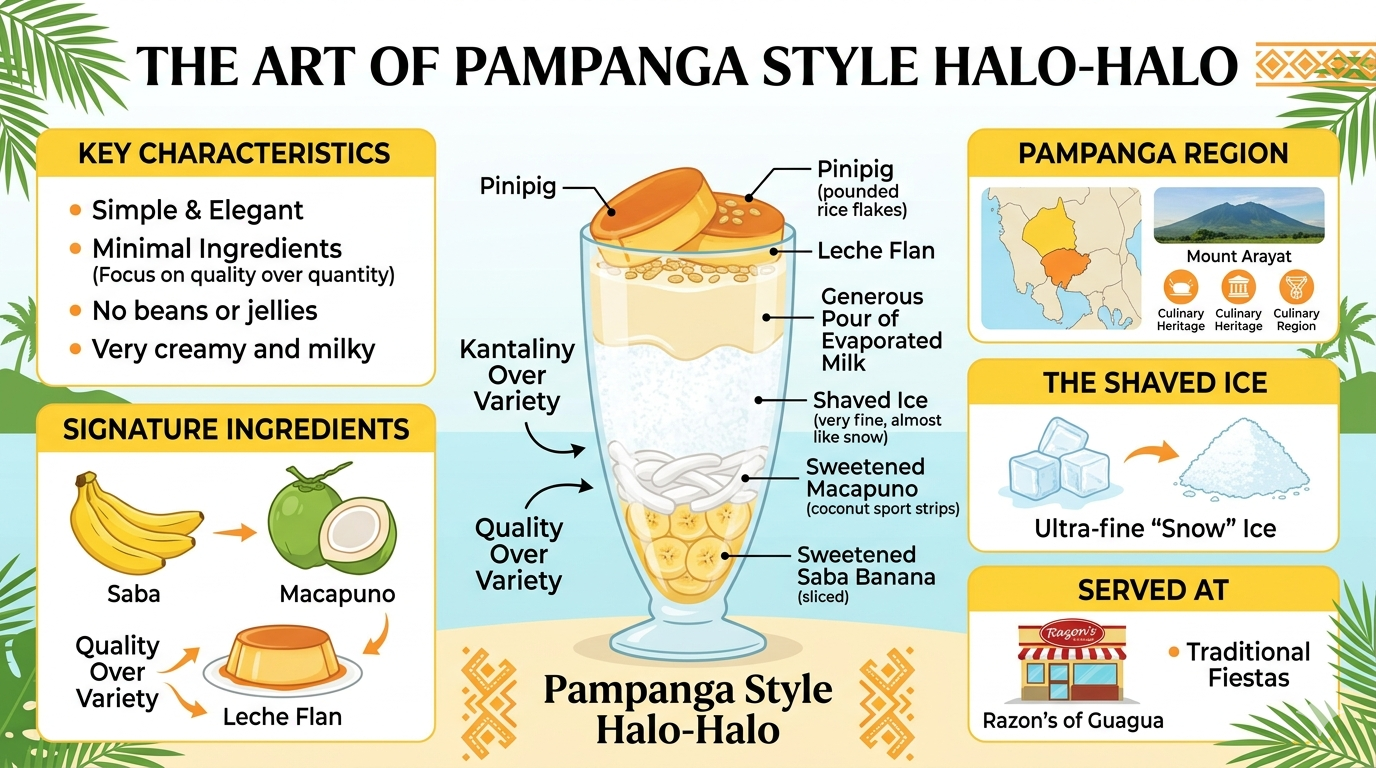
Visual breakdown of halo-halo ingredients and layers
Disclaimer
This article is for general informational and educational purposes only. It does not constitute professional medical, nutrition, or dietary advice. References to diets, foods, or supplements do not imply endorsement or guarantee of health outcomes. Readers are encouraged to consult licensed nutritionists, dietitians, or medical professionals for personalized guidance.