Binagol: A Neutral Overview of a Traditional Filipino Dessert
An educational look at Binagol, its ingredients, and nutritional considerations in the Philippine context.
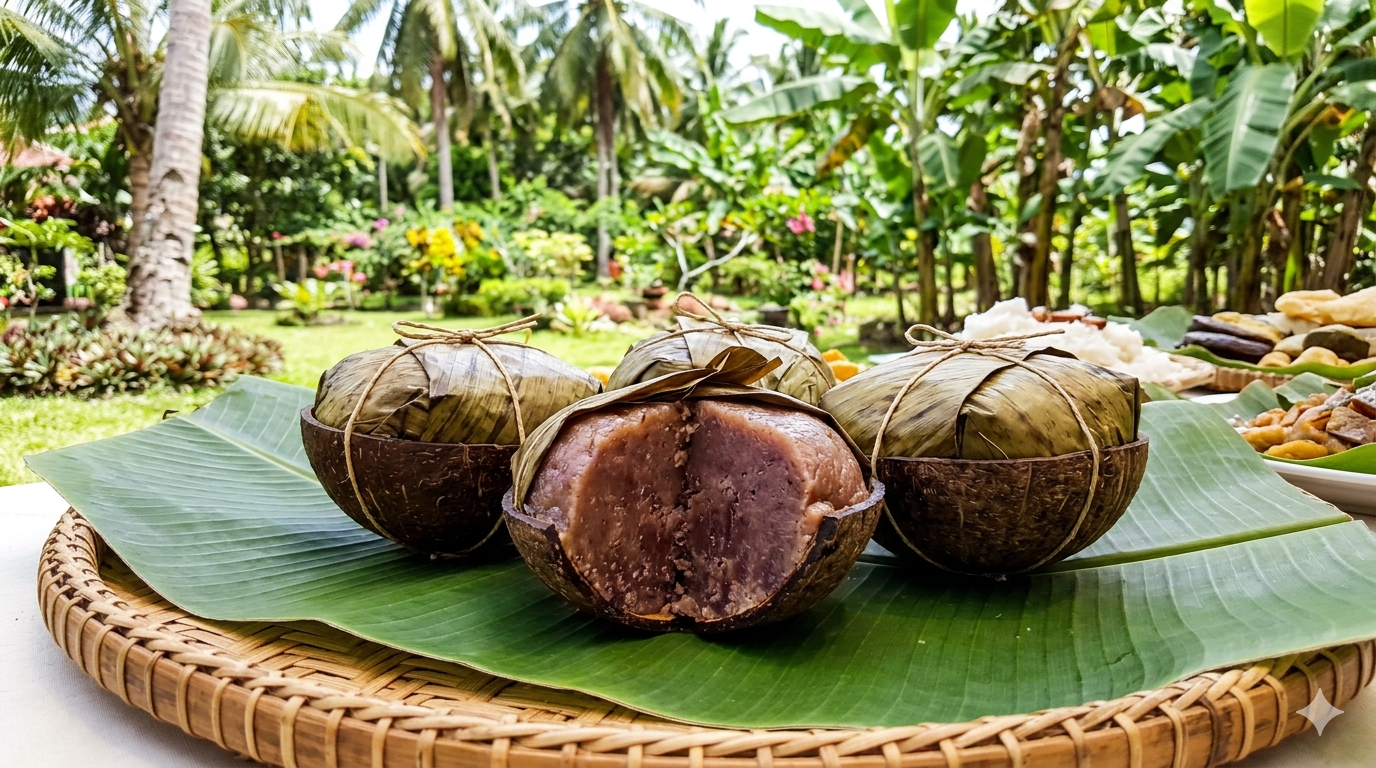
Binagol is a traditional Filipino dessert commonly found in the Eastern Visayas region. Prepared using taro (locally known as gabi), coconut milk, sugar, and sometimes egg yolks, it is steamed in a coconut shell or wrapped in a banana leaf. This article provides an informational overview of Binagol’s typical ingredients, macronutrient composition, and safe consumption considerations under Philippine food safety and labeling standards.
Ingredients and Nutritional Components
Binagol primarily consists of:
- Taro (Gabi): A starchy root vegetable, providing carbohydrates and dietary fiber.
- Coconut milk: Contains medium-chain triglycerides (MCTs), small amounts of protein, and saturated fats.
- Sugar: A source of simple carbohydrates that contributes to energy intake.
- Egg yolk (optional): Adds protein, fat, and micronutrients such as vitamin A and choline.
The dessert is typically steamed, which is a cooking method that does not require added oil and helps preserve the natural nutrients of the ingredients. Portion sizes and frequency of consumption may influence total calorie and macronutrient intake.
Food Safety Considerations
Under FDA Philippines guidelines, ingredients must be sourced and handled safely to prevent contamination. Coconut milk should be fresh or properly packaged, taro should be thoroughly washed and cooked to eliminate naturally occurring compounds that may cause irritation if raw, and sugar and egg components should follow proper storage practices.
Hypothetical Nutrient Overview (per 100 g serving, illustrative only)
- Carbohydrates: 20–30 g
- Protein: 1–3 g
- Fat: 5–8 g
- Fiber: 1–2 g
- Vitamins/Minerals: small amounts of vitamin C, potassium, and magnesium
These values are approximate and vary depending on preparation method and ingredient proportions.
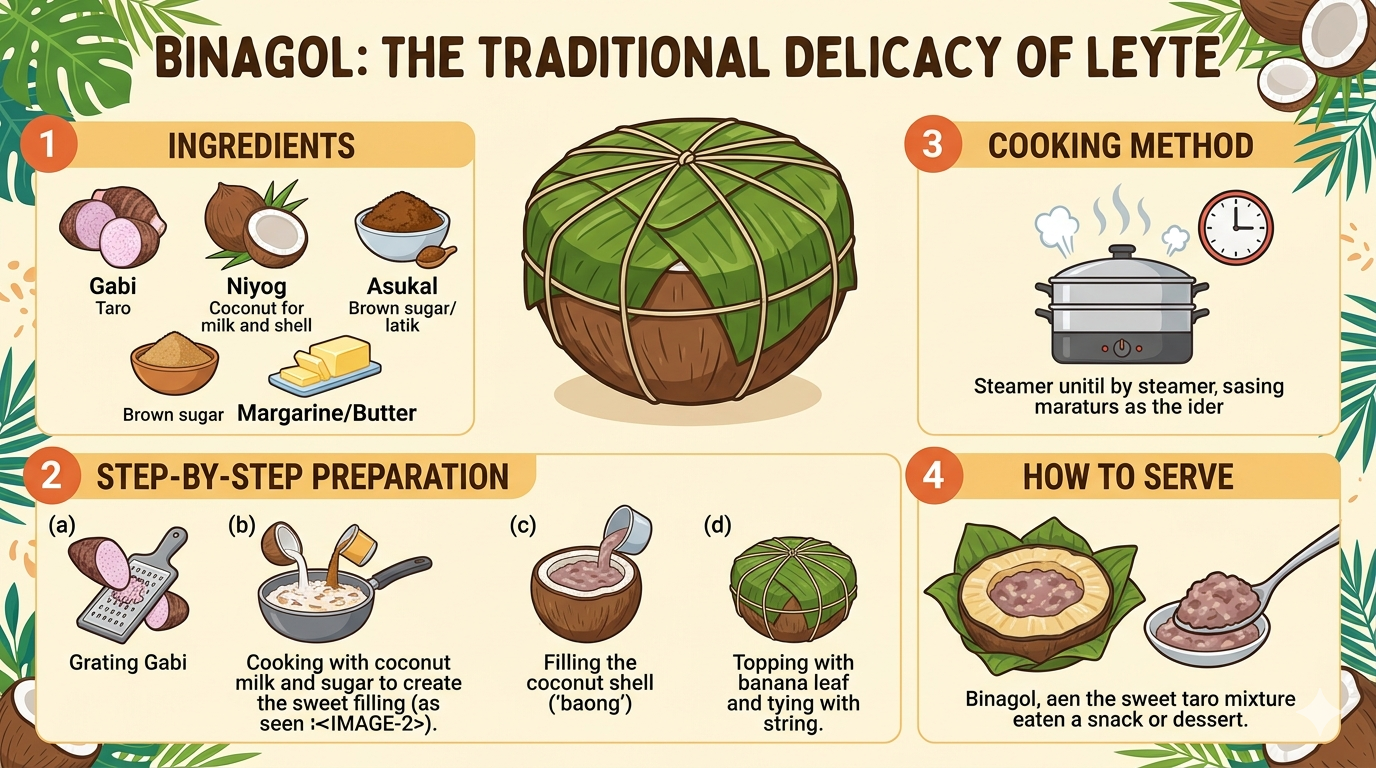
Infographic showing typical ingredients and traditional preparation method of Binagol.
Context
In nutrition science studies, starchy root-based desserts like Binagol contribute primarily to energy intake and may offer small amounts of fiber and micronutrients. Under Philippine consumer protection and food labeling standards, foods containing sugar and saturated fats should be clearly indicated to allow informed choices. Dietary results vary individually, and consumption should align with overall nutritional goals and energy needs.
FAQs
What is Binagol?
Binagol is a traditional Filipino dessert made from taro, coconut milk, sugar, and sometimes egg yolk, typically steamed in a coconut shell or banana leaf wrapper.
What nutrients are present in Binagol?
Binagol provides carbohydrates from taro and sugar, fat from coconut milk and egg yolk, small amounts of protein, and some dietary fiber and micronutrients.
Are there safety considerations when preparing Binagol?
Yes. Proper washing, cooking, and storage of ingredients are recommended to comply with food safety guidelines under the FDA Philippines.
Trusted Sources
- Department of Health (DOH) Philippines – Nutrition and food safety advisories
- FDA Philippines – Food labeling and preparation guidelines
- Philippine Food Composition Tables – Nutrient data for taro and coconut-based foods
Disclaimer
This article is for general informational and educational purposes only. It does not constitute professional medical, nutrition, or dietary advice. References to foods or recipes do not imply endorsement or guarantee of health outcomes. Readers are encouraged to consult licensed nutritionists, dietitians, or medical professionals for personalized guidance.