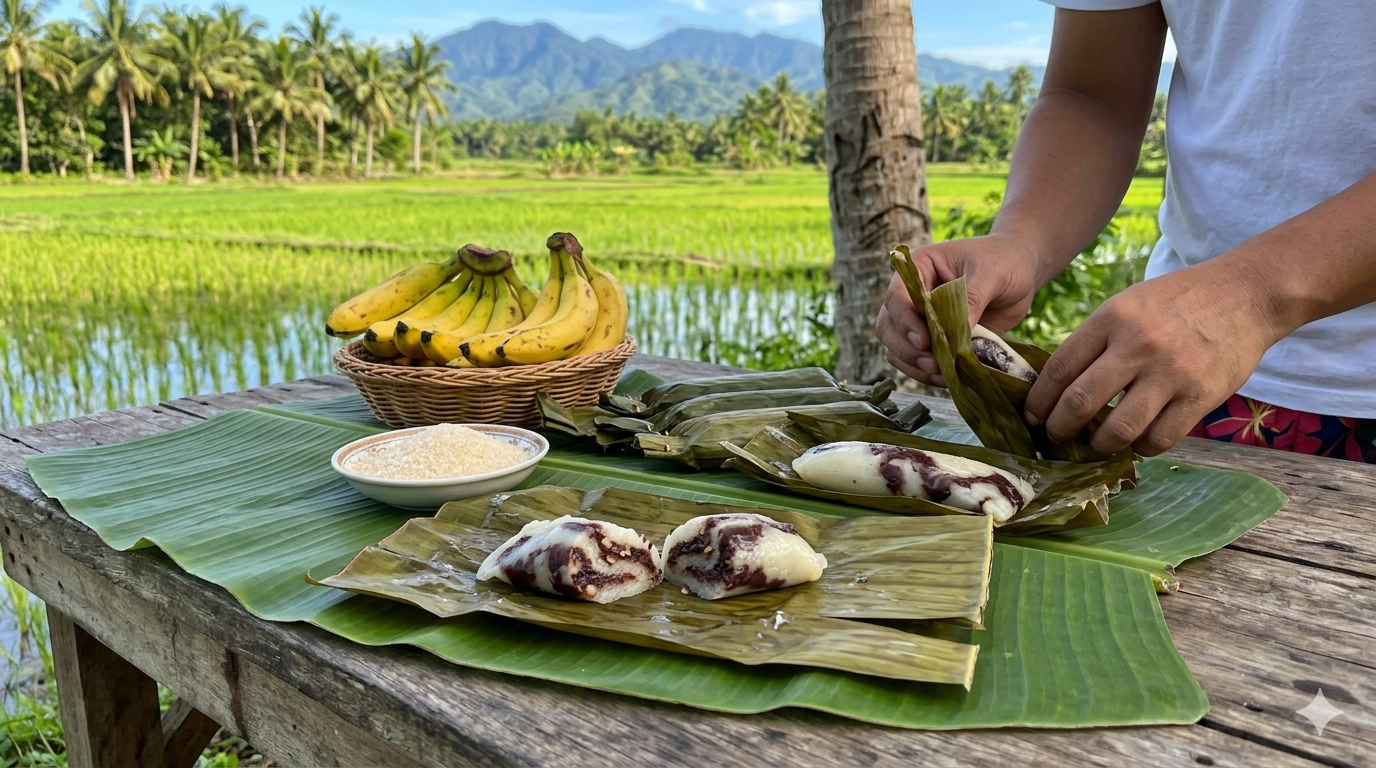
Understanding Moron: A Neutral Overview of Chocolate Sticky Rice Rolls
A neutral exploration of moron, its ingredients, nutritional aspects, and hypothetical serving considerations.
Moron, also known as chocolate sticky rice roll, is a traditional Filipino rice-based delicacy commonly enjoyed as a snack or dessert. This article provides a factual overview of moron’s ingredients, macronutrient composition, and cultural context. It aims to inform readers about the food’s nutritional components without implying health benefits, weight outcomes, or diet recommendations. Information aligns with Philippine food safety and labeling standards under DOH and FDA guidelines.
Ingredients and Composition
Moron typically contains glutinous rice, coconut milk, sugar, and cocoa powder. It may be wrapped in banana leaves for traditional preparation. Optional ingredients include butter or margarine for flavor and texture.
Macronutrient Overview
- Carbohydrates: Glutinous rice is a source of carbohydrates, providing energy.
- Fats: Coconut milk contributes saturated fats in moderate amounts.
- Protein: Protein content is low to moderate, depending on added ingredients.
- Fiber: Some fiber is present from rice and coconut components.
Hypothetical Serving Considerations
- A single moron roll may be considered a small energy-containing portion in a snack context.
- Nutrient density varies depending on sugar and coconut milk content.
- Illustrative serving: one 50–60 g roll provides mainly carbohydrates with small amounts of fat and protein.
Cultural and Culinary Context
- Moron is commonly sold in local markets in the Visayas region, particularly in Eastern Visayas.
- Preparation involves steaming rice mixture and rolling it in banana leaves, often for celebratory or communal events.
Consumer Awareness Notes
- Reading ingredient labels is advised when buying pre-packaged moron to confirm sugar content, additives, or preservatives.
- Under Philippine FDA labeling standards, product packaging should display ingredient lists and expiration dates.
Context
In nutrition science studies, glutinous rice is recognized as an energy source predominantly composed of carbohydrates. Coconut milk contributes fats and minor micronutrients. Under consumer protection and labeling standards in the Philippines, packaged rice-based products must include clear ingredient and nutrition information. Nutrient composition can vary between homemade and commercially produced moron. Dietary results vary individually, and this information does not imply any guaranteed health effects. For personalized nutrition guidance, consulting licensed nutritionists or dietitians is recommended.
FAQs
Q: What is moron?
A traditional Filipino rice roll made from glutinous rice, coconut milk, sugar, and sometimes cocoa, often wrapped in banana leaves.
Q: What nutrients are in a chocolate sticky rice roll?
Moron primarily provides carbohydrates, small amounts of fat, and minor protein. Nutrient content varies by recipe.
Q: How can I enjoy moron safely in a balanced diet?
As a snack or dessert, moron can be part of a diverse diet, considering portion size and individual dietary needs.
Trusted Sources
- Department of Health (DOH) Philippines – Food Safety Guidelines
- Food and Drug Administration (FDA) Philippines – Labeling and Ingredient Standards
- Philippine Nutritional Science Journals – Rice-Based Snack Studies
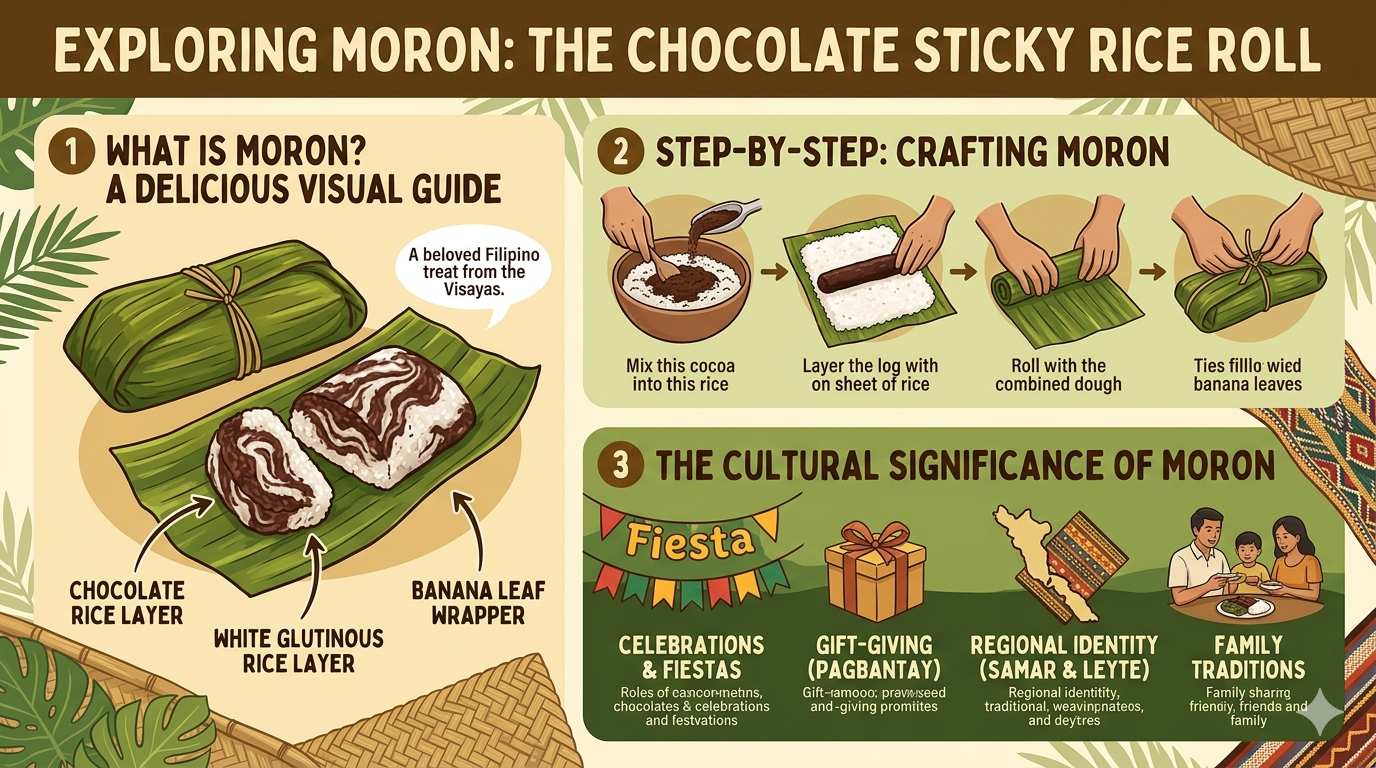
Visual representation of typical ingredients and composition of moron.
Disclaimer
This article is for general informational and educational purposes only. It does not constitute professional medical, nutrition, or dietary advice. References to foods do not imply endorsement or guarantee of health outcomes. Readers are encouraged to consult licensed nutritionists, dietitians, or medical professionals for personalized guidance.