
Curacha Dishes: Educational Overview of a Traditional Filipino Seafood Ingredient
A neutral introduction to culinary uses of curacha and general nutrition considerations in seafood meals.
Curacha is a seafood ingredient used in several Filipino dishes, particularly in coastal areas of Mindanao. The term commonly refers to the spanner crab species Ranina ranina. In the Philippines, curacha dishes are often associated with the cuisine of Zamboanga City. This article provides an educational overview of common curacha dishes, basic nutrition considerations for crab-based meals, and general consumer awareness when purchasing seafood.
What Is Curacha?
Curacha refers to a type of crab known for its broad, reddish shell and firm meat. It is commonly harvested in tropical waters across the Indo-Pacific region. In Filipino cuisine, curacha is typically prepared with sauces that highlight the natural flavor of the crab.
Crab meat generally contains protein and minerals such as zinc and selenium. Like other seafood, nutritional composition varies depending on portion size, preparation methods, and accompanying ingredients.
Examples of Curacha Dishes in Filipino Cuisine
Curacha in Alavar Sauce
One well-known preparation from Zamboanga City involves serving curacha with a sauce made from coconut milk, crab fat, and spices. The sauce coats the crab meat and shell.
From a nutrition perspective, coconut milk contributes dietary fats and calories. The overall nutrient profile of the dish depends on portion sizes and other ingredients used during cooking.
Steamed Curacha
Steaming is a simple preparation method in which the crab is cooked with minimal seasoning.
This approach generally involves:
- steaming the crab with water or broth
- adding aromatics such as garlic or ginger
- serving with dipping sauces
Steaming can reduce the need for additional oils or sauces, although flavoring choices vary by household or restaurant preparation.
Curacha with Garlic and Butter
Another preparation combines sautéed garlic and butter with cooked crab. This method creates a rich flavor profile.
Butter contributes dietary fat and calories, while garlic is often used for aroma and taste. As with many seafood dishes, the nutritional profile changes depending on the quantity of added ingredients.
Nutrition Context of Crab-Based Meals
Seafood such as crab is commonly included in balanced meal planning because it can provide protein and trace minerals. However, dietary balance typically involves considering multiple food groups, including vegetables, grains, and fruits.
Nutrition planning may also consider:
- portion sizes
- preparation methods
- sodium levels in sauces
- overall meal composition
Food safety guidelines recommend proper storage and thorough cooking of seafood to reduce the risk of contamination.
Consumer Awareness When Purchasing Seafood
Under Philippine food safety and consumer protection standards monitored by agencies such as the Department of Health and the Food and Drug Administration Philippines, consumers are encouraged to verify that seafood is sourced from reputable vendors.
General indicators of fresh crab may include:
- firm shell and intact body
- mild ocean-like smell
- proper cold storage at markets
Local government units may also regulate seafood handling practices in wet markets and restaurants.
Regional Culinary Traditions
Curacha dishes illustrate how coastal communities incorporate locally available seafood into traditional cooking methods. Regional sauces, spices, and preparation styles often shape the flavor profile of the final dish.
In nutrition discussions, seafood dishes are typically considered as part of broader dietary patterns rather than as single ingredients determining health outcomes.
FAQs
What is curacha?
Curacha is a local Filipino name for the spanner crab species Ranina ranina. It is commonly used in seafood dishes in parts of Mindanao, particularly in Zamboanga cuisine.
How is curacha usually cooked?
Common preparations include steaming, cooking with garlic and butter, or serving with coconut-based sauces. Recipes and ingredients vary by household or restaurant.
Is crab commonly used in Filipino meals?
Crab appears in several regional Filipino seafood dishes. Its use depends on coastal availability, culinary traditions, and seasonal seafood supply.
Trusted Sources
- Department of Health – Food safety and nutrition advisories
- Food and Drug Administration Philippines – Food safety guidelines
- Food and Agriculture Organization of the United Nations – Seafood and fisheries information
- Peer-reviewed food science and nutrition journals
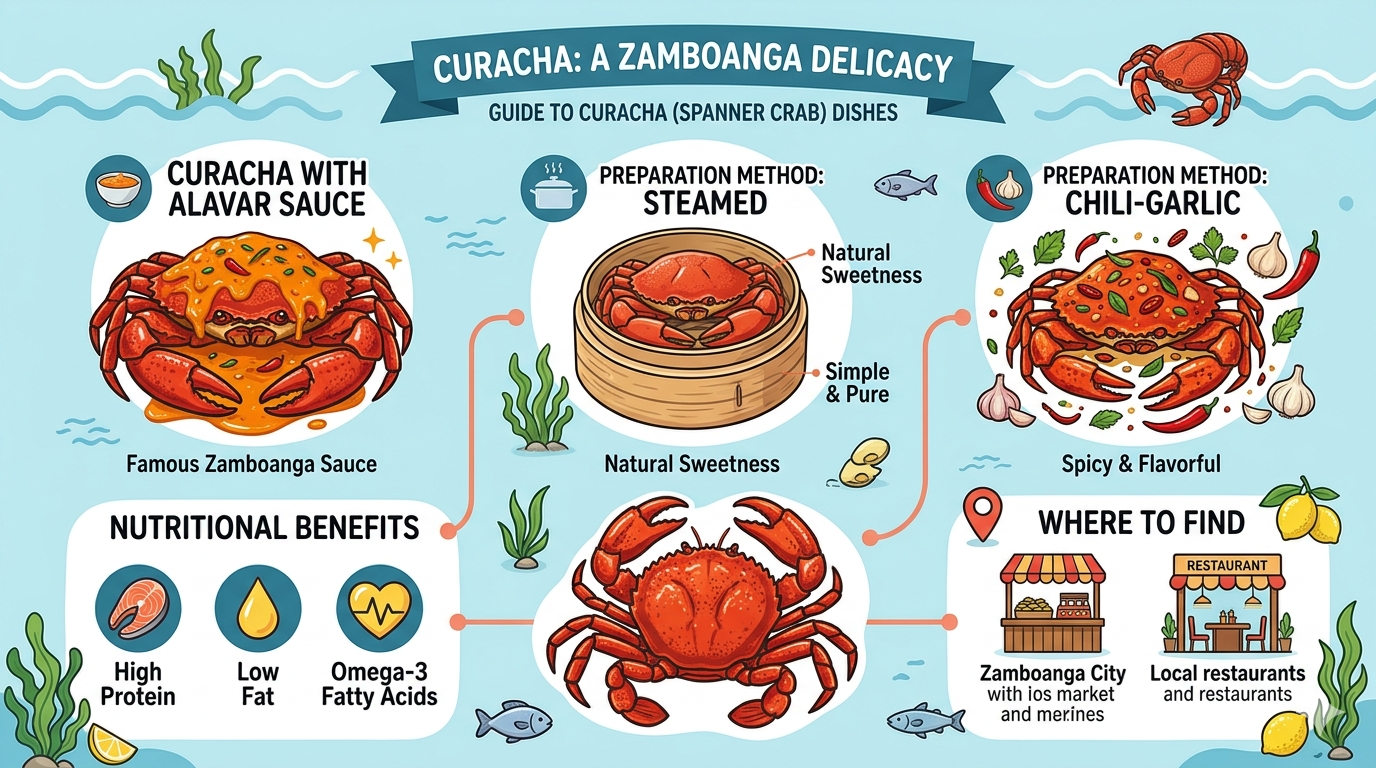
Illustrated overview of curacha dishes and spanner crab seafood preparations.
Disclaimer
This article is for general informational and educational purposes only. It does not constitute professional medical, nutrition, or dietary advice. References to diets, foods, or supplements do not imply endorsement or guarantee of health outcomes. Readers are encouraged to consult licensed nutritionists, dietitians, or medical professionals for personalized guidance.