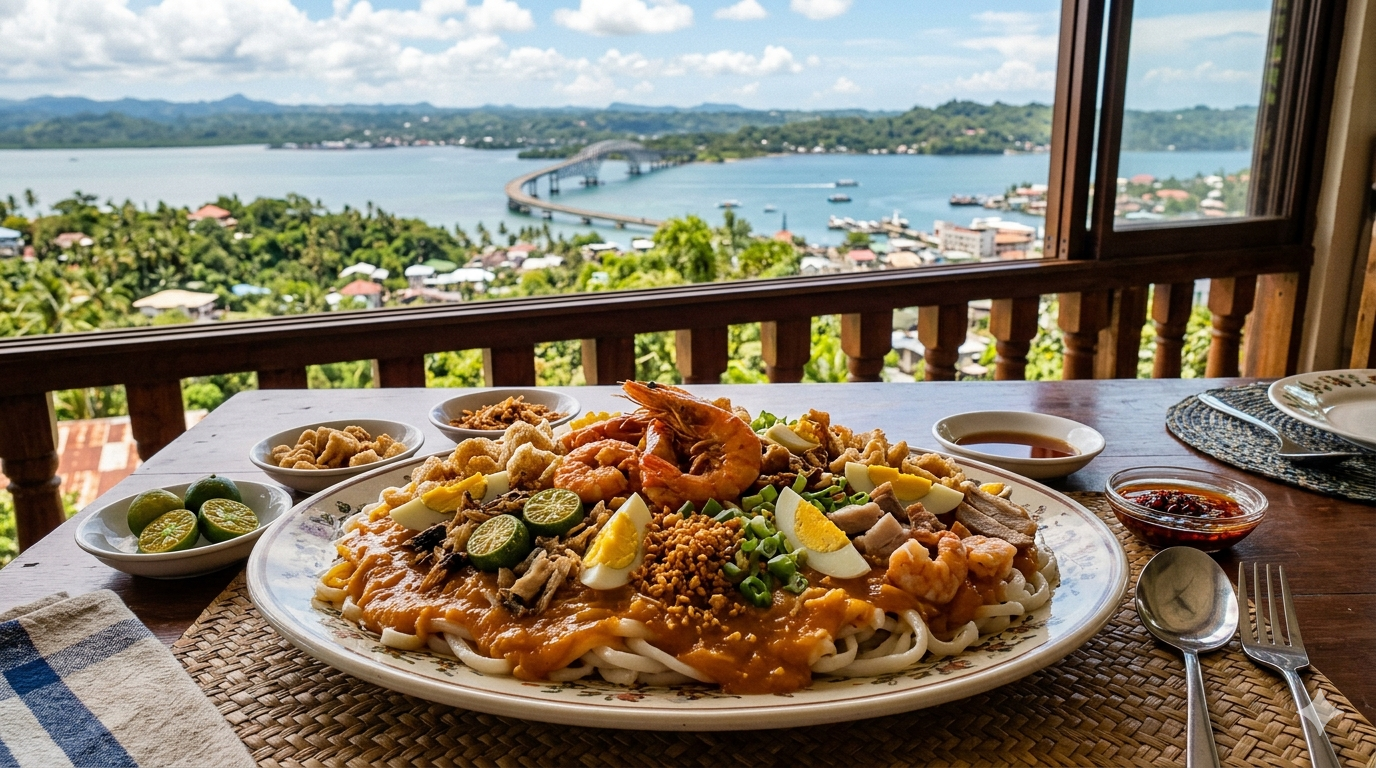
Pancit Palabok Tacloban Style: Nutritional Overview and Ingredients
A neutral exploration of traditional Filipino noodle dishes, ingredient composition, and nutritional considerations.
Pancit Palabok is a traditional Filipino noodle dish often served during celebrations. This article examines the Tacloban style, highlighting its common ingredients, nutrient composition, and general dietary considerations under Philippine food safety standards. It does not provide health guarantees or dietary recommendations but offers an educational overview for readers interested in local cuisine and nutrition.
Ingredients and Typical Components
Tacloban-style Pancit Palabok generally includes:
- Rice noodles – thin, white noodles made from rice flour, primarily contributing carbohydrates.
- Sauce – typically a combination of shrimp stock, garlic, onions, and cornstarch for thickening.
- Protein toppings – boiled shrimp, minced pork, or smoked fish; source of protein and micronutrients such as zinc and B vitamins.
- Garnishes – hard-boiled eggs, chicharrón (pork cracklings), green onions, and sometimes fried garlic; these add fats, micronutrients, and flavor.
- Condiments – calamansi juice or fish sauce (patis), mainly for seasoning rather than nutrition.
Nutritional Perspective
- Carbohydrates: The rice noodles provide energy-dense carbohydrates.
- Protein: Shrimp, pork, and eggs contribute protein and essential amino acids.
- Fat: Garnishes and cooking oil add fats, including saturated and unsaturated types.
- Micronutrients: Eggs, shrimp, and green onions supply vitamins A, D, and minerals like iron and iodine.
- Sodium: Condiments like patis and shrimp stock may increase sodium content; moderation is typical in culinary practice.
Dietary Planning Considerations
- Portion control may be used to balance carbohydrate and protein intake.
- Substitutions, such as using leaner protein sources or reduced-sodium condiments, are examples of hypothetical adjustments to meet general nutrition awareness.
- Hydration alongside meals is a standard consideration in dietary planning.
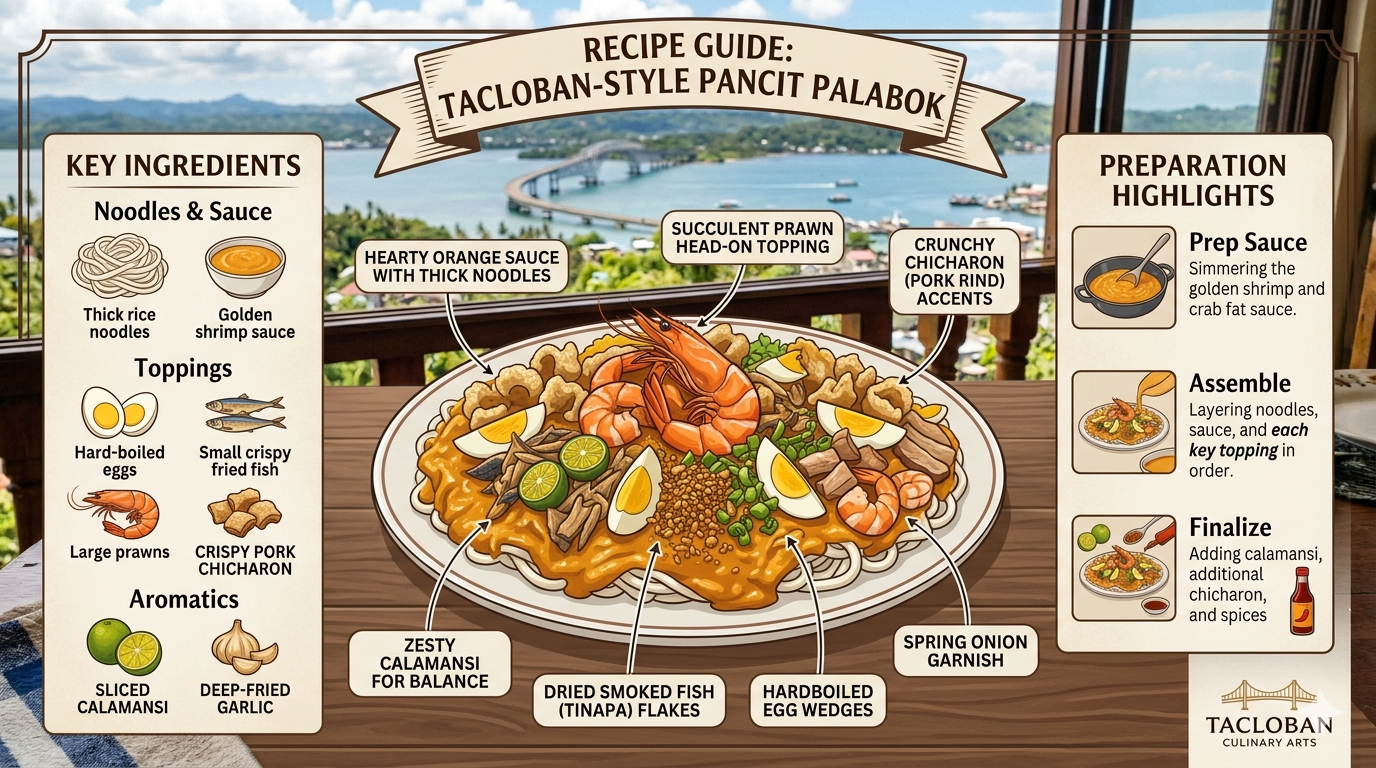
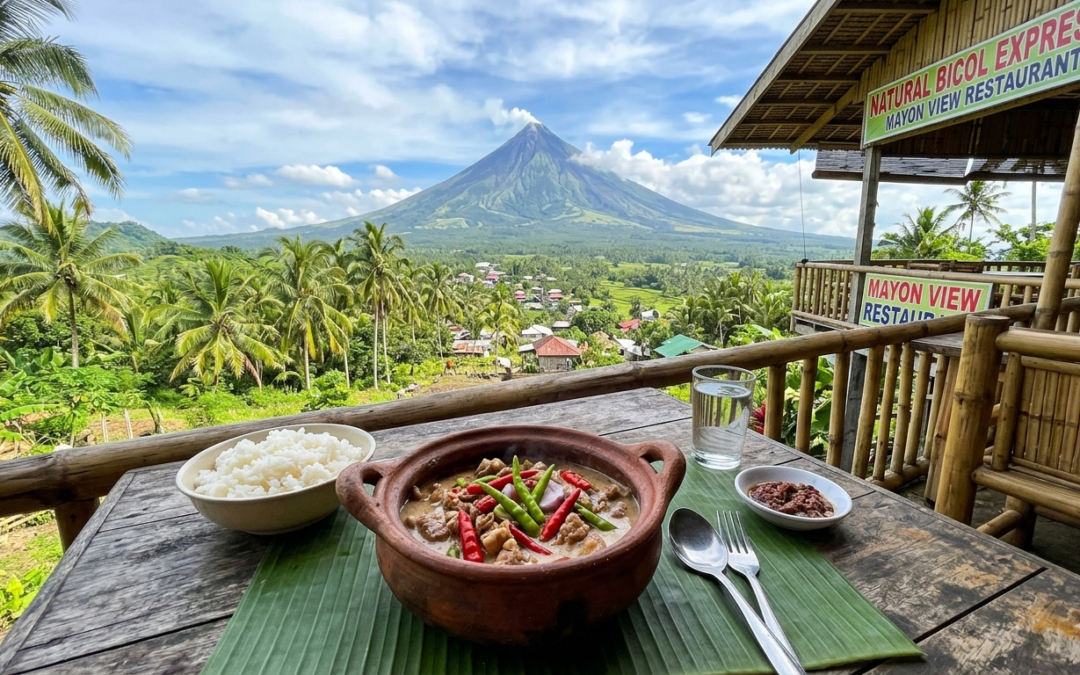
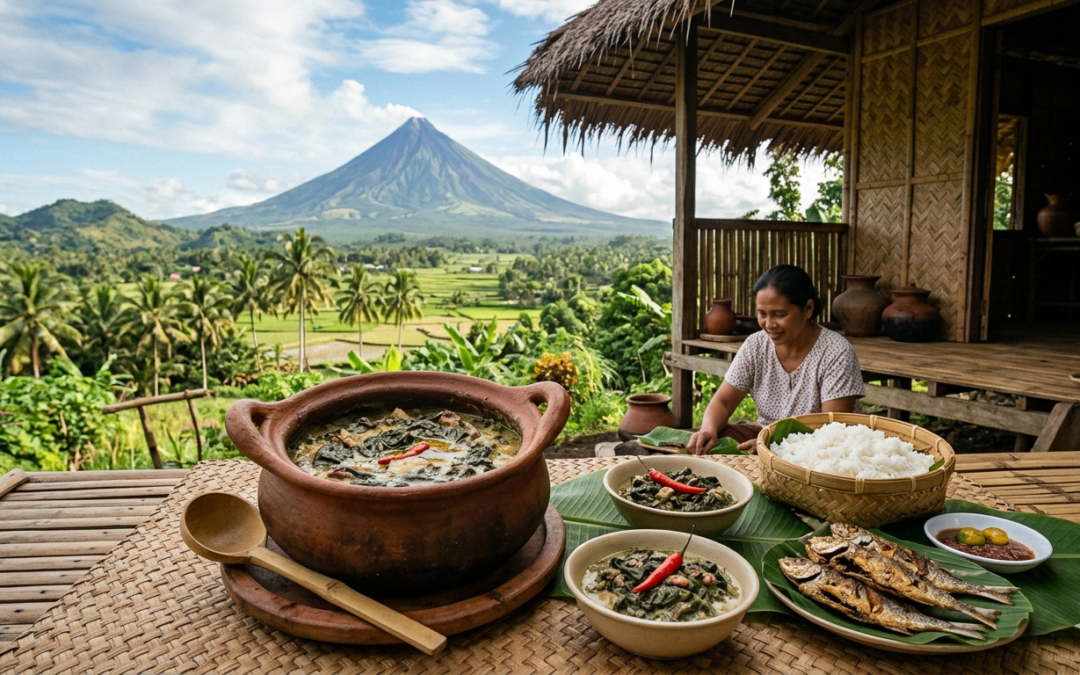
Visual breakdown of common ingredients used in Tacloban-style Pancit Palabok.
Context
In nutrition science studies, rice-based noodle dishes provide primarily carbohydrates, while seafood and eggs contribute protein and micronutrients. Under consumer protection and labeling standards, understanding ingredient composition helps with informed dietary choices. Individual dietary needs vary, and Tacloban-style Pancit Palabok is one of many Filipino dishes that can be included in a balanced diet.
FAQs
What are the main nutrients in Pancit Palabok?
Rice noodles provide carbohydrates, while shrimp, pork, and eggs supply protein. Garnishes can contribute fats and vitamins.
Is Pancit Palabok considered a nutrient-dense meal?
It provides energy and micronutrients from protein sources and garnishes. Nutrient density depends on portion sizes and ingredient choices.
How does Tacloban style differ from other Palabok versions?
Variations often involve specific protein toppings or garnishes preferred locally, such as smoked fish or particular types of chicharrón.
Trusted Sources
- Department of Health (DOH) Philippines – Food Safety and Nutrition Advisories
- FDA Philippines – Guidelines on Food Labeling and Ingredient Awareness
- Academic publications on Filipino noodle dishes and local cuisine nutrition
Disclaimer
This article is for general informational and educational purposes only. It does not constitute professional medical, nutrition, or dietary advice. References to traditional dishes, ingredients, or preparation methods do not imply endorsement or guarantee of health outcomes. Readers are encouraged to consult licensed nutritionists, dietitians, or medical professionals for personalized guidance.