
by Roland Diaz | Mar 31, 2026 | Filipino Cuisine, Food & Nutrition Education
A neutral overview of nutritional properties, culinary uses, and safe consumption practices.
Wood Ear, also called Black Fungus, is an edible mushroom commonly used in Filipino and Asian cuisines. This article provides educational information on its general nutritional components, culinary applications, and safe handling practices, in line with Philippine food safety standards from the Department of Health (DOH) and Food and Drug Administration (FDA Philippines).
Scientific Name: Auricularia auricula-judae
Description
Wood Ear mushrooms have a dark, thin, and slightly rubbery texture with a mild, neutral flavor. They are often added to soups, stir-fries, and salads, primarily for texture rather than taste.
Nutritional Profile
- Dietary Fiber: Contains soluble fiber that may support digestive health.
- Minerals: Provides trace amounts of iron, potassium, and other micronutrients.
- Low Calorie: Low in calories and fat, making it a neutral addition to a balanced meal.
Culinary Uses
- Dried mushrooms are usually soaked in water before cooking to rehydrate.
- Can be added to soups, vegetable stir-fries, and salads.
- Typically cooked briefly to retain texture and ensure food safety.
Food Safety Considerations
- Purchase from reputable suppliers or wet markets.
- Rinse thoroughly and inspect for spoilage before cooking.
- Cook until fully softened; avoid consuming dried mushrooms raw.
- Store dried mushrooms in a cool, dry place; refrigerate fresh mushrooms and consume promptly.
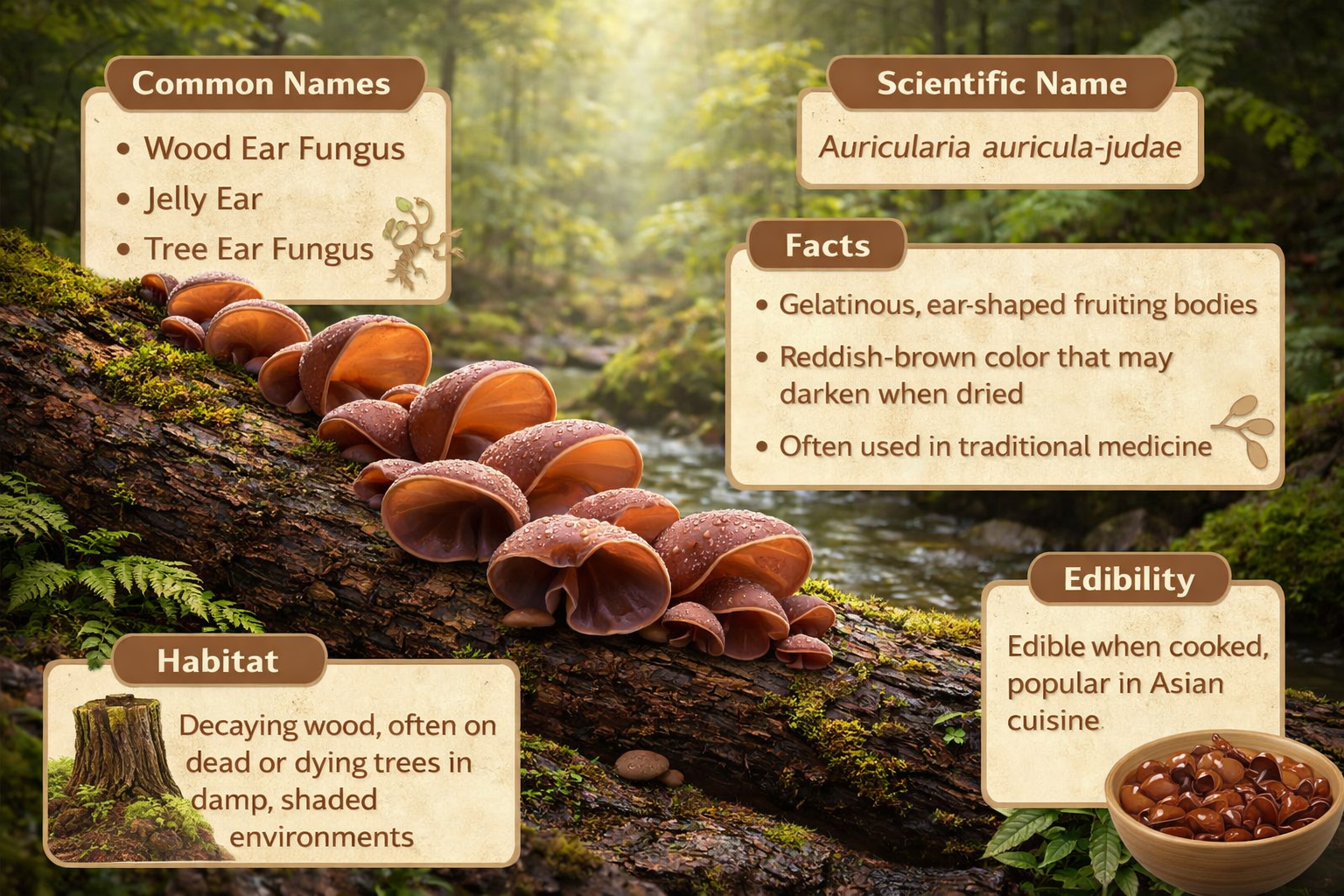
Visual guide to Wood Ear mushrooms and general characteristics.
Context
In nutrition science, mushrooms like Wood Ear are valued for fiber and trace minerals. They complement a balanced diet but are not a primary nutrient source. Dietary effects vary individually, and consultation with licensed nutritionists or dietitians is recommended for personalized guidance.
FAQs
What is Wood Ear / Black Fungus?
An edible mushroom with dark color and rubbery texture, commonly used in soups and stir-fries.
What nutrients does it provide?
Soluble fiber and trace minerals such as iron and potassium.
How should it be prepared safely?
Rinse thoroughly, soak if dried, cook until softened, and store properly.
Trusted Sources
- Department of Health (DOH) Philippines – Food Safety Guidelines
- FDA Philippines – Edible Mushroom References
- Academic journals on food science and nutrition
Disclaimer
This article is for general informational and educational purposes only. It does not constitute professional medical, nutrition, or dietary advice. References to mushrooms do not imply endorsement or guarantee of health outcomes. Readers are encouraged to consult licensed nutritionists, dietitians, or medical professionals for personalized guidance.

by Roland Diaz | Mar 31, 2026 | Filipino Cuisine, Food & Nutrition Education
A neutral overview of nutrition, culinary uses, and availability in the Philippines.
Enoki mushrooms, scientifically known as Flammulina velutipes, are edible fungi recognized for their long, thin stems and small white caps. They have a mild flavor and a slightly crisp texture. Enoki mushrooms are commonly used in soups, salads, and hot pot dishes. In the Philippines, they are typically available in supermarkets, often sold in packaged fresh bundles. This article provides educational information on their nutritional composition, culinary uses, and safe handling practices, in line with general guidance from the Department of Health (DOH) and the Food and Drug Administration (FDA Philippines).
Nutritional Profile
Enoki mushrooms are low in calories and contain small amounts of protein and carbohydrates, along with dietary fiber. They also provide micronutrients such as B vitamins and potassium. These characteristics allow them to be included in balanced meal planning as part of a varied diet.
Culinary Uses
Enoki mushrooms are used in a variety of dishes due to their unique texture and mild taste. Common applications include:
- Adding to soups and hot pot dishes
- Incorporating into salads
- Using as a garnish or ingredient in stir-fried meals
They are often trimmed at the base, separated into smaller clusters, and typically cooked before consumption.
Food Safety Considerations
Based on general food safety practices under FDA and LGU guidance:
- Enoki mushrooms should be rinsed carefully before use
- The base portion is usually removed prior to preparation
- Cooking is commonly practiced to support safe consumption
- Proper refrigeration helps maintain freshness and reduce spoilage
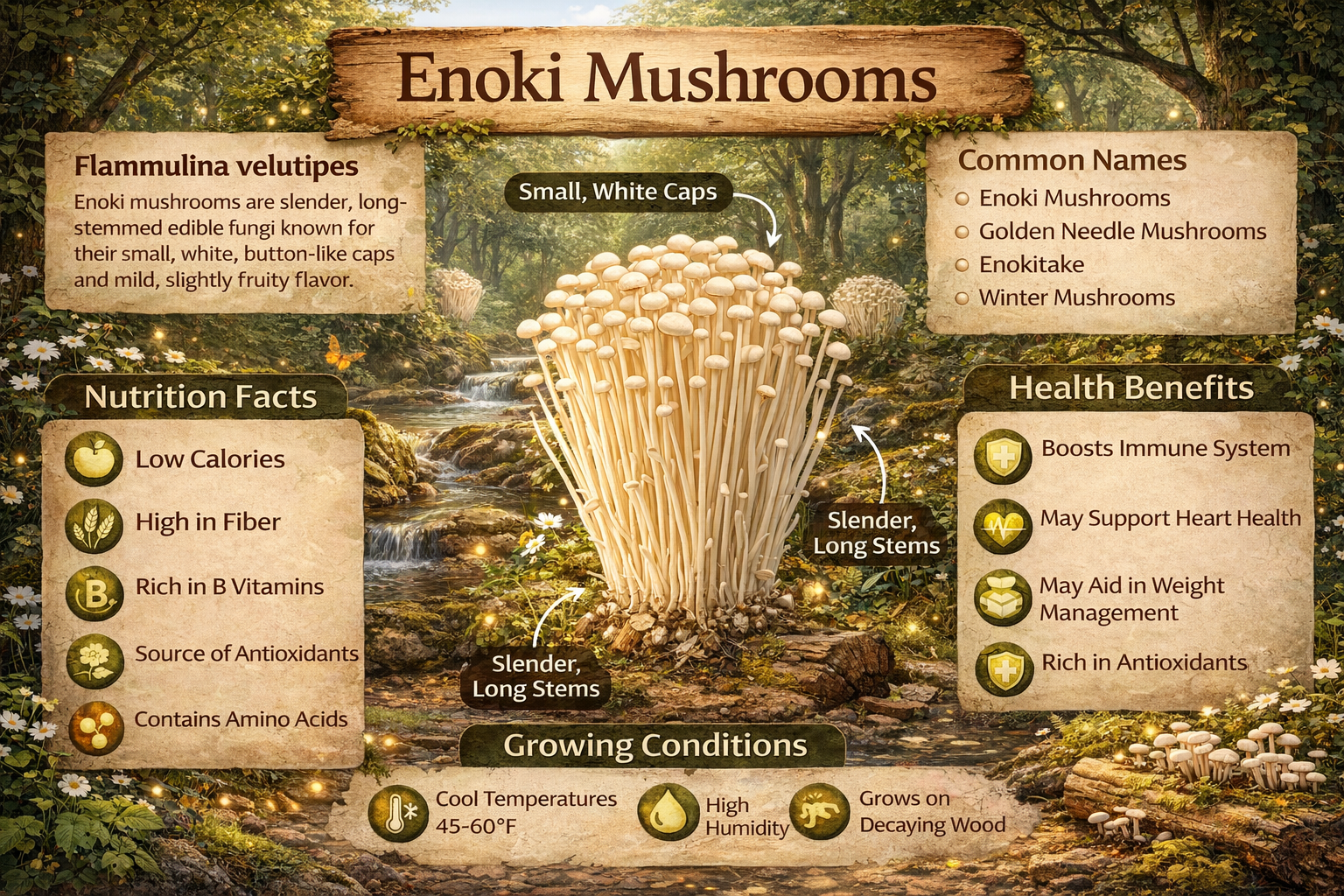
Visual guide to enoki mushroom varieties and characteristics.
Context
In nutrition science discussions, mushrooms such as enoki are described as nutrient-dense foods that may contribute to dietary diversity when included in meals. Dietary planning typically involves combining mushrooms with other food groups such as vegetables, grains, and protein sources. Individual dietary responses may vary, and consultation with licensed nutrition or medical professionals is recommended for personalized guidance.
FAQs
What nutrients are found in enoki mushrooms?
Enoki mushrooms contain dietary fiber, B vitamins, potassium, and small amounts of protein and carbohydrates.
How are enoki mushrooms typically prepared?
They are commonly added to soups, hot pots, salads, and stir-fried dishes after trimming and cleaning.
Are enoki mushrooms available in the Philippines?
Yes, they are commonly available in supermarkets, usually sold in packaged fresh bundles.
Trusted Sources
- Department of Health (DOH) Philippines – General Food Safety Guidance
- FDA Philippines – Food Handling and Storage References
- Peer-reviewed food science and nutrition journals
Disclaimer
This article is for general informational and educational purposes only. It does not constitute professional medical, nutrition, or dietary advice. References to foods do not imply endorsement or guarantee of health outcomes. Readers are encouraged to consult licensed nutritionists, dietitians, or medical professionals for personalized guidance.

by Roland Diaz | Mar 31, 2026 | Filipino Cuisine, Food & Nutrition Education
A neutral overview of nutrition, culinary uses, and availability in the Philippines.
Oyster mushrooms, scientifically known as Pleurotus ostreatus, are edible fungi recognized for their fan-shaped appearance and soft texture. They have a mild, slightly sweet taste and are commonly used in a variety of cooked dishes. In the Philippines, oyster mushrooms are widely cultivated and are available in both fresh and dried forms in local markets. This article provides educational information on their nutritional composition, culinary applications, and safe handling practices, in line with general guidance from the Department of Health (DOH) and the Food and Drug Administration (FDA Philippines).
Nutritional Profile
Oyster mushrooms are low in calories and contain a combination of macronutrients, including small amounts of protein and carbohydrates, along with dietary fiber. They also provide micronutrients such as B vitamins, potassium, and other trace minerals. These characteristics make them a commonly included ingredient in balanced meal planning for dietary variety.
Culinary Uses
Oyster mushrooms are used in a wide range of dishes due to their soft texture and adaptable flavor. Common uses include:
- Stir-frying with vegetables or plant-based dishes
- Adding to soups and broths
- Incorporating into sautéed or mixed dishes
They are typically cooked before consumption, which can enhance texture and flavor.
Food Safety Considerations
Based on general food safety practices under FDA and LGU guidance:
- Fresh oyster mushrooms should be cleaned gently to remove debris
- Dried mushrooms should be soaked and rinsed before cooking
- Proper cooking is commonly practiced prior to consumption
- Storage in cool, clean conditions helps maintain freshness and reduce spoilage risk
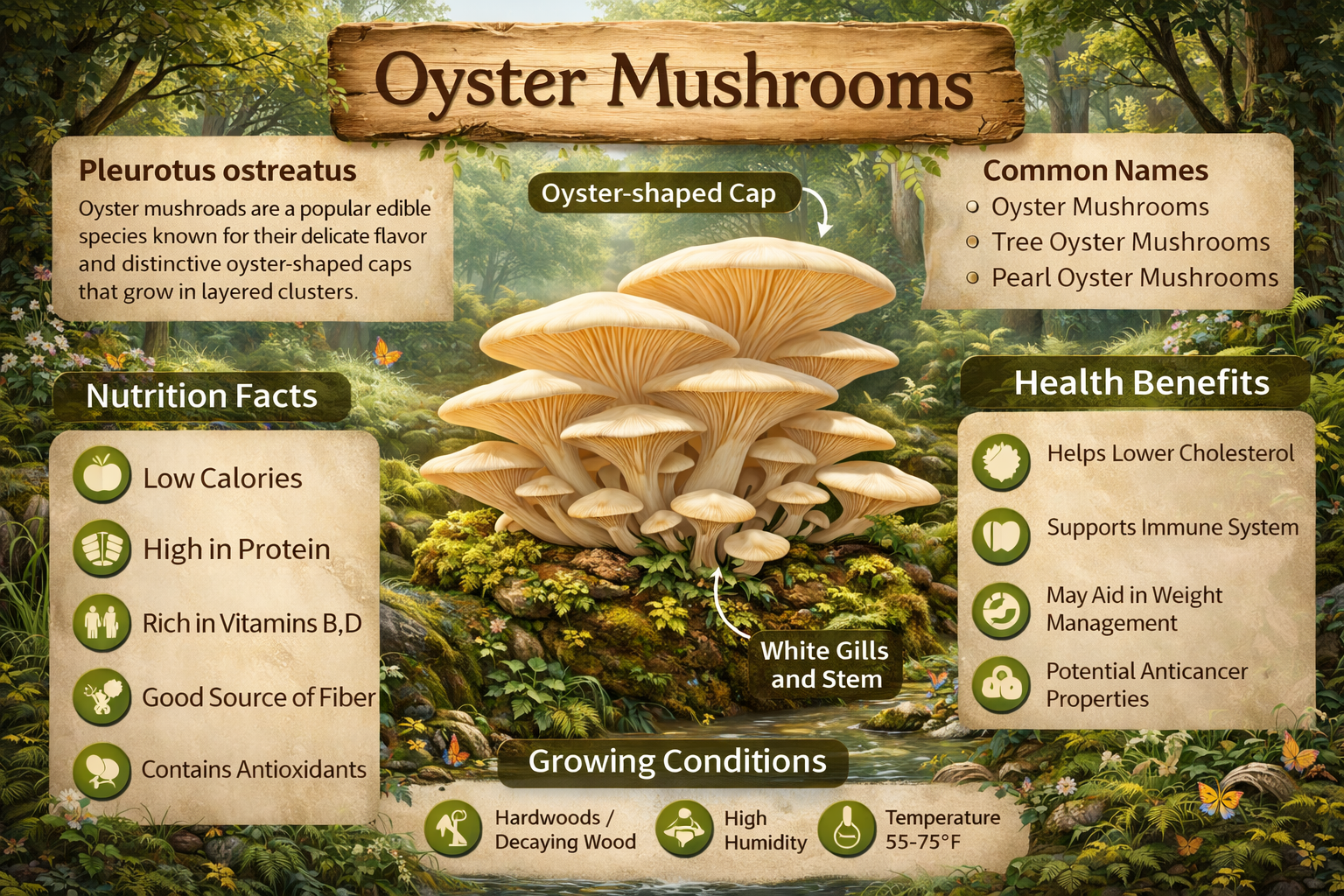
Visual guide to oyster mushroom varieties and characteristics.
Context
In nutrition science discussions, oyster mushrooms are described as nutrient-dense foods that can contribute to dietary diversity. Meal planning typically involves combining mushrooms with other food groups such as vegetables, grains, and protein sources to support balanced nutrient intake. Individual dietary needs and responses may vary, and consultation with licensed nutrition or medical professionals is recommended for personalized guidance.
FAQs
What nutrients are found in oyster mushrooms?
Oyster mushrooms contain dietary fiber, B vitamins, potassium, and small amounts of protein and carbohydrates.
How are oyster mushrooms commonly prepared?
They are typically cooked in stir-fries, soups, and sautéed dishes.
Are oyster mushrooms widely available in the Philippines?
Yes, they are widely farmed locally and sold fresh or dried in many markets.
Trusted Sources
- Department of Health (DOH) Philippines – General Food Safety Guidance
- FDA Philippines – Food Handling and Storage References
- Peer-reviewed food science and nutrition journals
Disclaimer
This article is for general informational and educational purposes only. It does not constitute professional medical, nutrition, or dietary advice. References to foods do not imply endorsement or guarantee of health outcomes. Readers are encouraged to consult licensed nutritionists, dietitians, or medical professionals for personalized guidance.

by Roland Diaz | Mar 31, 2026 | Filipino Cuisine, Food & Nutrition Education
A neutral overview of nutrition, culinary uses, and availability in the Philippines.
Shiitake mushrooms, scientifically known as Lentinula edodes, are edible fungi recognized for their brown caps and distinct savory flavor. They are commonly used in soups, stir-fries, and various cooked dishes. In the Philippines, shiitake mushrooms are available in dried and fresh forms in supermarkets and select wet markets. This article provides educational information on their nutritional composition, culinary uses, and safe handling practices in alignment with local food safety guidance from the Department of Health (DOH) and the Food and Drug Administration (FDA Philippines).
Nutritional Profile
Shiitake mushrooms are low in calories and contain a mix of macronutrients, including small amounts of protein and carbohydrates, along with dietary fiber. They also provide micronutrients such as B vitamins, copper, and selenium. These nutrients contribute to overall dietary diversity when included as part of balanced meal planning.
Culinary Uses
Shiitake mushrooms are commonly used in a variety of dishes due to their rich, savory taste. Typical uses include:
- Adding to soups and broths
- Stir-frying with vegetables and other ingredients
- Rehydrating dried shiitake for use in cooked dishes
Dried shiitake mushrooms are often soaked in water before cooking to restore texture.
Food Safety Considerations
Based on general food safety practices under FDA and LGU guidance:
- Fresh mushrooms should be cleaned properly before use
- Dried mushrooms should be soaked in clean water and rinsed
- Cooking is commonly practiced to ensure safe consumption
- Proper storage in cool conditions helps maintain freshness and quality
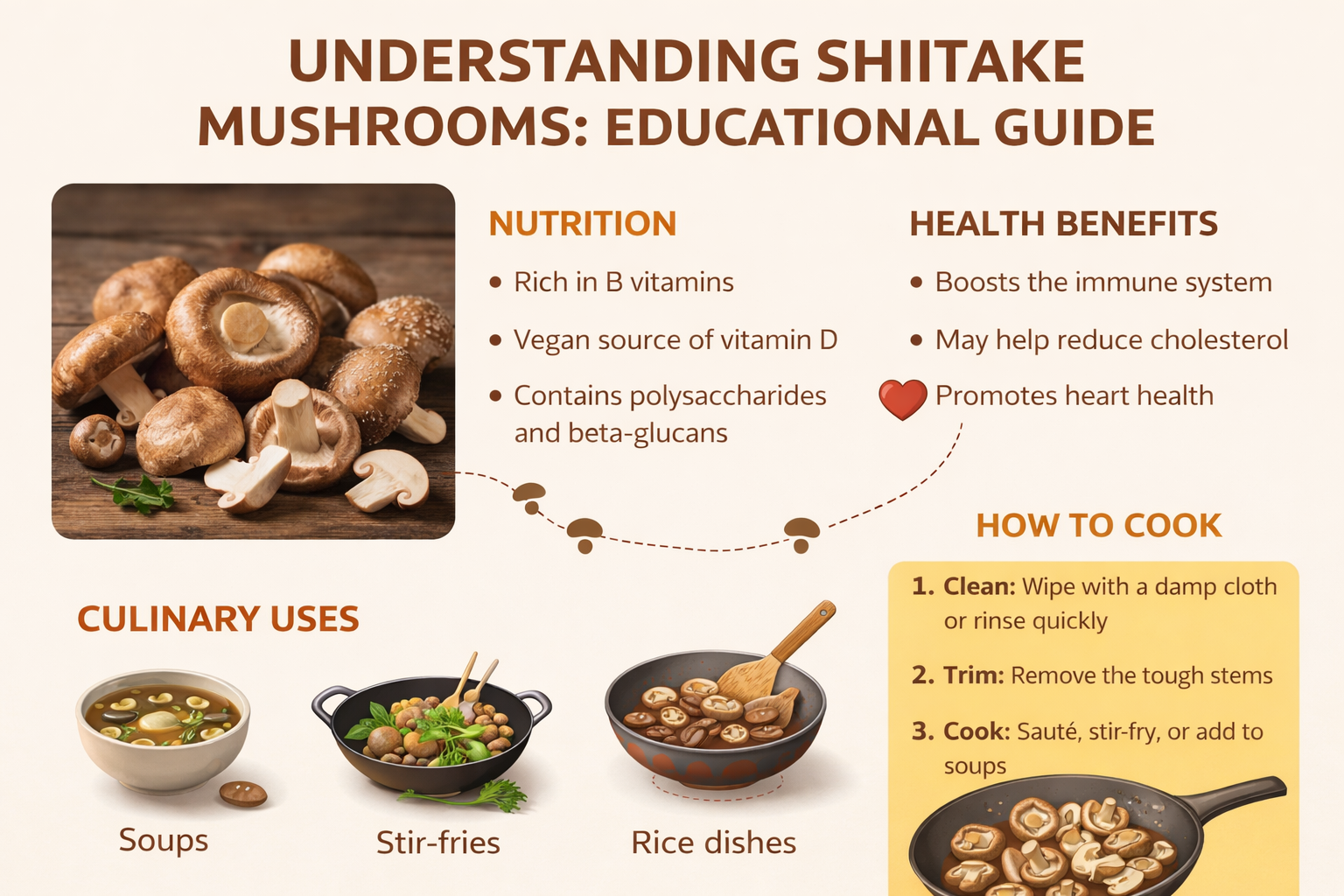
Visual guide to shiitake mushroom varieties and uses.
Context
In nutrition science literature, mushrooms such as shiitake are described as nutrient-dense foods that can be incorporated into balanced diets. Dietary planning typically involves combining mushrooms with other food groups to support nutrient variety. Individual responses to dietary patterns may vary. Consultation with licensed nutrition or medical professionals is recommended for personalized dietary guidance.
FAQs
What nutrients are found in shiitake mushrooms?
Shiitake mushrooms contain dietary fiber, B vitamins, copper, and selenium, along with small amounts of protein and carbohydrates.
Are shiitake mushrooms available in dried form?
Yes, they are commonly sold dried and can be rehydrated before cooking.
How are shiitake mushrooms typically prepared?
They are usually added to soups, stir-fries, and other cooked dishes after cleaning or rehydration.
Trusted Sources
- Department of Health (DOH) Philippines – General Food Safety Guidance
- FDA Philippines – Food Handling and Storage References
- Peer-reviewed food science and nutrition journals
Disclaimer
This article is for general informational and educational purposes only. It does not constitute professional medical, nutrition, or dietary advice. References to foods do not imply endorsement or guarantee of health outcomes. Readers are encouraged to consult licensed nutritionists, dietitians, or medical professionals for personalized guidance.
by Roland Diaz | Mar 31, 2026 | Filipino Cuisine, Food & Nutrition Education
A neutral overview of nutrition, culinary uses, and availability in the Philippines.
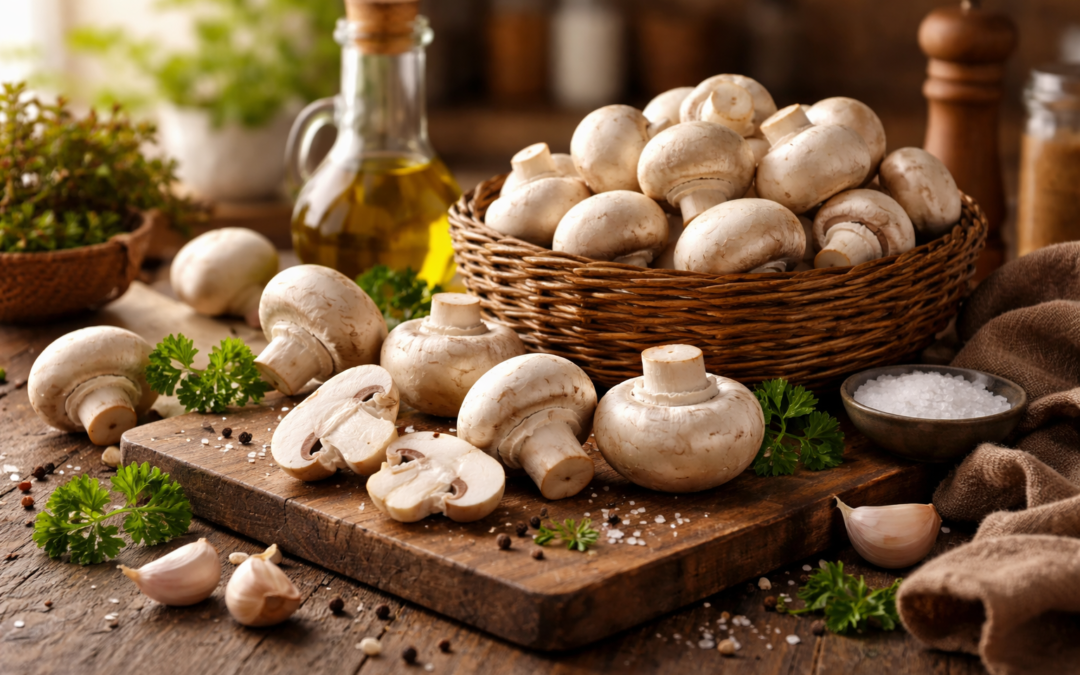
Button mushrooms, scientifically known as Agaricus bisporus, are small, white mushrooms with a mild flavor. They are commonly used in soups, stir-fries, and salads. These mushrooms are widely available in Philippine supermarkets and wet markets. This article provides educational information about their nutritional profile, culinary uses, and safe consumption considerations under local DOH and FDA guidelines.
Nutritional Profile
Button mushrooms are low in calories and provide a moderate source of protein and dietary fiber. They contain various vitamins and minerals, including B vitamins, selenium, and potassium, which contribute to overall dietary balance. While they contain small amounts of carbohydrates, they are generally considered nutrient-dense rather than energy-dense.
Culinary Uses
Button mushrooms are versatile and can be included in a variety of dishes. Common preparations include:
- Adding to soups or broths
- Stir-frying with vegetables
- Incorporating raw in salads
Food Safety Considerations
Under FDA and LGU food safety standards, mushrooms should be:
- Rinsed thoroughly before cooking or consumption
- Stored at appropriate refrigeration temperatures
- Cooked adequately when included in hot dishes to ensure food safety
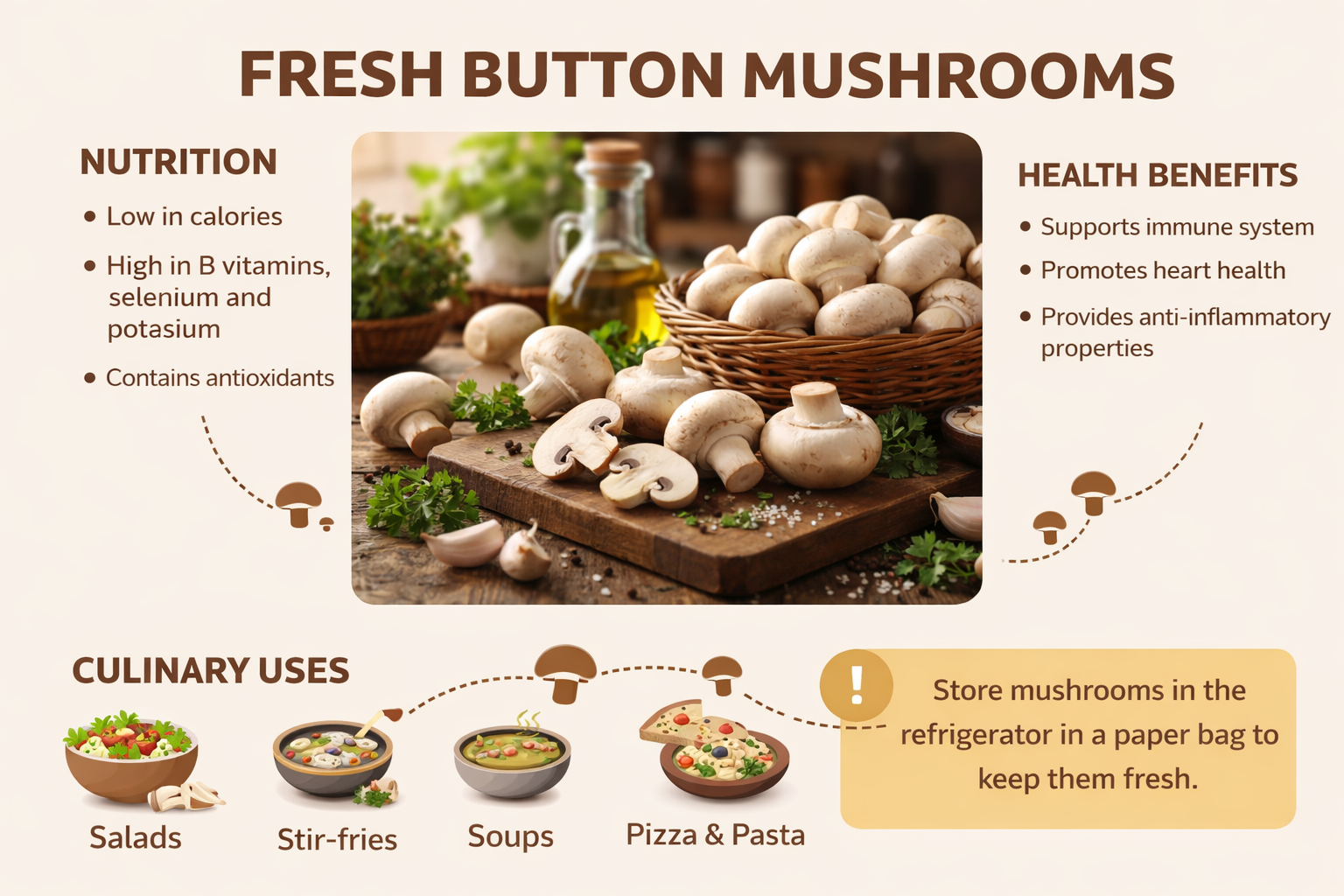
Visual guide to button mushroom types and uses.
Context
In nutrition science studies, mushrooms are recognized as a low-calorie food that can contribute to dietary variety and nutrient balance. Dietary planning with mushrooms typically involves considering portion sizes and integrating them with other vegetables and protein sources. Individual nutritional results may vary, and readers are encouraged to consult licensed nutritionists for personalized guidance.
FAQs
What are the main nutrients in button mushrooms?
Button mushrooms contain protein, dietary fiber, B vitamins, selenium, and potassium.
Can button mushrooms be eaten raw?
Yes, they can be consumed raw in salads, but should be washed thoroughly to remove contaminants.
How are button mushrooms commonly used in meals?
They are used in soups, stir-fries, and as toppings for salads and cooked dishes.
Trusted Sources
- Department of Health (DOH) Philippines – Food Safety Guidelines
- FDA Philippines – Mushroom Handling and Storage Advisories
- Academic journals on food science and nutrition
Disclaimer
This article is for general informational and educational purposes only. It does not constitute professional medical, nutrition, or dietary advice. References to foods do not imply endorsement or guarantee of health outcomes. Readers are encouraged to consult licensed nutritionists, dietitians, or medical professionals for personalized guidance.
by villarramil028 | Mar 30, 2026 | Filipino Cuisine, Food & Nutrition Education
Understanding KBL (Kadios, Baboy, Langka): Nutritional Insights and Food Science
A neutral overview of KBL ingredients, nutrient contributions, and dietary considerations
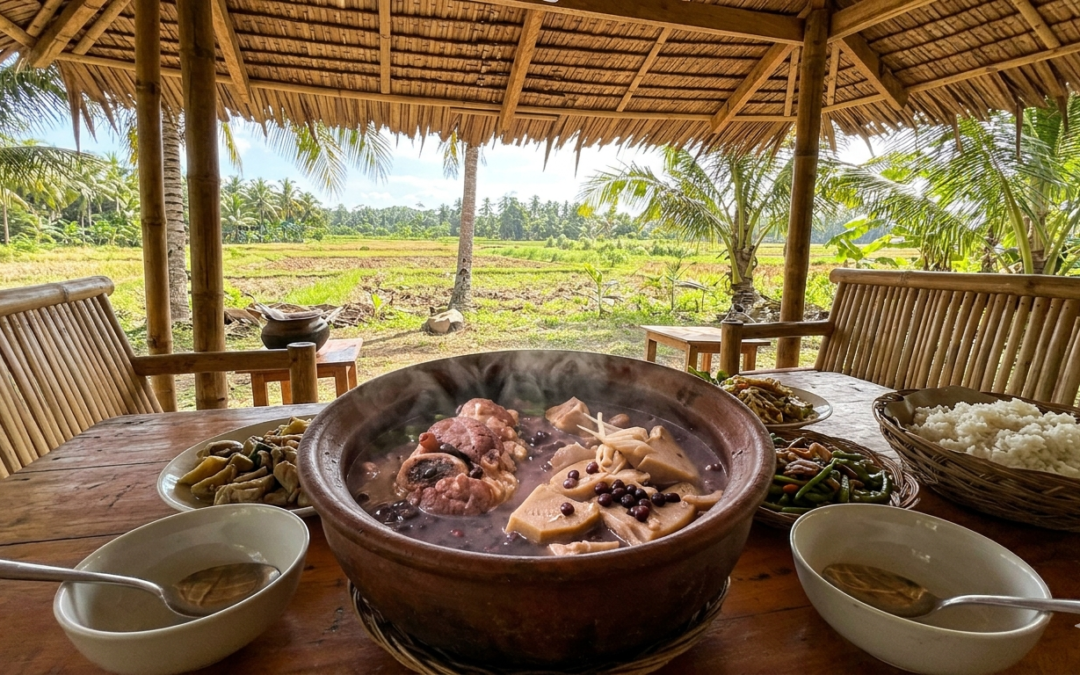
KBL, short for Kadios, Baboy, Langka, is a traditional Filipino stew commonly found in Bicol and other regions. This article provides an educational overview of the nutritional components of KBL, typical ingredients, and hypothetical ways it can fit into balanced dietary planning. Content aligns with DOH, FDA Philippines, and DTI guidelines and focuses on neutral, factual information about macronutrients, micronutrients, and food composition.
Key Ingredients and Nutrient Profiles
- Kadios (Pigeon Pea / Cajanus cajan)
Kadios are legumes rich in plant-based protein, dietary fiber, and complex carbohydrates. They also contain micronutrients such as iron, magnesium, and folate. Legumes are nutrient-dense and provide sustained energy.
- Baboy (Pork)
Pork contributes animal protein and essential amino acids, as well as micronutrients including zinc, B vitamins, and iron. Lean cuts reduce saturated fat content, while fattier cuts increase energy density.
- Langka (Jackfruit, unripe)
Young jackfruit is high in dietary fiber and complex carbohydrates, with small amounts of vitamin C, potassium, and other minerals. It is low in fat and adds bulk to meals, supporting neutral informational context.
- Additional Components
Ingredients like coconut milk, onions, garlic, and chili are common. Coconut milk provides saturated fats and calories, while aromatics contribute flavor without significant macronutrients.
Hypothetical Nutrient Balance in a Serving
| Ingredient |
Approx. Weight (g) |
Protein (g) |
Carbs (g) |
Fat (g) |
Fiber (g) |
| Kadios |
100 |
8 |
20 |
1 |
7 |
| Baboy |
75 |
14 |
0 |
8 |
0 |
| Langka |
100 |
2 |
20 |
0 |
3 |
| Coconut milk |
50 |
0 |
2 |
10 |
0 |
Note: Nutrient values are illustrative averages. Actual values vary depending on cut, cooking method, and recipe.
Dietary Planning Considerations (Neutral)
- Portion Control: Combining legumes, meat, and vegetables in KBL provides a mix of macronutrients; portion sizes determine overall energy content.
- Protein Variety: Kadios plus Baboy supplies both plant and animal protein sources.
- Micronutrient Diversity: Including langka and aromatics increases fiber and phytonutrient content.
- Cooking Methods: Boiling or simmering maintains nutrient retention; frying or excessive oil may increase fat content.
Context
In nutrition science studies, stews combining legumes, protein, and vegetables are considered balanced meals when portioned appropriately. Under consumer protection and labeling standards, recipes like KBL can be evaluated based on ingredient composition and nutrient content. Dietary outcomes vary individually depending on overall eating patterns, activity levels, and health conditions. For personalized guidance, consultation with a licensed nutritionist or dietitian is recommended.
FAQs
What is KBL?
KBL stands for Kadios (pigeon peas), Baboy (pork), and Langka (young jackfruit), a traditional Filipino stew with macronutrient and micronutrient variety.
What nutrients are in KBL?
KBL contains protein, complex carbohydrates, dietary fiber, and micronutrients such as iron, magnesium, B vitamins, and potassium.
How can KBL fit into a meal plan?
Hypothetical meal planning may include KBL as part of a nutrient-diverse lunch or dinner, combined with rice or vegetables to maintain macronutrient variety.
Trusted Sources
- DOH Philippines – Nutritional Guidelines and Health Advisories
- FDA Philippines – Food Safety and Labeling Guidelines
- Peer-reviewed journals on Filipino cuisine and nutrient composition
- Philippine Dietary Reference Intakes (DRIs)
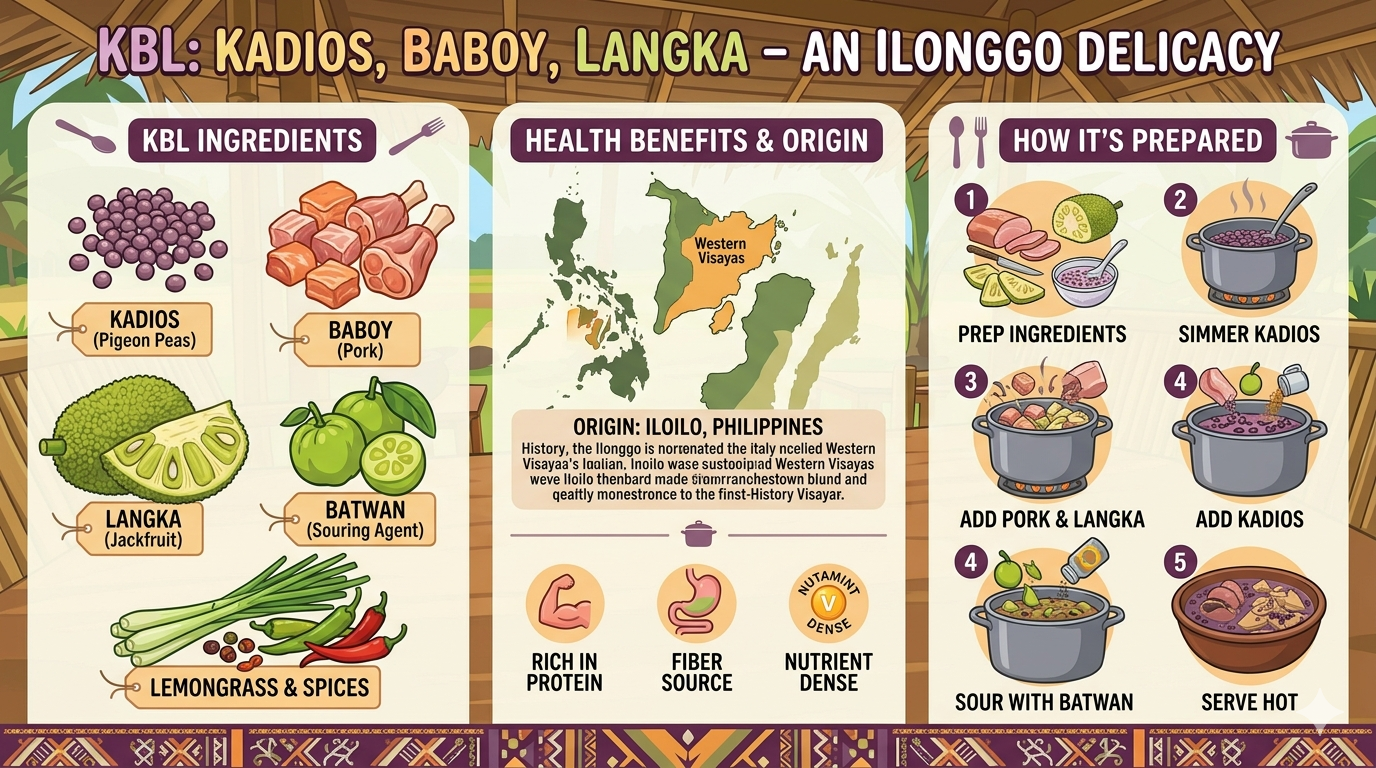
Infographic showing kadios, baboy, langka, and their macronutrient categories.
Disclaimer
This article is for general informational and educational purposes only. It does not constitute professional medical, nutrition, or dietary advice. References to recipes, foods, or ingredients do not imply endorsement or guarantee of outcomes. Readers are encouraged to consult licensed nutritionists, dietitians, or medical professionals for personalized guidance.

