
Rebuild Your Life Before It’s Too Late – Jim Rohn Motivation






A neutral overview of nutritional properties, culinary uses, and safe consumption practices.
Wood Ear, also called Black Fungus, is an edible mushroom commonly used in Filipino and Asian cuisines. This article provides educational information on its general nutritional components, culinary applications, and safe handling practices, in line with Philippine food safety standards from the Department of Health (DOH) and Food and Drug Administration (FDA Philippines).
Scientific Name: Auricularia auricula-judae
Description
Wood Ear mushrooms have a dark, thin, and slightly rubbery texture with a mild, neutral flavor. They are often added to soups, stir-fries, and salads, primarily for texture rather than taste.
Nutritional Profile
Culinary Uses
Food Safety Considerations
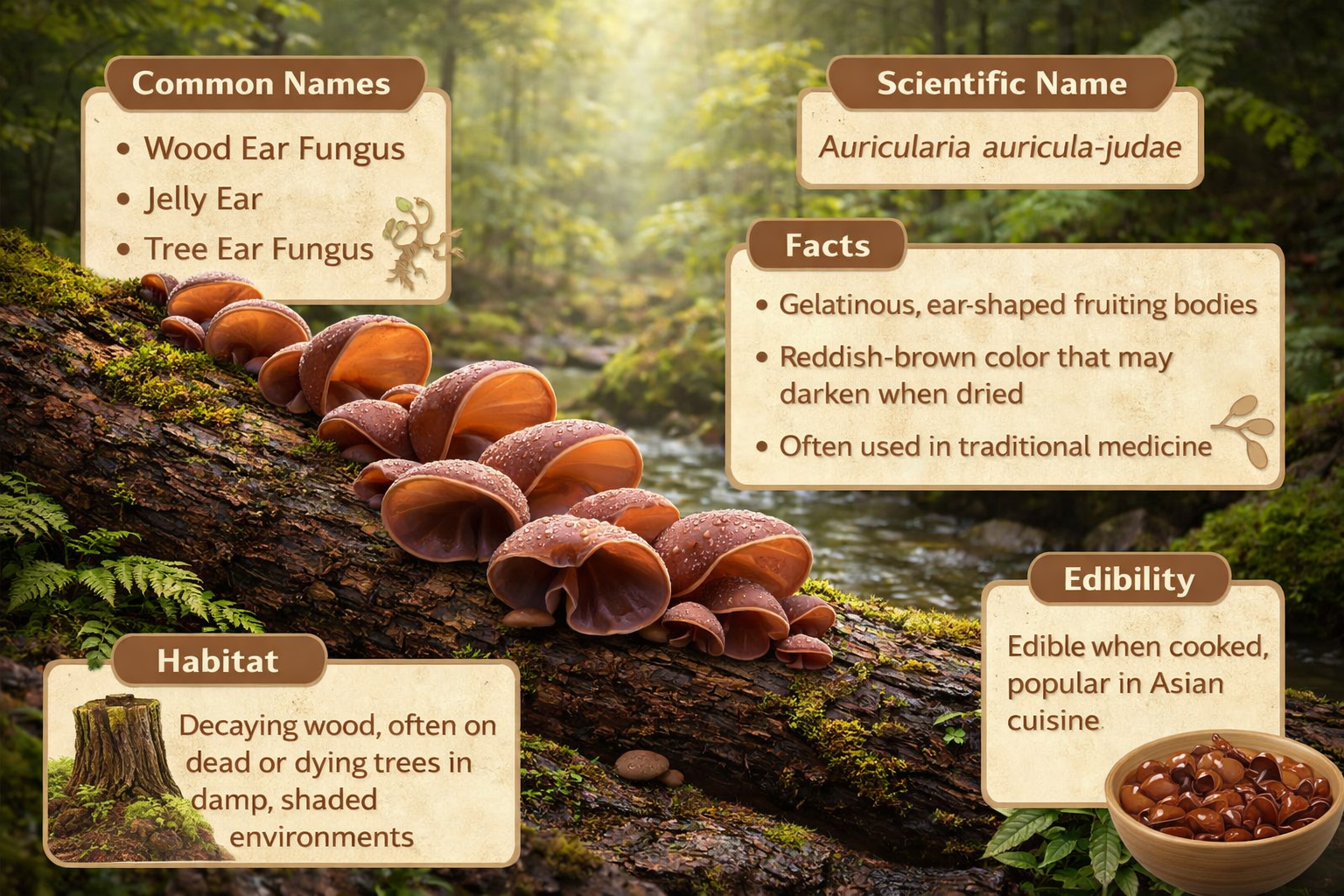
Visual guide to Wood Ear mushrooms and general characteristics.
In nutrition science, mushrooms like Wood Ear are valued for fiber and trace minerals. They complement a balanced diet but are not a primary nutrient source. Dietary effects vary individually, and consultation with licensed nutritionists or dietitians is recommended for personalized guidance.
What is Wood Ear / Black Fungus?
An edible mushroom with dark color and rubbery texture, commonly used in soups and stir-fries.
What nutrients does it provide?
Soluble fiber and trace minerals such as iron and potassium.
How should it be prepared safely?
Rinse thoroughly, soak if dried, cook until softened, and store properly.
This article is for general informational and educational purposes only. It does not constitute professional medical, nutrition, or dietary advice. References to mushrooms do not imply endorsement or guarantee of health outcomes. Readers are encouraged to consult licensed nutritionists, dietitians, or medical professionals for personalized guidance.

A neutral overview of nutrition, culinary uses, and availability in the Philippines.
Enoki mushrooms, scientifically known as Flammulina velutipes, are edible fungi recognized for their long, thin stems and small white caps. They have a mild flavor and a slightly crisp texture. Enoki mushrooms are commonly used in soups, salads, and hot pot dishes. In the Philippines, they are typically available in supermarkets, often sold in packaged fresh bundles. This article provides educational information on their nutritional composition, culinary uses, and safe handling practices, in line with general guidance from the Department of Health (DOH) and the Food and Drug Administration (FDA Philippines).
Nutritional Profile
Enoki mushrooms are low in calories and contain small amounts of protein and carbohydrates, along with dietary fiber. They also provide micronutrients such as B vitamins and potassium. These characteristics allow them to be included in balanced meal planning as part of a varied diet.
Culinary Uses
Enoki mushrooms are used in a variety of dishes due to their unique texture and mild taste. Common applications include:
They are often trimmed at the base, separated into smaller clusters, and typically cooked before consumption.
Food Safety Considerations
Based on general food safety practices under FDA and LGU guidance:
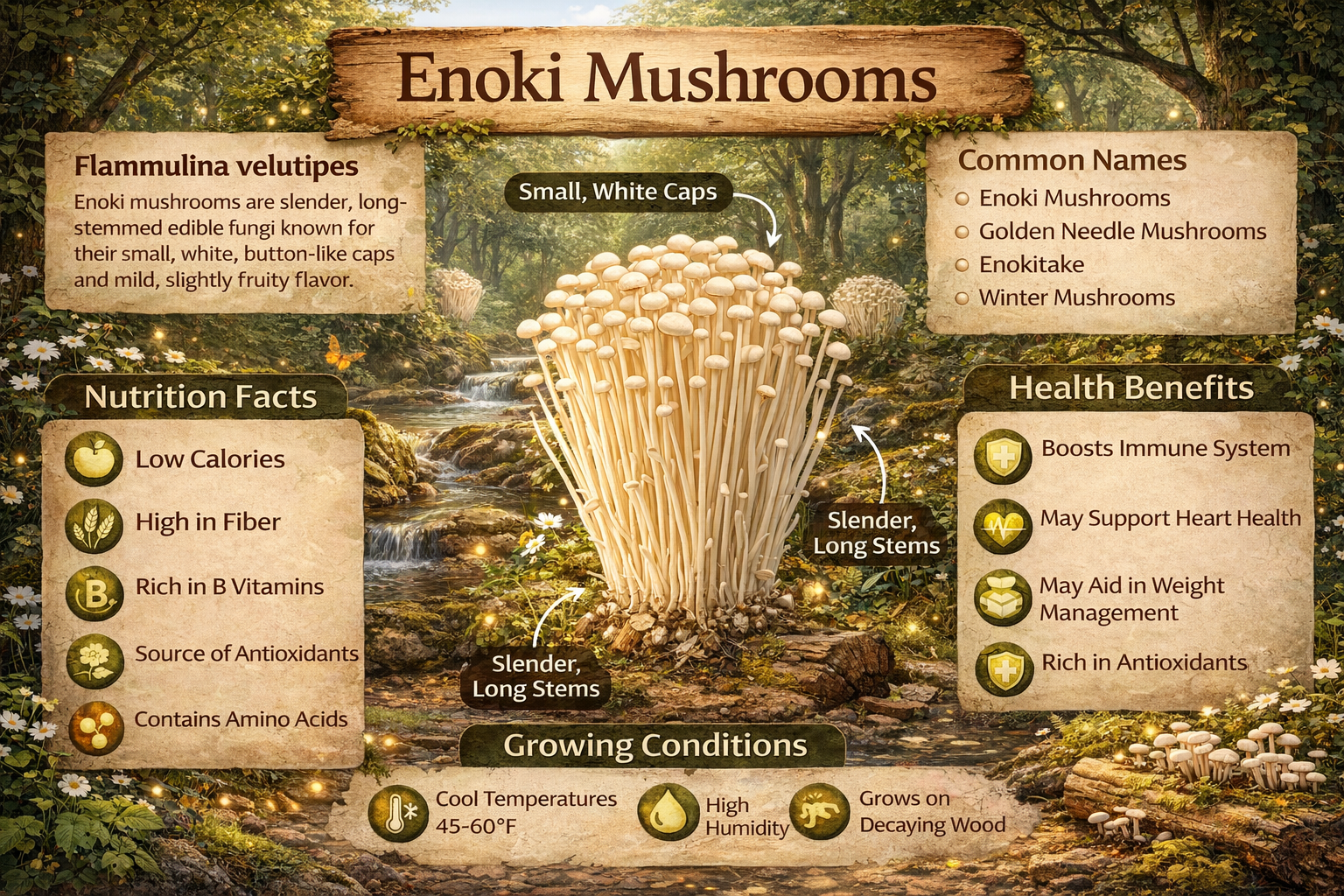
Visual guide to enoki mushroom varieties and characteristics.
In nutrition science discussions, mushrooms such as enoki are described as nutrient-dense foods that may contribute to dietary diversity when included in meals. Dietary planning typically involves combining mushrooms with other food groups such as vegetables, grains, and protein sources. Individual dietary responses may vary, and consultation with licensed nutrition or medical professionals is recommended for personalized guidance.
What nutrients are found in enoki mushrooms?
Enoki mushrooms contain dietary fiber, B vitamins, potassium, and small amounts of protein and carbohydrates.
How are enoki mushrooms typically prepared?
They are commonly added to soups, hot pots, salads, and stir-fried dishes after trimming and cleaning.
Are enoki mushrooms available in the Philippines?
Yes, they are commonly available in supermarkets, usually sold in packaged fresh bundles.
This article is for general informational and educational purposes only. It does not constitute professional medical, nutrition, or dietary advice. References to foods do not imply endorsement or guarantee of health outcomes. Readers are encouraged to consult licensed nutritionists, dietitians, or medical professionals for personalized guidance.