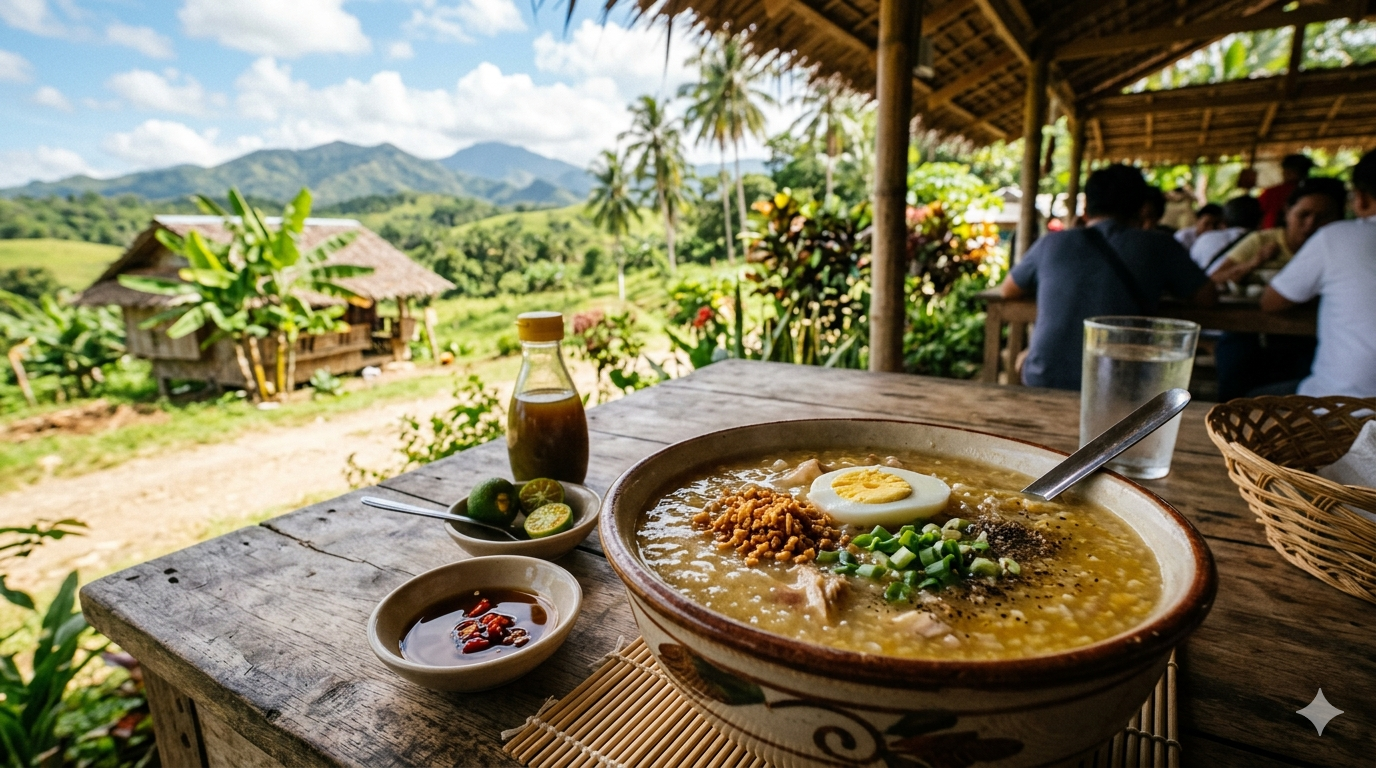
Description
Nutritional Principles of Lugaw and Arroz Caldo
Rice porridge primarily provides carbohydrates, the body’s main source of energy. Depending on preparation, it can also supply protein (from chicken or other protein sources), dietary fiber (from added vegetables), and micronutrients such as vitamin B-complex and minerals like iron and zinc.
Key considerations in evaluating nutritional value:
Macronutrients: Rice porridge is high in carbohydrates, moderate in protein if meat or legumes are included, and low in fat unless added oils or toppings are used.
Micronutrients: Ingredients like ginger and green onions contribute antioxidants and small amounts of vitamins. Chicken adds B-vitamins, phosphorus, and selenium.
Hydration: As a dish with high water content, it can contribute to daily fluid intake.
Food Group and Portion Context
Under Philippine dietary guidelines, a balanced meal generally includes a combination of:
Carbohydrate source: Rice (main ingredient)
Protein source: Chicken, egg, or tofu (optional)
Vegetables/herbs: Ginger, green onions, garlic (optional)
Fats: Minimal, usually from cooking oil or toppings
Portion control can be applied in hypothetical meal planning. For example, a standard serving might include 1 cup of cooked rice porridge, 50–75 grams of chicken, and 1–2 tablespoons of vegetables. This provides a moderate energy intake without implying any specific health outcome.
Hypothetical Meal Planning Example
A neutral daily meal plan incorporating lugaw or arroz caldo:
Meal Food Approx. Serving
Breakfast Lugaw with small chicken portion 1 cup
Snack Fresh fruit (banana or papaya) 1 medium piece
Lunch Grilled fish, mixed vegetables, ½ cup rice 1 serving each
Snack Plain yogurt ½ cup
Dinner Arroz caldo with lean chicken and spring onions 1 cup
Note: This example is for illustration only. Individual dietary needs vary.