
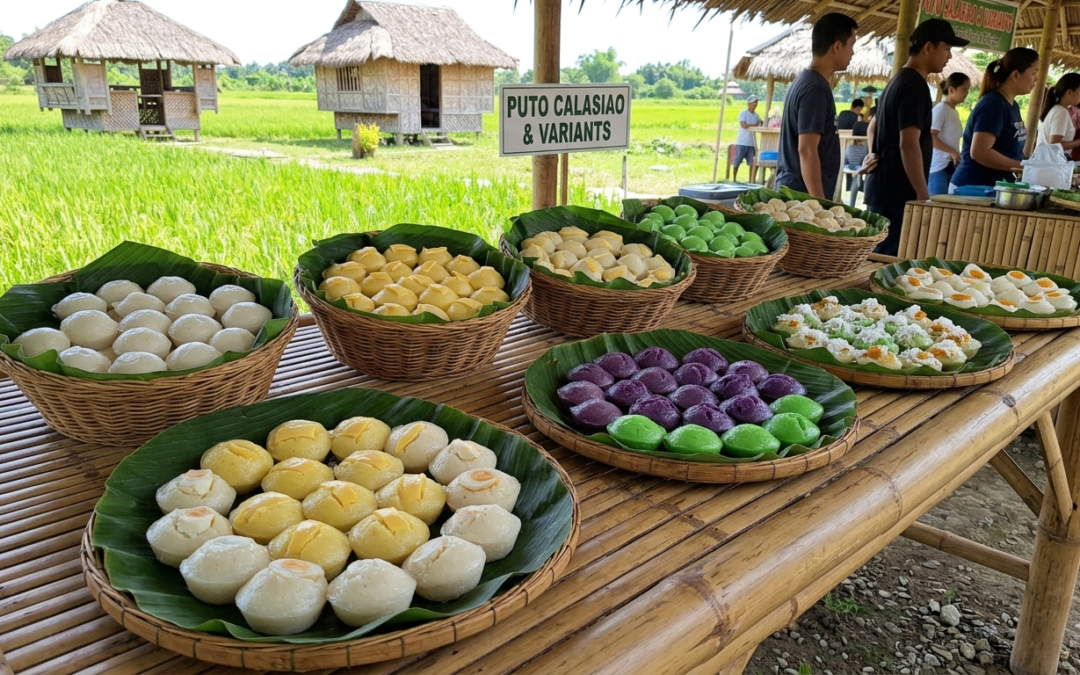
Puto Calasiao-style variants
Puto Calasiao–Style Variants: An Educational Overview of Rice Cake Variations
Understanding ingredient variations and preparation differences in a traditional Filipino food
This article presents an overview of puto Calasiao–style variants, focusing on ingredient composition, preparation methods, and common adaptations. It aligns with general food safety and labeling awareness principles observed under the Department of Health (DOH) and the Food and Drug Administration (FDA Philippines). The content is intended for educational purposes, describing how variations of this traditional rice-based food may differ in formulation and characteristics.
What Is Puto Calasiao?
Puto Calasiao is a small, steamed rice cake traditionally made from fermented rice batter. It is known for its soft texture and slightly sweet taste. The base ingredients typically include:
- Rice (often soaked and ground)
- Sugar
- Water
- Leavening agents (in some preparations)
Fermentation is a defining characteristic in traditional methods, contributing to its texture and flavor profile.
Common Ingredient Variations
Different versions of puto Calasiao–style products may adjust ingredients to achieve varied textures and tastes:
- Non-Fermented Versions
Some recipes use rice flour and baking powder instead of fermentation. This approach may shorten preparation time and produce a milder flavor. - Sugar Level Adjustments
Sweetness levels can vary depending on the amount of sugar used. Some versions are less sweet, while others emphasize a more dessert-like profile. - Use of Coconut Milk
Coconut milk may be added to modify texture and introduce a distinct flavor.
Flavor-Based Variants
Modern adaptations often incorporate additional ingredients for variety:
- Ube (Purple Yam) Variant
Incorporates ube for color and flavor. - Pandan Variant
Uses pandan extract or leaves to add aroma. - Cheese-Topped Variant
Adds a small amount of cheese as a topping for contrast in flavor. - Chocolate Variant
Includes cocoa powder or chocolate flavoring in the batter.
These variants reflect evolving food preferences while maintaining the base preparation method.
Texture and Preparation Differences
Variations may also affect texture:
- Traditional Texture
Soft, slightly sticky, and moist due to fermentation. - Flour-Based Texture
Lighter and more cake-like when using commercial rice flour and leavening agents. - Mini vs. Larger Portions
Size adjustments may influence steaming time and consistency.
Steaming remains the primary cooking method across most variants.
Hypothetical Serving Example
A typical serving scenario may include:
- Several small pieces of puto Calasiao
- Optional pairing with beverages such as water or unsweetened drinks
Portion sizes and combinations vary depending on individual preferences and dietary context.
Food Safety and Label Awareness
Under Philippine food safety guidelines:
- Prepared foods should be handled with proper hygiene
- Ingredients used in commercial products should be clearly labeled
- Additives and flavorings must comply with FDA Philippines standards
Consumers may review ingredient lists when purchasing packaged versions to understand composition and potential allergens.
Context
In food science and culinary studies, traditional foods like puto Calasiao are often adapted over time to reflect ingredient availability and regional preferences. Variations in preparation methods, such as fermentation versus chemical leavening, may influence texture and taste but do not necessarily define a single standard version.
Under the Consumer Act of the Philippines (RA 7394) and FDA regulations, accurate labeling and safe food handling are required for commercially distributed food products. This supports transparency and informed consumer choices.
Food preferences and dietary considerations differ among individuals. For specific dietary needs, consultation with qualified nutrition professionals may provide tailored guidance.
FAQs
What makes puto Calasiao different from other puto?
Puto Calasiao is traditionally made from fermented rice batter, which contributes to its distinct texture and flavor compared to other rice cakes.
Can puto Calasiao be made without fermentation?
Some variations use rice flour and leavening agents instead of fermentation, resulting in a different texture and preparation time.
What flavors are commonly added to puto variants?
Common additions include ube, pandan, cheese, and chocolate, which modify flavor and appearance.
Trusted Sources
- Department of Health (Philippines) – Food safety and nutrition guidance
- Food and Drug Administration (Philippines) – Food labeling and safety standards
- Philippine culinary and food science publications
- Academic journals on food processing and fermentation
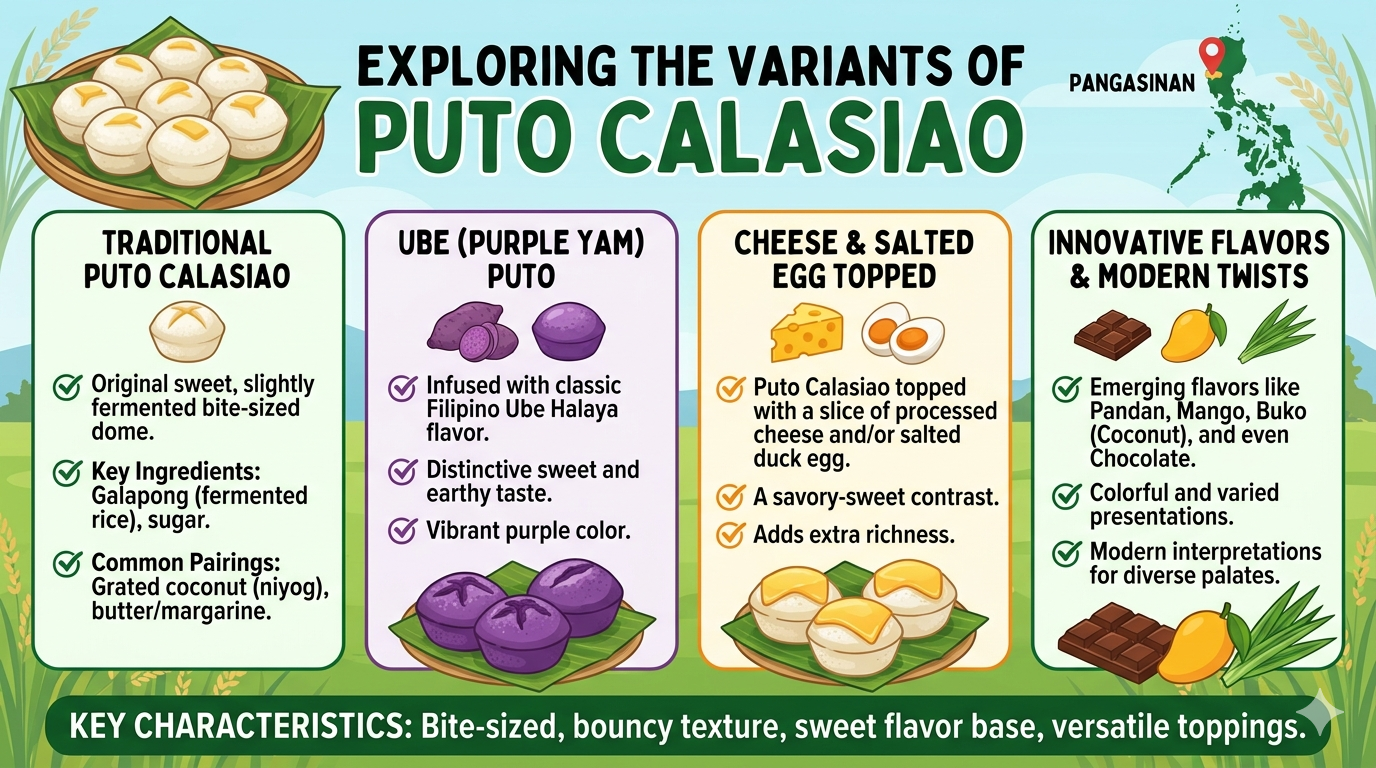
Infographic displaying ingredient types and preparation variations of puto Calasiao-style rice cakes
Disclaimer
This article is for general informational and educational purposes only. It does not constitute professional medical, nutrition, or dietary advice. References to foods or preparation methods do not imply endorsement or guarantee of health outcomes. Readers are encouraged to consult licensed nutritionists, dietitians, or relevant professionals for personalized guidance.
