
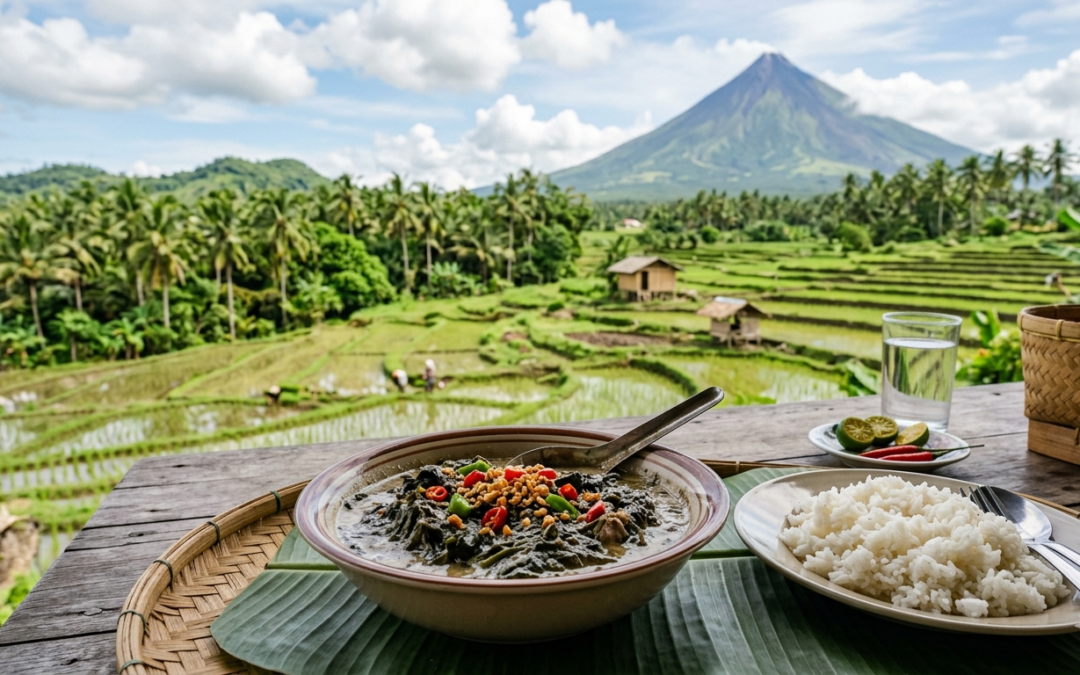
Laing
Laing: Nutritional Overview and Dietary Context
An educational look at a traditional Filipino dish and its nutrient components
Laing is a traditional Filipino dish commonly associated with the Bicol region. It is primarily made from dried taro leaves cooked in coconut milk, often combined with ingredients such as chili, garlic, onions, and sometimes fish or meat. This article provides a neutral overview of its nutritional components, preparation considerations, and its place within general dietary planning, in line with food safety and nutrition guidance from Philippine authorities such as the Department of Health (DOH) and the Food and Drug Administration (FDA) Philippines.
Basic Ingredients and Composition
Typical ingredients in laing include:
- Dried taro leaves
- Coconut milk (gata)
- Garlic, onion, and ginger
- Chili peppers (optional)
- Protein additions (such as shrimp, fish, or pork in some variations)
The exact nutrient profile depends on preparation methods and ingredient proportions.
Nutritional Components
Macronutrients
- Fats: Coconut milk contributes dietary fats, including saturated fats
- Carbohydrates: Taro leaves provide small amounts of carbohydrates and dietary fiber
- Protein: Present in modest amounts, depending on added ingredients like seafood or meat
Micronutrients
- Iron and calcium: Found in leafy greens such as taro leaves
- Potassium: Present in plant-based ingredients
- Vitamins: Including vitamin A and some B vitamins from leafy vegetables
Dietary Considerations
- Portion awareness: Coconut milk is energy-dense, so portion size may affect total calorie intake
- Sodium levels: Depending on added seasonings such as fish sauce or salt
- Spice level: Chili content varies and may affect tolerance for some individuals
Laing can be part of a varied diet when combined with other food groups such as rice, vegetables, and protein sources.
Food Safety and Preparation Notes
- Taro leaves must be properly cooked before consumption to reduce naturally occurring compounds that may cause irritation if undercooked
- Safe food handling and cooking practices are recommended, consistent with Food Safety Act guidelines in the Philippines
- Ingredients should be sourced from reliable and hygienic suppliers
Context
In Philippine culinary traditions, laing is often served as a main or side dish. In nutrition science discussions, traditional dishes like laing are examples of how local ingredients contribute to dietary diversity.
Dietary patterns vary across regions and households, and preparation methods can significantly influence nutrient composition.
For individualized dietary needs, consultation with a licensed nutrition professional is advisable.
FAQs
What is laing made of?
Laing is typically made from dried taro leaves cooked in coconut milk with spices and optional protein ingredients.
Is laing considered a vegetable dish?
It is primarily plant-based due to the use of taro leaves, although some versions include animal-based ingredients.
Why must taro leaves be fully cooked?
Proper cooking helps break down compounds in taro leaves that may cause irritation if consumed raw or undercooked.
Trusted Sources
- Department of Health (DOH) Philippines – Food and Nutrition Guidelines
- Food and Drug Administration (FDA) Philippines – Food Safety and Labeling Resources
- Food and Agriculture Organization (FAO) – Traditional Diets and Nutrition
- Peer-reviewed food science and nutrition journals
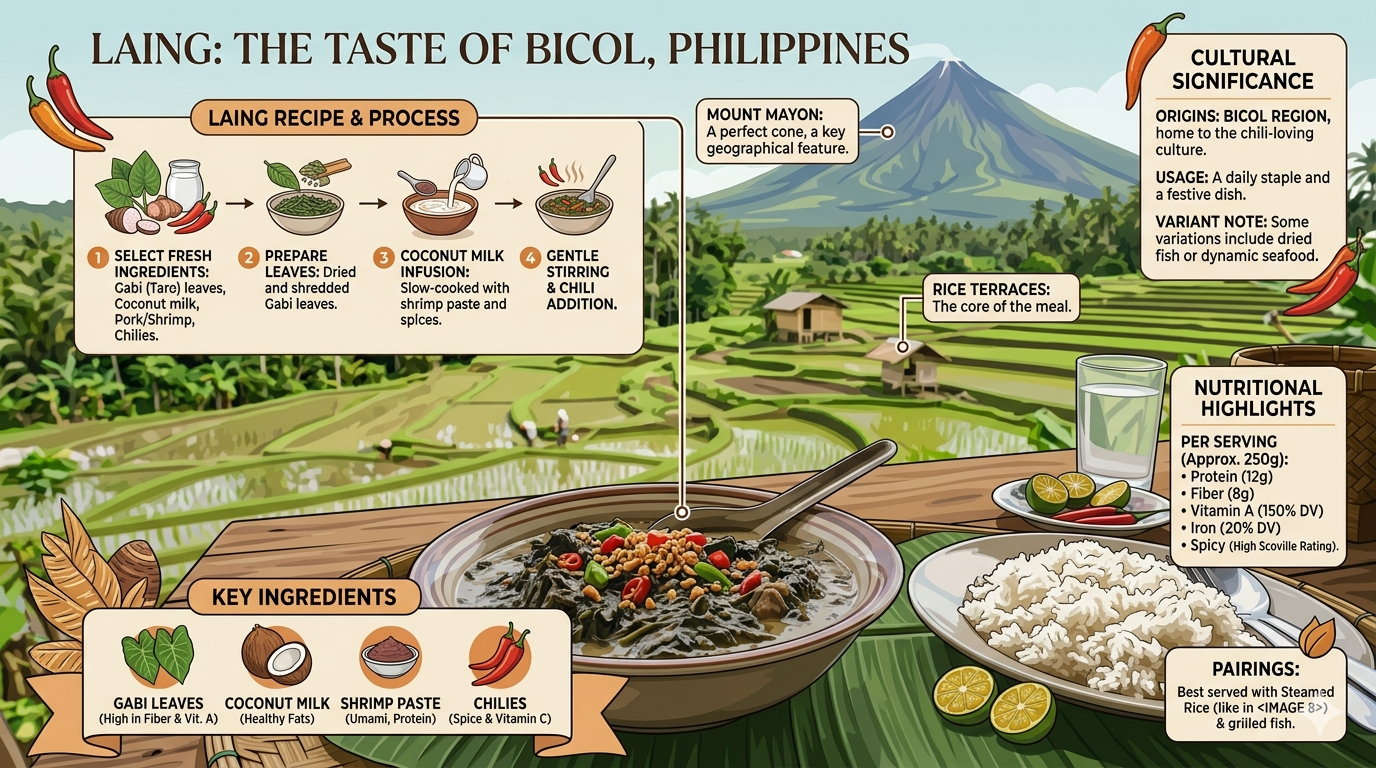
Visual layout showing components commonly used in laing
Disclaimer
This article is for general informational and educational purposes only. It does not constitute professional medical, nutrition, or dietary advice. References to foods or preparation methods do not imply endorsement or guarantee of health outcomes. Readers are encouraged to consult licensed nutritionists, dietitians, or medical professionals for personalized guidance.
