Description
Common Ingredients
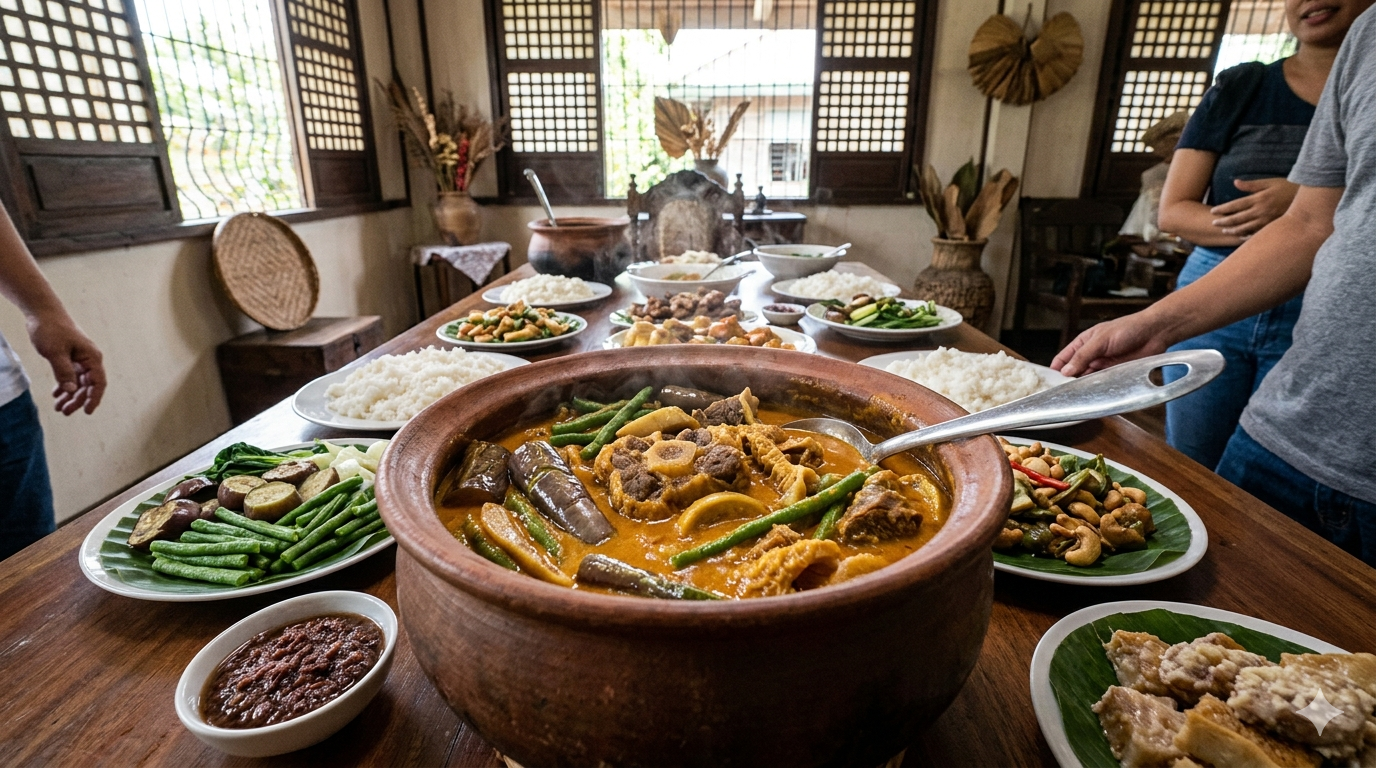
Kare-kare usually includes a combination of:
Protein sources: oxtail, beef, tripe, or sometimes seafood
Vegetables: eggplant, string beans, banana blossom (puso ng saging), and pechay
Sauce base: ground peanuts or peanut paste
Thickening agents: toasted rice flour (galapong)
Condiment: bagoong (fermented shrimp paste), served on the side
These components contribute to the dish’s flavor, texture, and nutrient profile.
Macronutrient Composition (General Overview)
The dish may contain a mix of macronutrients:
Proteins: from meat or seafood ingredients
Fats: from peanuts and certain cuts of meat
Carbohydrates: from vegetables and thickening agents
The exact proportions can vary depending on preparation methods and ingredient quantities.
Micronutrient Content
Kare-kare may provide various micronutrients depending on ingredients used:
Iron and zinc from meat
Vitamin C and fiber from vegetables
Magnesium and vitamin E from peanuts
Nutrient content may differ based on cooking techniques and portion sizes.
Preparation and Food Safety Considerations
Food preparation typically involves:
Boiling meat until tender
Preparing peanut-based sauce separately
Combining vegetables toward the end to maintain texture
Under Philippine food safety guidelines:
Proper handling of meat and seafood is important
Cooked dishes should be stored at safe temperatures
Fermented condiments like bagoong should be sourced from regulated producers when packaged