
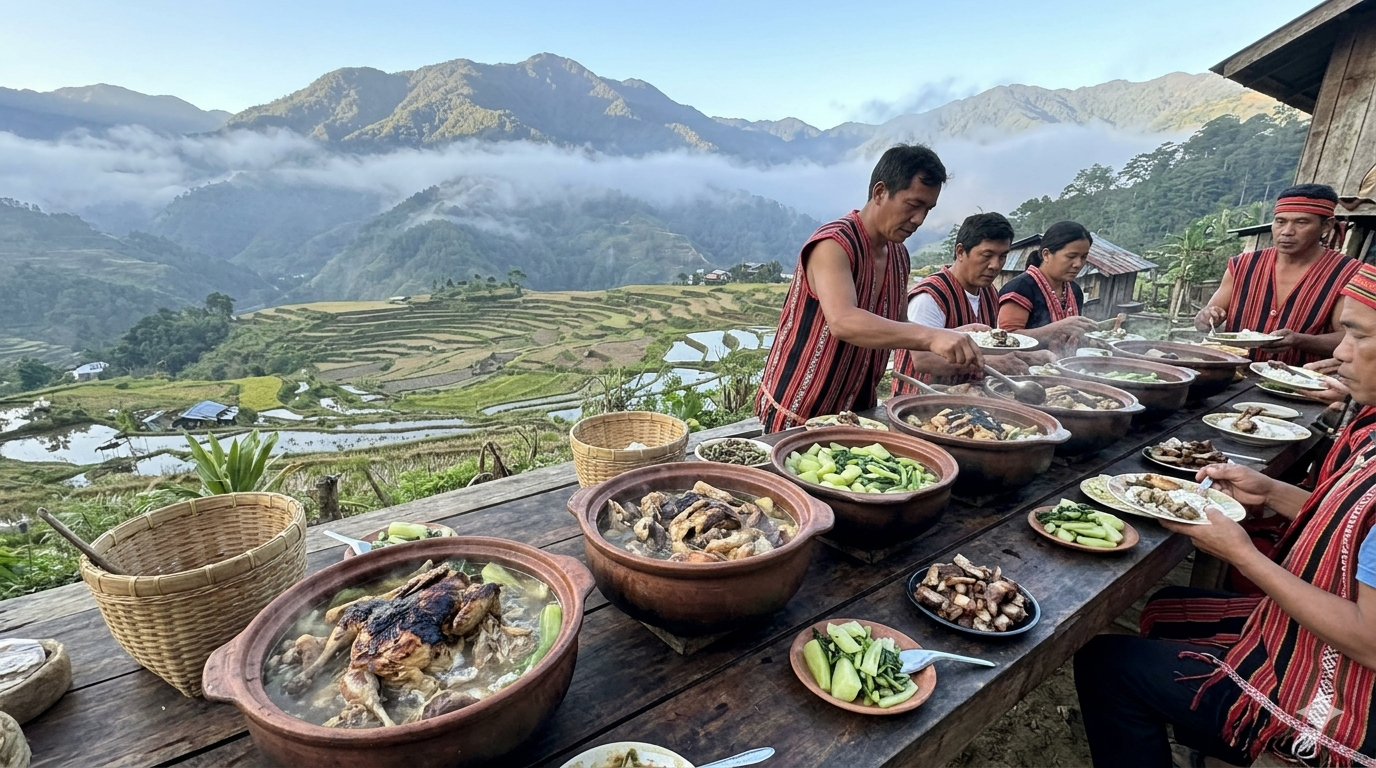
Description
Cultural Context
Pinikpikan reflects indigenous practices, particularly among Igorot communities. Moreover, communities often include ritual elements that connect the dish to cultural beliefs and traditions.
Because of its cultural significance, preparation methods may differ across communities and occasions. Therefore, variations can reflect local customs and preferences.
Nutritional Components
From a general nutrition perspective, pinikpikan contains several components:
Protein: Chicken provides protein used in body structure
Fats: Poultry naturally contains fats
Micronutrients: Meat includes iron and B vitamins
Phytonutrients: Ginger and vegetables contribute plant-based compounds
However, nutrient composition varies depending on portion size, ingredient selection, and cooking methods.
Food Safety and Preparation Considerations
Under Philippine food safety and animal welfare standards, preparation practices require attention. For instance:
Proper handling and cooking of poultry reduce foodborne risks
Thorough cooking remains a standard safety practice
Awareness of local regulations and humane treatment guidelines influences modern preparation methods
Over time, food preparation practices may change to align with public health standards and regulatory guidance.
Reviews
There are no reviews yet.